Before I get to a few titles seen at Origins Game Fair 2026, I'll note that Cephalofair Games has announced an expansion for Joe Klipfel and Nikki Valens' Gloomhaven: Buttons & Bugs, with Pub Crawlers scheduled to debut at Gen Con 2026.
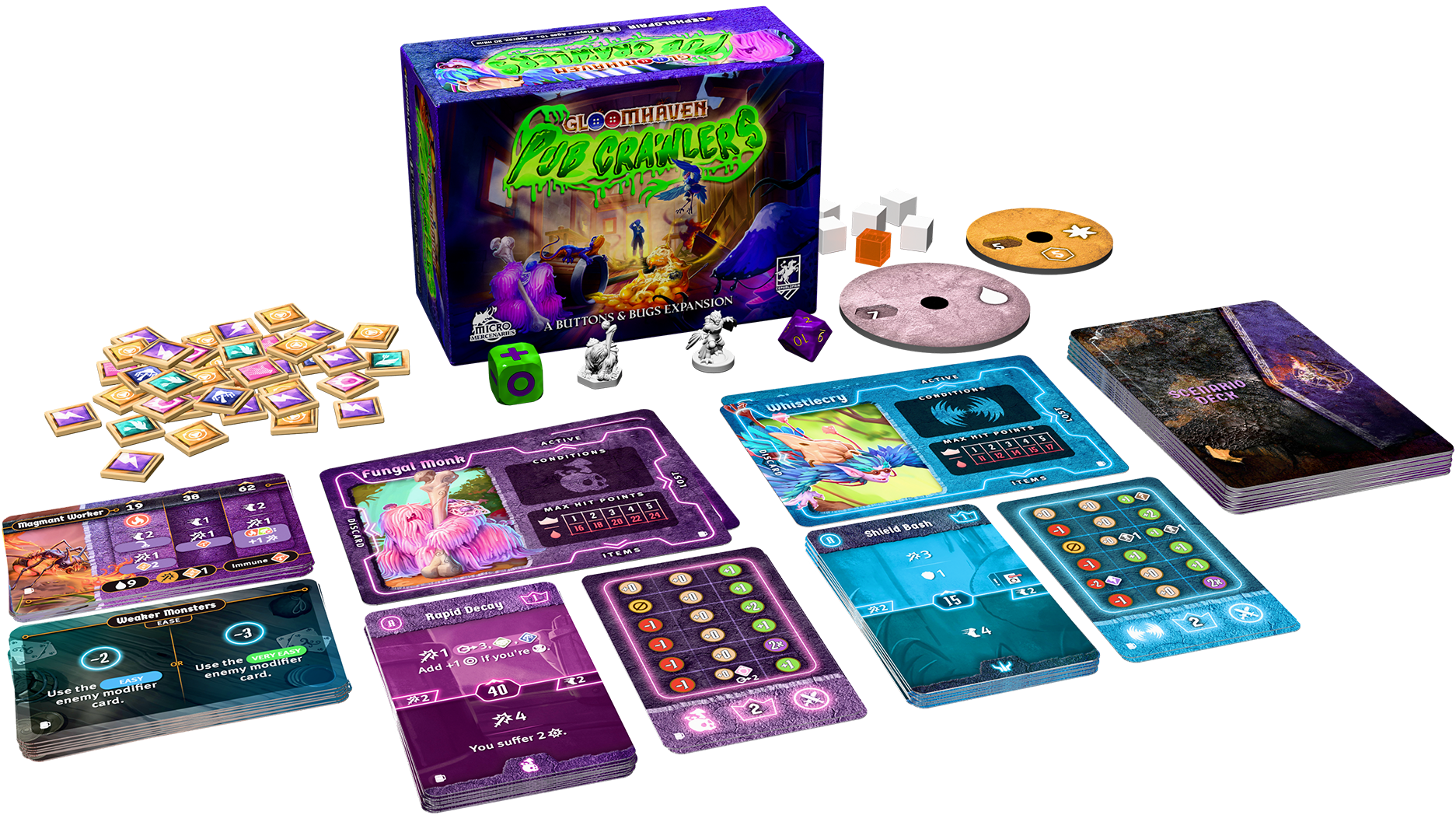
Gloomhaven: Buttons & Bugs – Pub Crawlers features two new classes — Whistlecry and Fungal Monk — a new struggle/ease difficulty deck, and 17 new scenario cards that can be used with these new classes or those in the base game, which is required for play.
Preorders for Pub Crawlers will be available through Cephalofair, with shipping scheduled for September 2026 ahead of a Q4 2026 retail release.
At Gen Con, many publishers host media events before and during the show to highlight both new and upcoming games. Allplay hosted a similar event ahead of Origins opening on June 18, 2026 to highlight three titles it will crowdfund in July 2026, and I'm writing about its featured games now, so I guess the event did its job. Maybe more such events will take place in 2027...
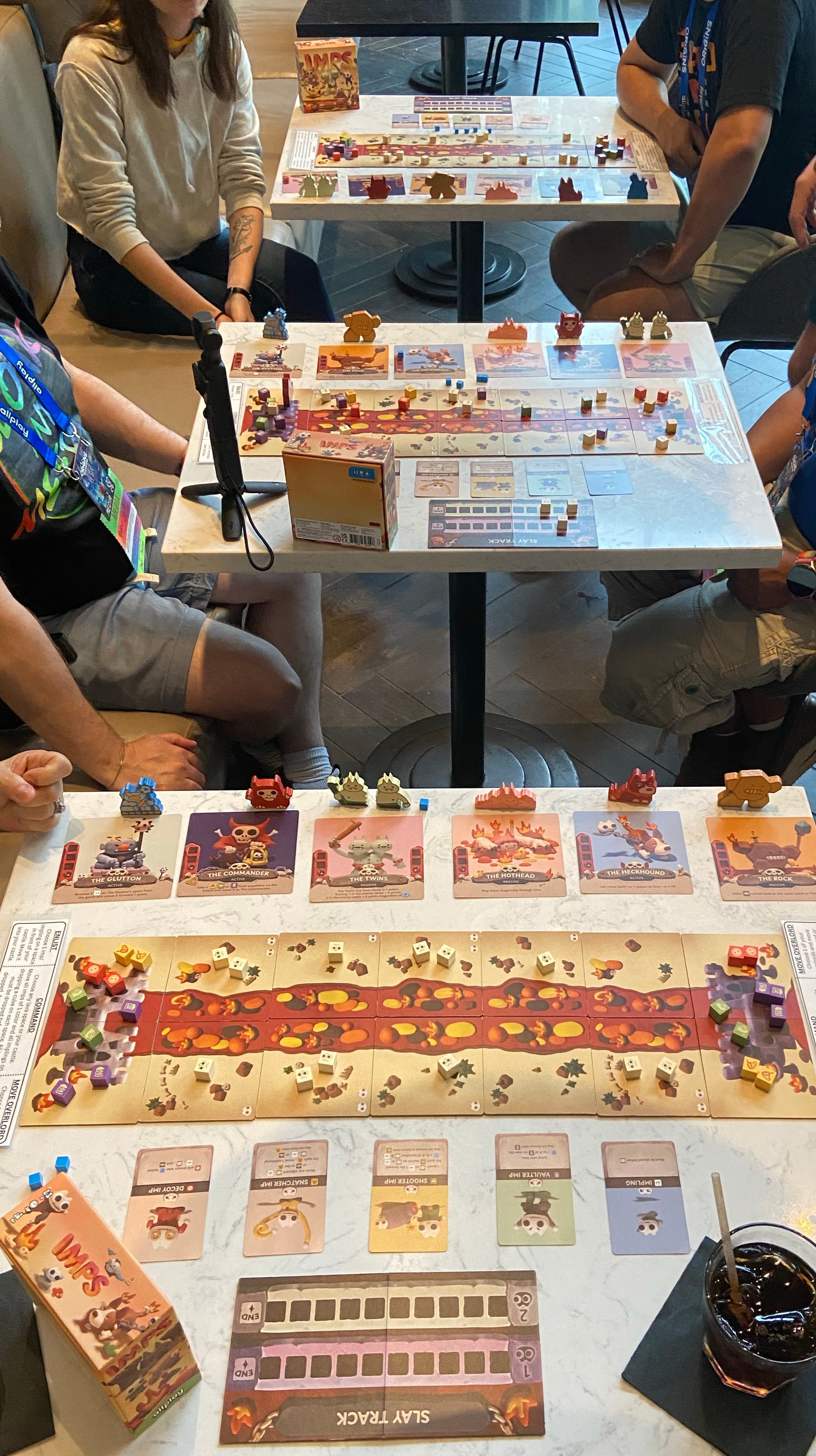
Designer Nick Brachmann sold a small number of copies of the two-player game Imps at Indie Game Night Market in 2025, and Allplay's COO Joe Wiggins told me that he played the game twice the evening he bought it and immediately wanted to sign the design.
Imps uses a mancala-style movement system for the colored imps and creamy implings in play, but that's only part of the game. To begin, each player drafts two overlords that start in their castle. On a turn, you move one of your overlords forward or sideways one space; move an imp/impling into your castle; or (most frequently) pick up all imps of a single color from your castle or any space along the lava path, along with all implings in that space, then "seed" them one by one in a clockwise or counterclockwise path, with implings always being placed first.
Three of the colored imps have powers, with the final purple imp you place vaulting across the lava, then dealing as much as damage to non-purple tokens as the number of purple imps in that space. Each imp/impling is removed with only one point of damage, with you placing these tokens on your side of the slay track. Overlords take 2-3 points of damage to remove.
Enjoying the Origins coverage?
If Eric’s convention reports help you discover new games, please consider supporting Board Game Beat. Paid memberships start at $2/month and help keep this kind of independent coverage going.
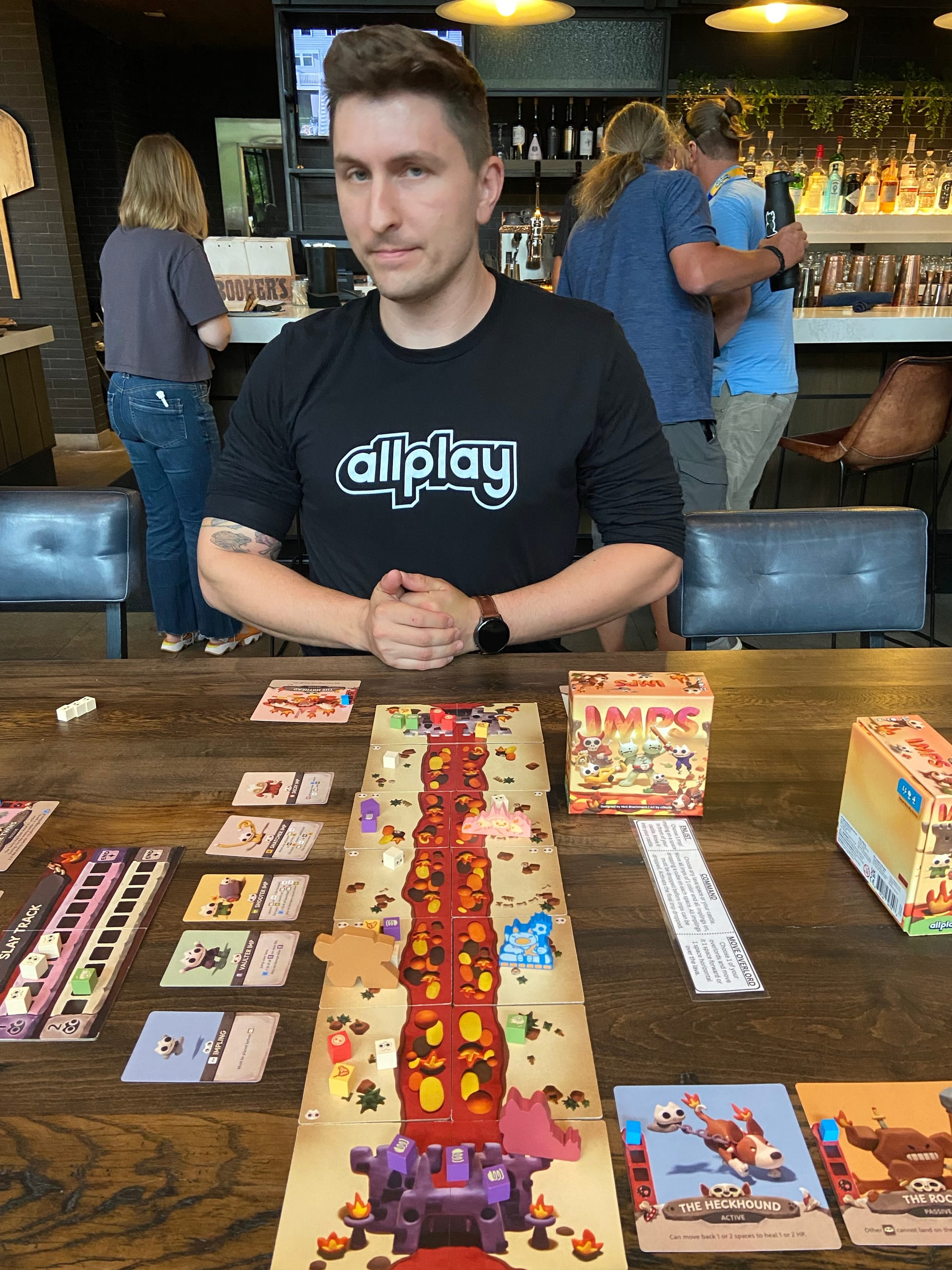
The final green imp placed "shoots" other tokens from its location to cause damage when they land. The final yellow imp pulls tokens to its space, allowing you to manipulate the movement possible in future turns. Red imps do nothing other than wear a target on their back, with damage striking them first if they're present.
Overlords have unique powers, such as moving diagonally, not letting other tokens past, and removing three implings from a space to move again, and you score points for them if they reach the opponent's castle, with damage knocking down how much you earn. You also score 1 point for each two imps/implings you slay, while losing 1 point for each imp/impling still in your castle at game's end. That end happens when the slay track is filled or one player gets their second overlord into a castle.
Despite the mancala movement system, I overlooked how tactical the game is. No information is hidden, so you need to account for which imps and overlords can move where and how you might plan to take advantage of such things in future turns.
Wiggins says that gameplay is similar to the first release, but the original game gave each player the same two overlords, whereas now you draft two of six unique overlords to give each game a different feeling. Other aspects have been refined, such as modifying the scoring system to discourage turtling.
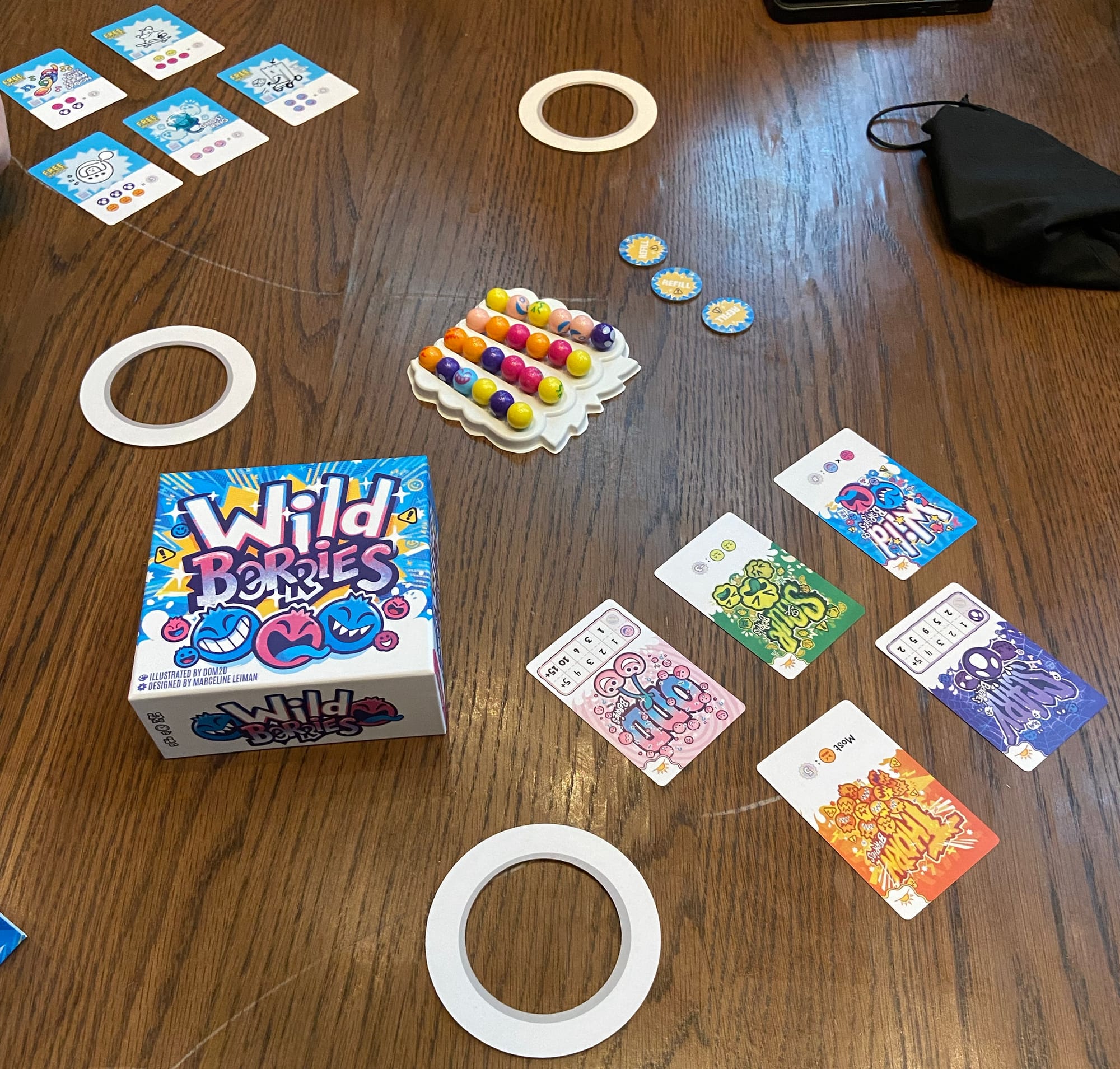
Marceline Leiman's Wildberries is a 2-5 player game in which each turn you draft 1-2 marbles from the end of one track of the display. When two tracks are empty, you refill those tracks from the bag, and after a certain number of refills, the game ends.
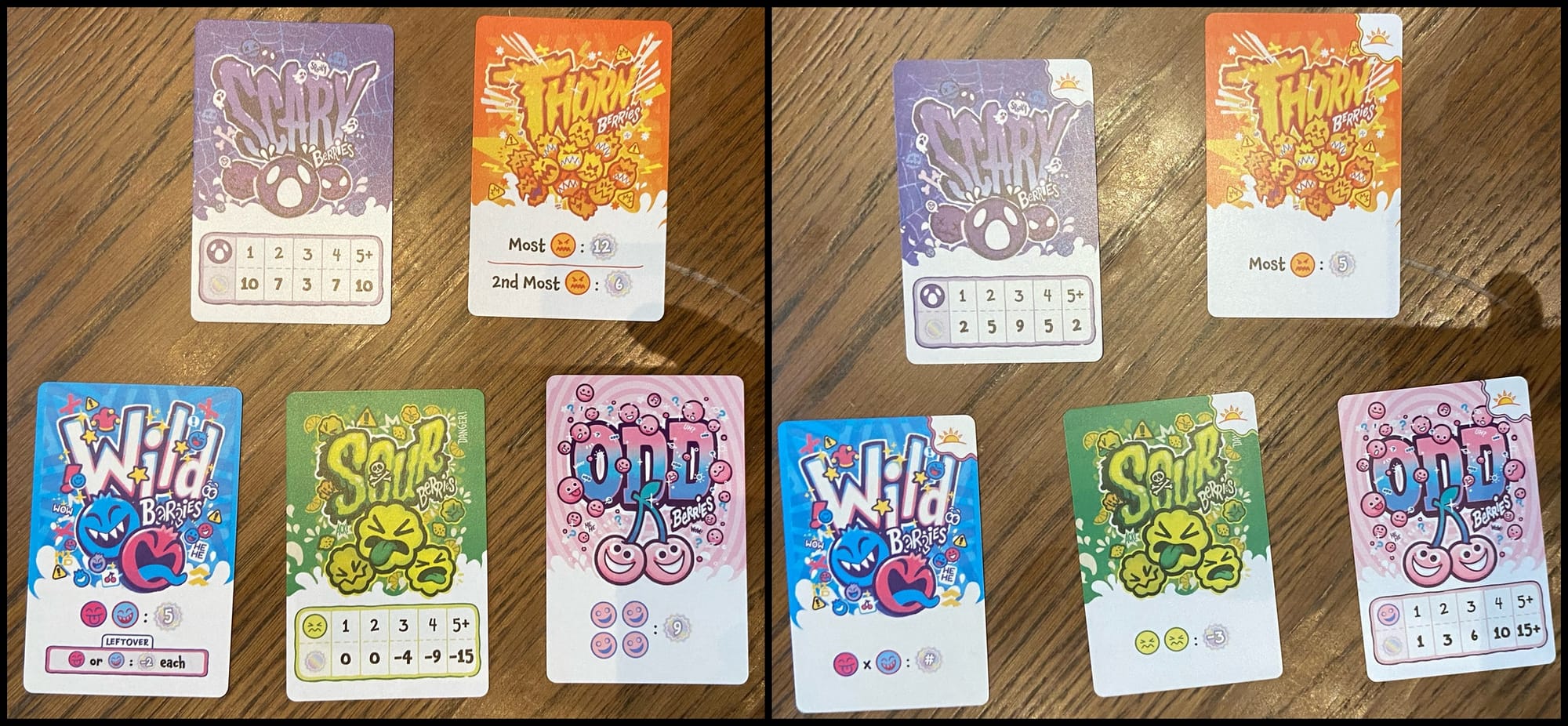
You're trying to collecting marbles — which are themed as bits of breakfast cereal — to claim public objectives and score points based on the cereal colors you collect. As you might expect in this day and age, the objectives and scoring metrics are double-sided to add variability to gameplay...although I object to "sour" being linked to negative points. Sour candies are the best, man.
Kabuto Sumo Dice, a 2-4 player game by Alex Cutler and Michael Mihealsick, uses the Kabuto Sumo setting with art by Kwanchai Moriya, but gameplay is along the lines of Dieter Nüßle's Strike, with players taking turns to throw dice into an arena.
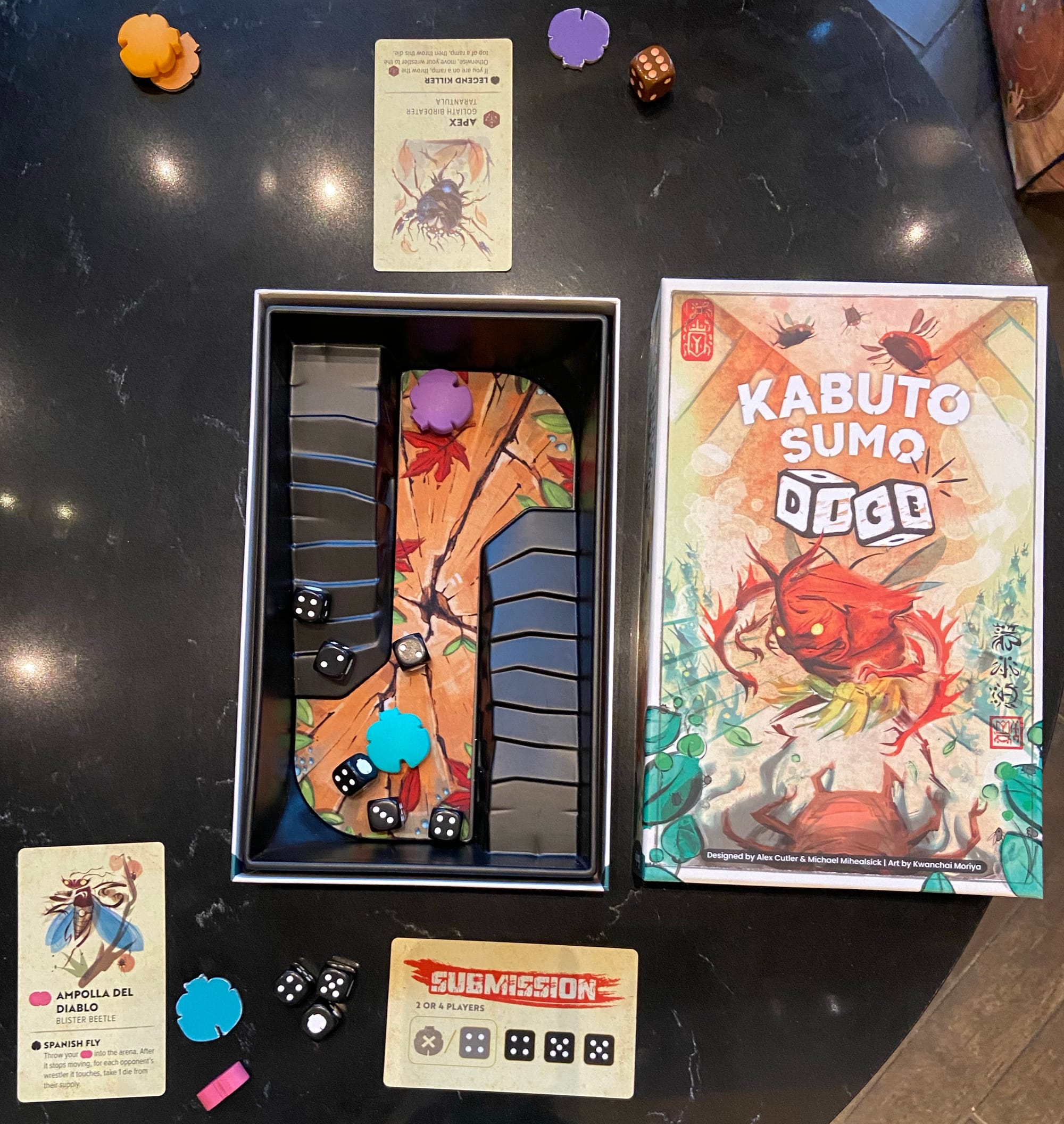
Each player has a colored plastic token in the arena, and before play begins you draft one of six critters to determine your special ability during play. If you end up with a lilypad in the arena, whether the die you drop or any that you hit, you use that critter's special ability. With my Spanish Fly, for example, I can steal a die from a player's reserve if I can throw it and make it touch their insect. Who can resist my allure?!
My opponent in the game above had a giant die that creates a bigger impact and allows them to replace their insect on a ramp; that matters since they can distance themself from others, but also because each player has a "submission" combination that eliminates them from play if those dice are present in the arena — and if you've been flipped on your back to reveal your tummy's X, that submission combination is one die smaller.
You're also eliminated from play if you have no dice at the start of your turn, and you regain dice if (1) you have a lilypad, with you reclaiming that die, (2) your right-hand neighbor bounces one or more dice from the arena, and (3) if the arena has three dice of the same value after your turn. In the image above, my opponent had just rolled a four, which meant the 4s would be removed from play, making my submission far less likely (yay!) — but that was my opponent's last die, so he would have lost if he hadn't picked up any (boo!).
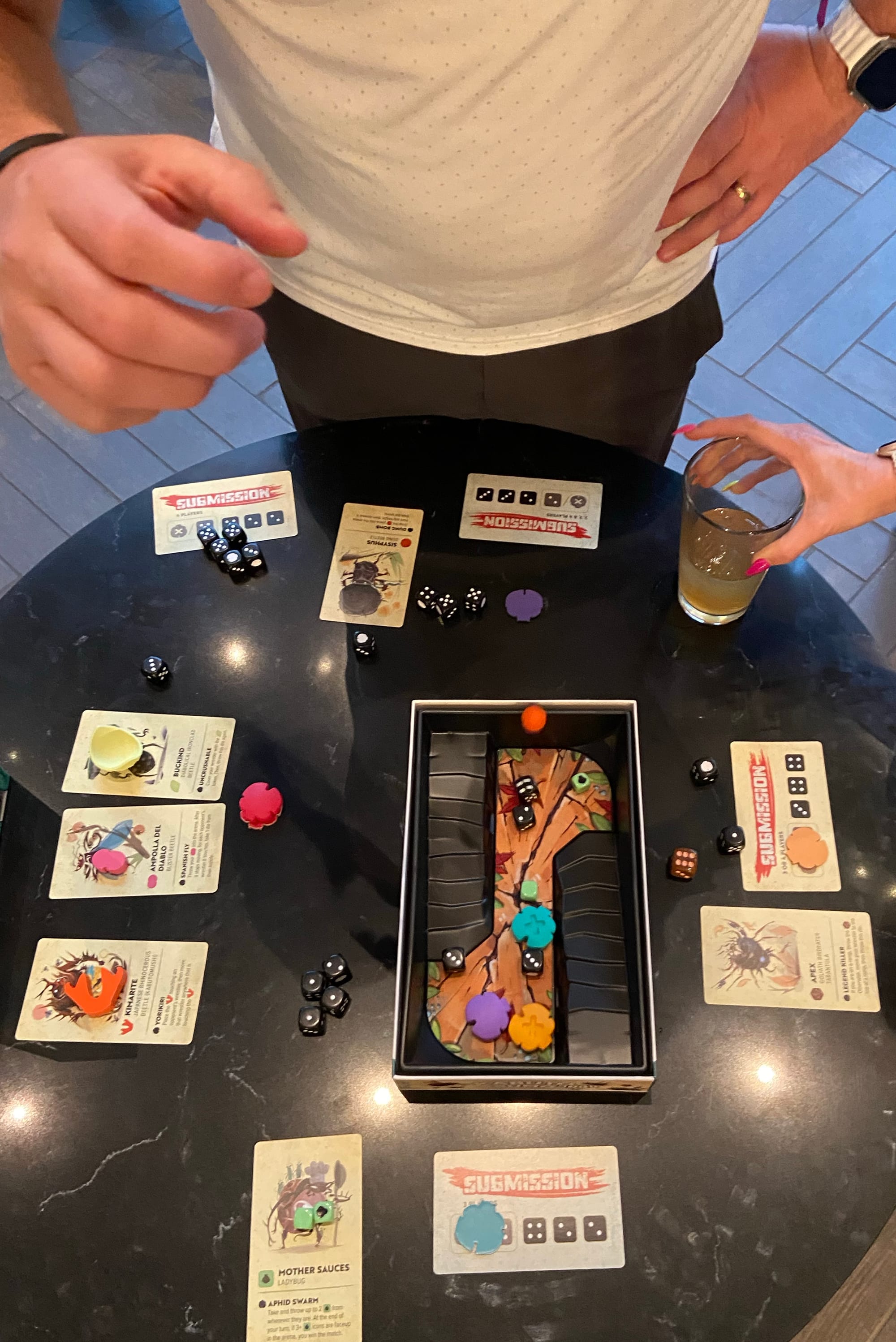
In another game, my special lilypad power was to roll two teensy dice that feature an aphid on some sides. If I ever had three or more aphids face up, I'd win the game — and I managed to make that happen by smashing a die into others to put two lilypads in play, giving me the re-roll opportunities I needed.
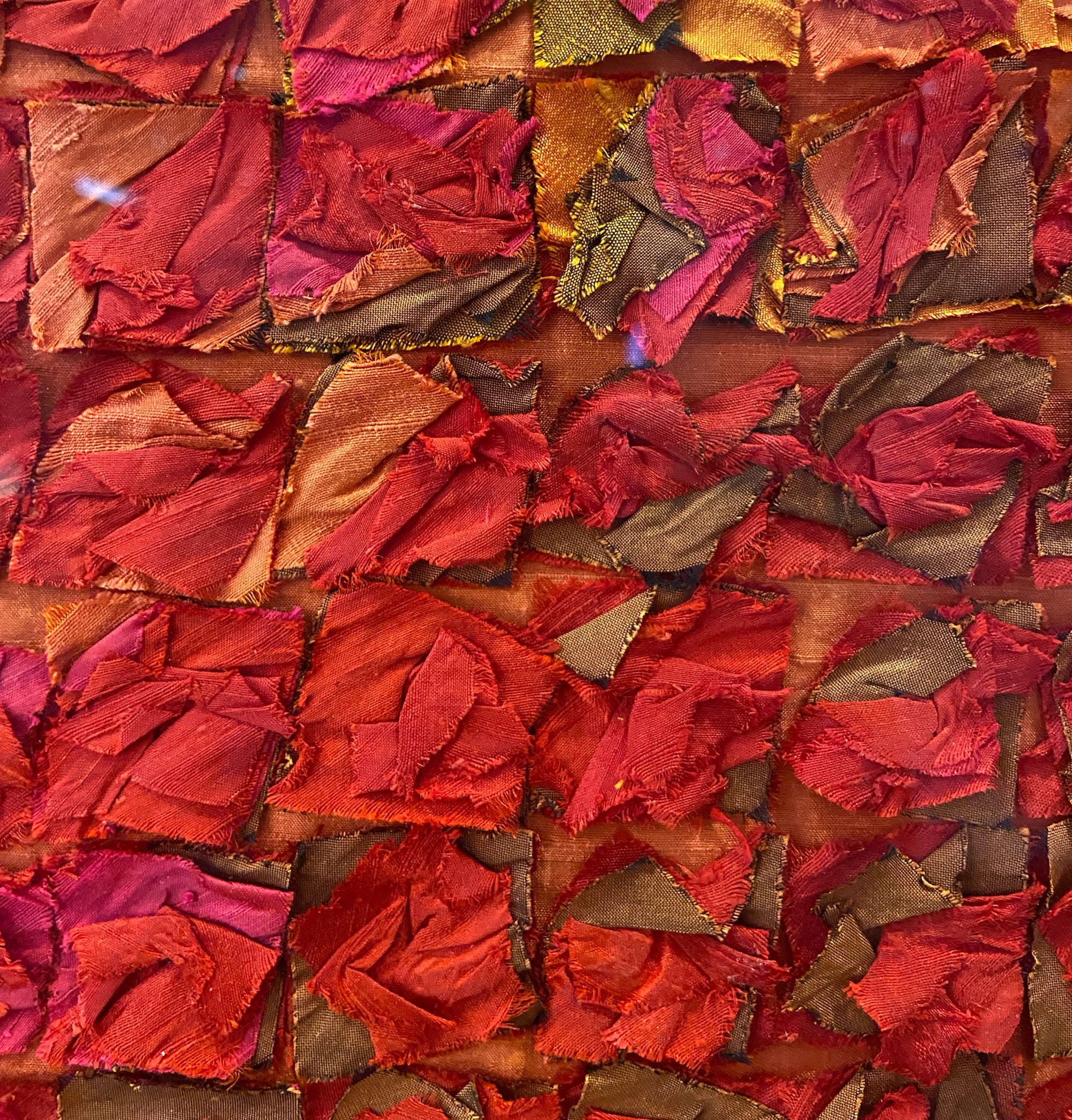
Here's the entirety of Tim Harding's "Crushed Gold Crimson", which unfortunately has exterior light from various windows reflected on it:
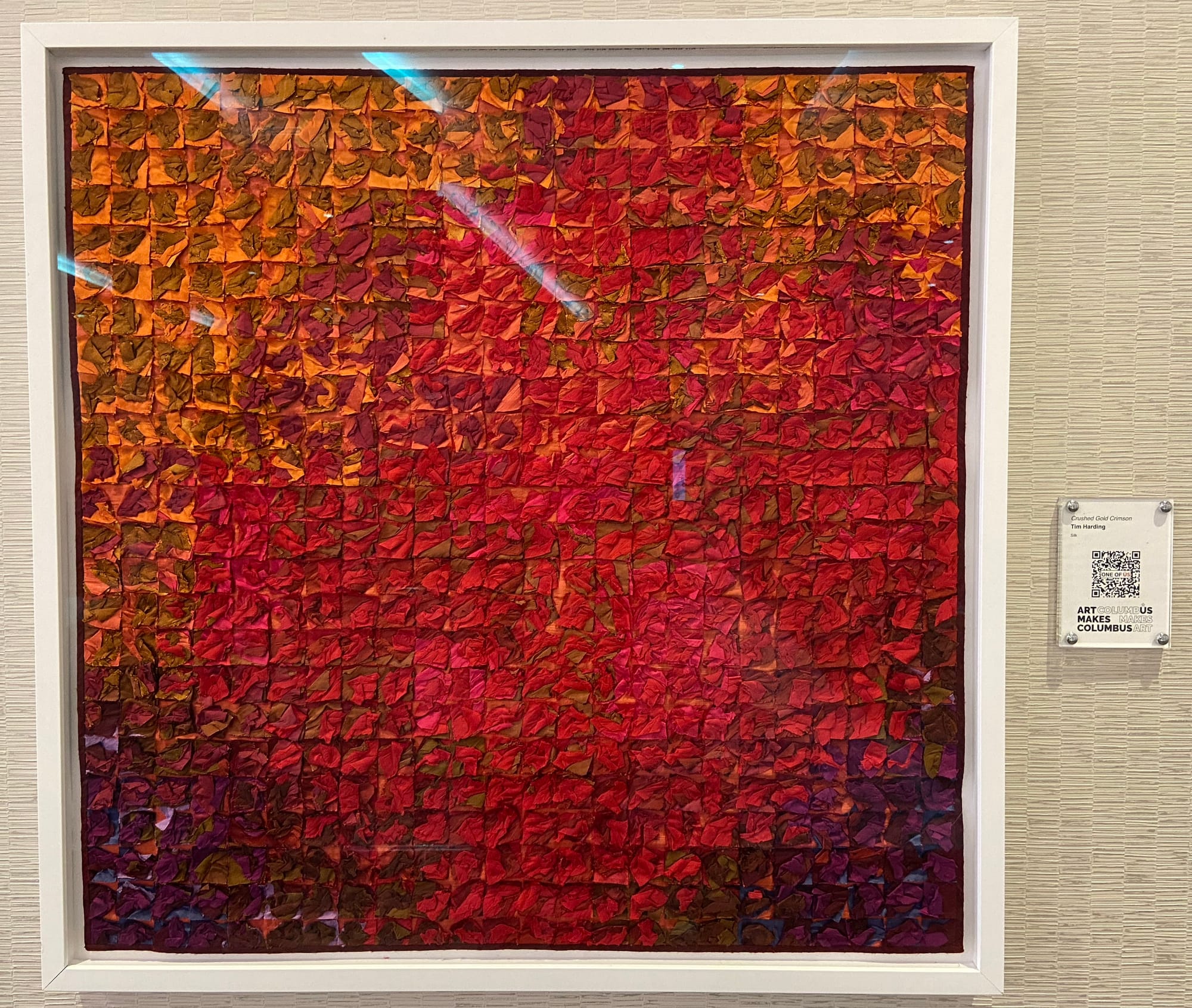
If you look at the placard in the image above, you'll see the only component used in this artwork is silk — and you might not be able to understand how exactly artist Tim Harding went from "silk" to this artwork, so let me zoom in: