On Friday, July 31, Bitewing Games was one of several publishers participating in a "Mega Announcement Showcase" event in which they revealed upcoming games, with Bitewing releasing introductory details about five titles.
Baba Is You: The Board Game is a tabletop adaptation of the Baba Is You puzzly video game created by Arvi Teikari, who goes by Hempuli, and the board game has been created by Hempuli and Peter C. Hayward.
The video game has more than two hundred levels in which a single player tries to overcome various challenges by creating and breaking rules. "Baba Is You" is one of those rules, with you embodying a strange white creature named Baba. You walk around the environment and can push words to change the rules of play. Push the word "Rock" in front of "Is You", and you immediately become the rock!
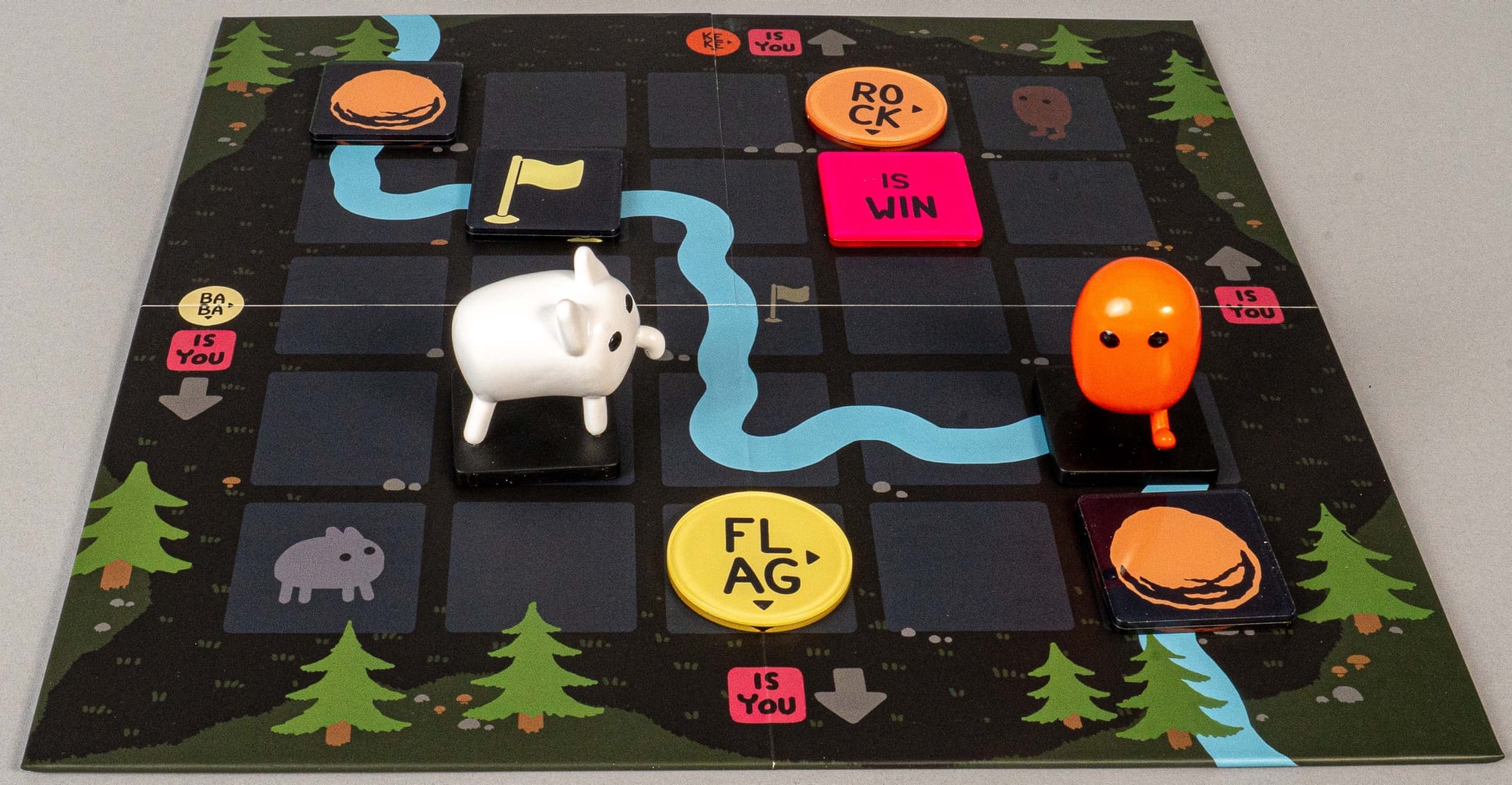
Unlike the video game, Baba Is You: The Board Game is for two players, with one being Baba and the other Keke. You know which creature you inhabit by the "Keke is YOU" rule that points at you. The game features scenarios that comprise two or more video game levels, with players changing the rules until ideally whatever thing is YOU moves onto whatever thing is WIN (or vice versa).
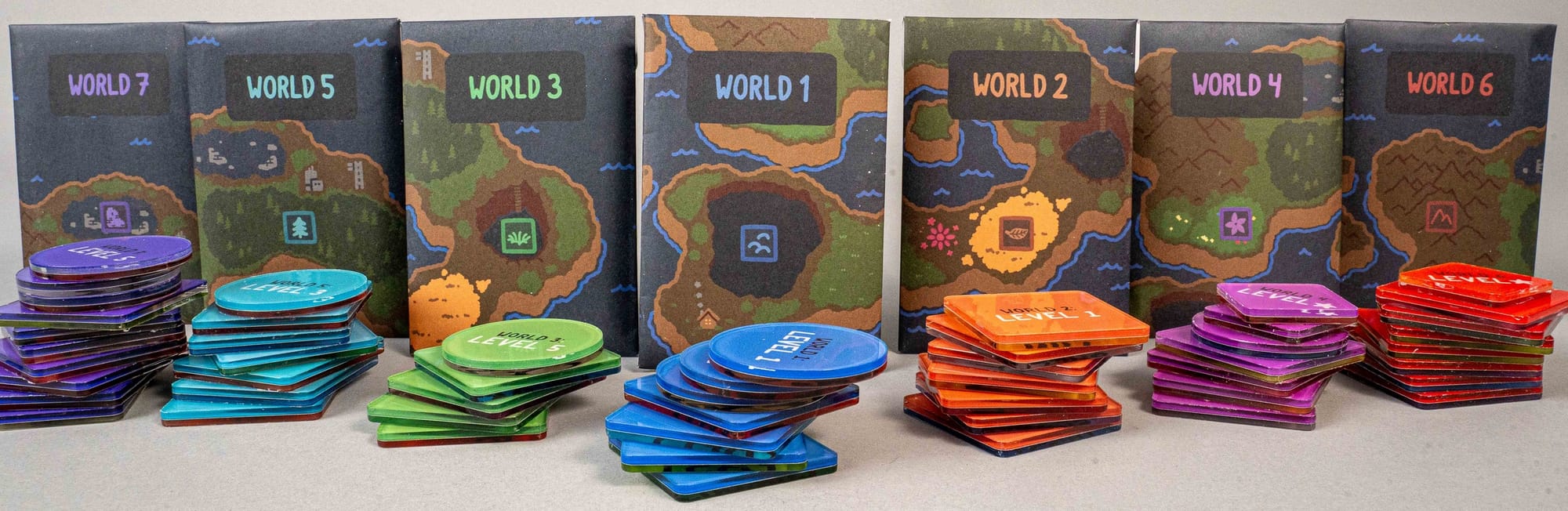
Other words featured in the game are STRONG, SCARED, and MELT, with the game featuring 35 levels in seven worlds. You can play a one-hour game through any five-level world (with whoever wins three scenarios winning the game), or you can take on the full seven-world campaign against a single opponent. The scenario loser decides which level stays in the game to be combined with a new level
Once you've played through the worlds, you can also combine levels to create new scenarios.
Bitewing Games will launch a crowdfunding campaign on September 15, 2026 f0r Baba Is You: The Board Game, as well as for Party House: The Deckbuilding Game, a 1-4 player game by Jon Perry that is also based on a video game by Joy Perry: Party House, which is one of the designs in UFO 50, a collection of fifty solitaire and multiplayer games.
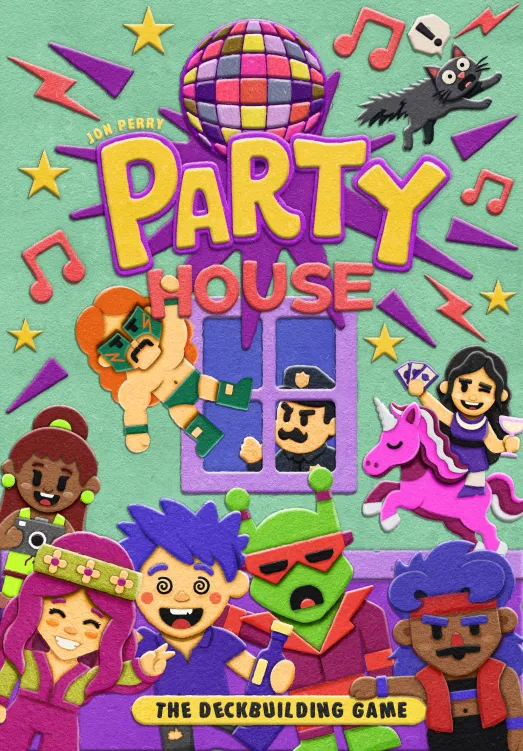
Party House: The Deckbuilding Game is a press-your-luck design in which you want to throw a rager and attract all sorts of VIPs to your party before the police bust up your party. Guests will arrive at your house offering money (which you get to keep no matter how long guests stick around) and popularity (which stays with you only if you don't get busted). Each character also has 0-3 trouble — and 8 trouble in one location spells the end of the night for you!
If you don't bust, you can spend money and popularity on new guests, such as "a monkey who increases your popularity but also increases your trouble, a driver who can fetch another guest for you, a hippie who calms down a troublemaker, a bartender who makes you more money, and a security guard who kicks somebody out for you".
Guests can help you grab objective cards that grant VIP points, but ideally you can lure long-term VIP guests to your house: an alien, a ghost, a genie, a mermaid, and more.
Bitewing Games will then run another crowdfunding campaign in Q4 2026 for its other three titles, including Reiner Knizia's Escar-GO!, which is a new edition of his press-your-luck dice game Exxtra, a.k.a. Excape.
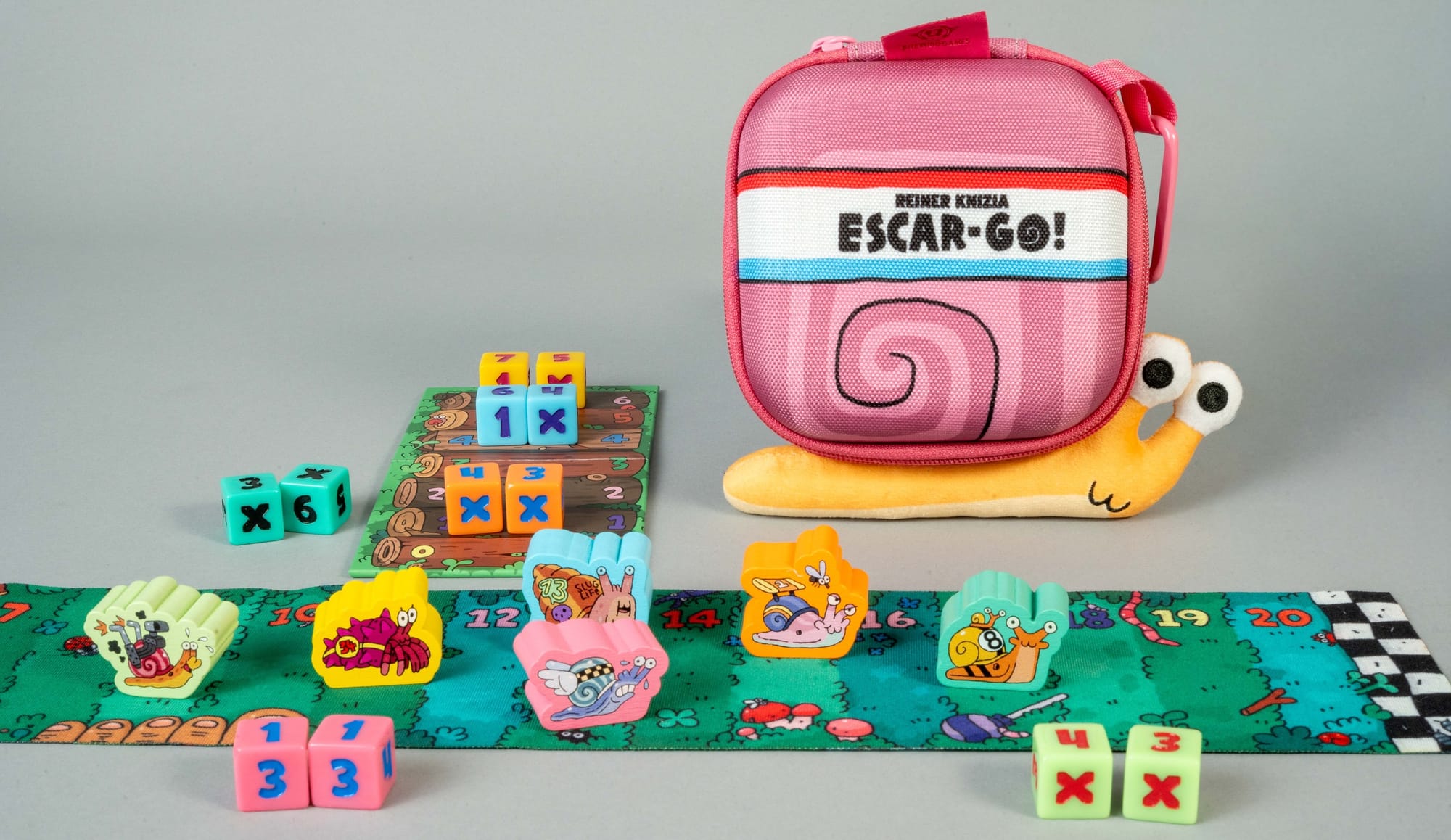
You want to reach the end of the racetrack first, but sometimes you'll find yourself moving in the wrong direction. On a turn, you roll your two dice as many times as you wish to create a two-digit number — but if you get an X from your second roll on, you bust and move backward.
If you stop before busting, you place your dice on an empty space of the movement ladder, and if your number is higher than any dice above you on the ladder, you bump them off! If no one bumps you off before your turn comes around again, you move your snail as many spaces as the number on your ladder rung, so do you want to play it safe or take a chance on moving quickly should you hang on?
Escar-GO! features a double-sided ladder (0-5 and 0-6), as well as a double-sided track with 0-20 on one side and 0-30 on the other; the longer track features a few special spaces that trigger if you land on them, such as Double, which moves you again; Ketchup, which moves everyone behind you three spaces; and Catch 22, a hurdle that can bump you back to 22. Each player also has two one-shot tokens they can spend to ignore a bust to allow the snails a reprieve from sliding back.
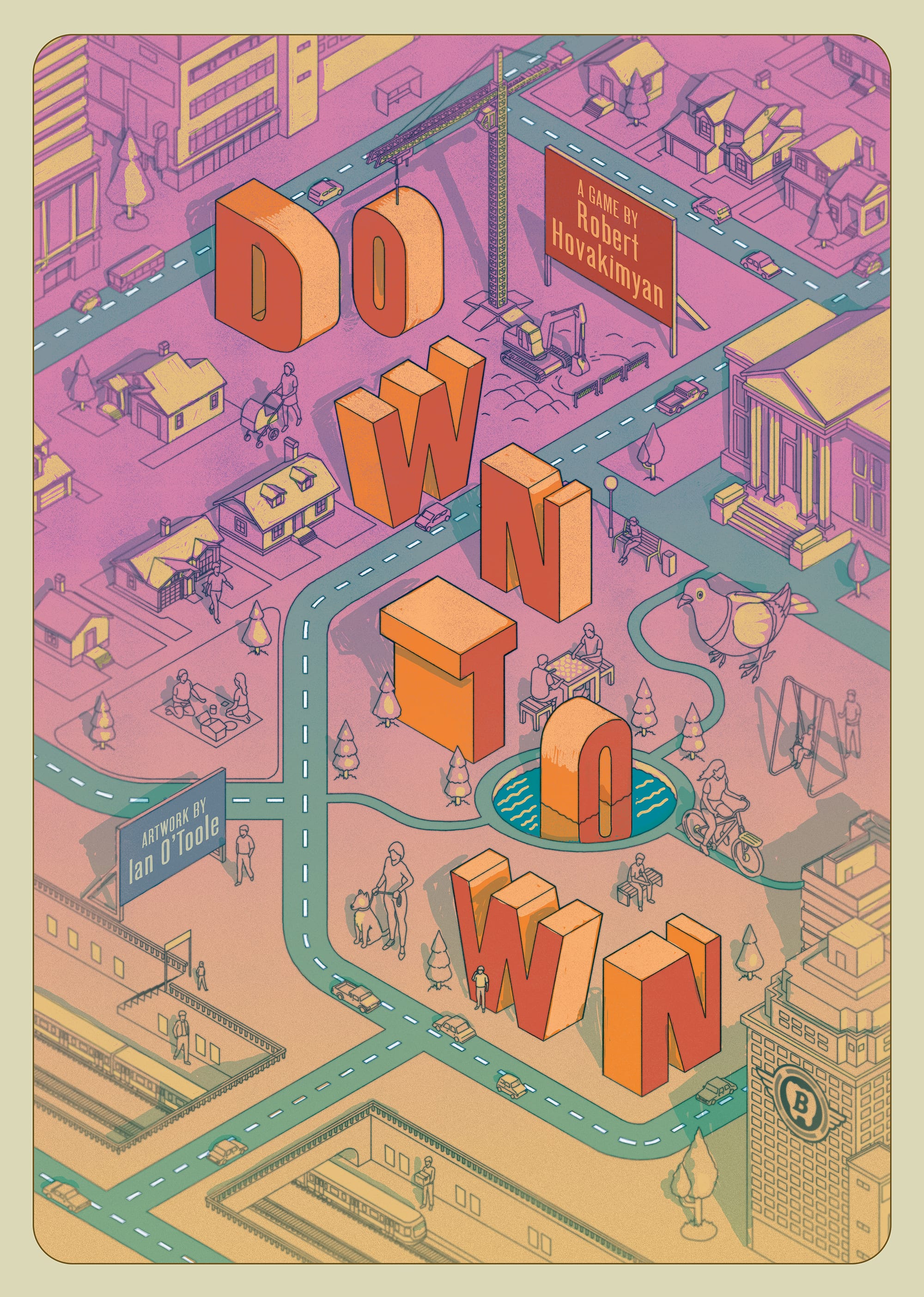
Downtown is a city-building game for 2-4 players from Robert Hovakimyan in which players will focus on building in one zone at a time, with you trying to connect tiles across multiple zones so that you can earn more on a turn.
Each turn, you draw tiles from a personal bag, return some of them to the bag, place others on the game board, then replenish your bag so that it always has the same number of tiles. In the publisher's words: "Players' bags will begin to diverge as they place and replenish unique tiles. Your strategy will evolve and pivot as you play across different zones of the city, and you'll have to adapt to the tiles that enter your hand and the tiles that others play to the board, so the bag building is less about constructing an engine and more about steering your strategy."
During the game, you gain benefits from placing next to certain locations, compete for majorities, and decide each turn whether to take your income as money or points. The latter helps you win, of course, but without money you won't be able to do much each round.
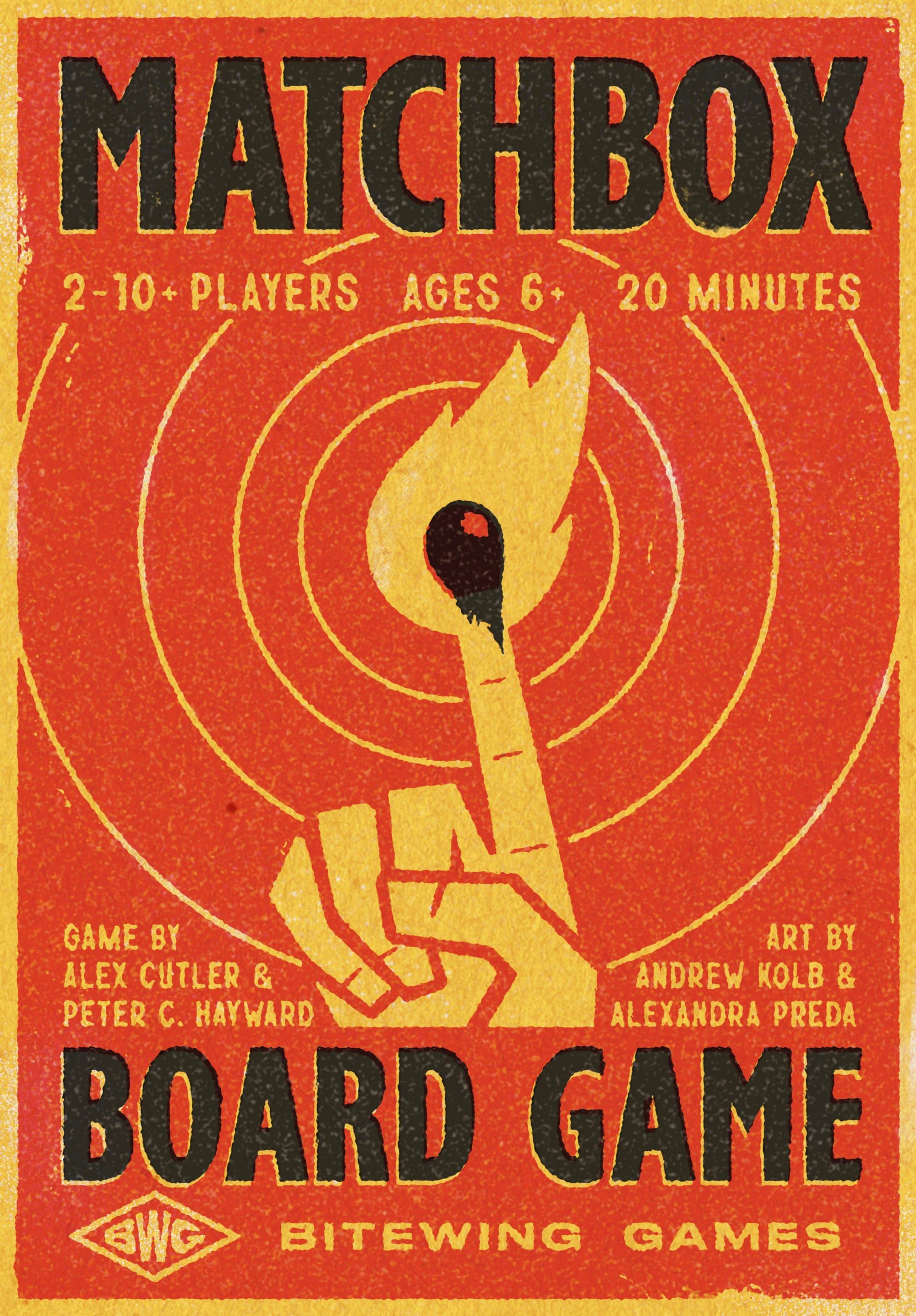
In the Alex Cutler and Peter C. Hayward co-operative game Matchbox, 2-10 players split into two teams to try to identify their own words...which seems like an odd concept, but here's how it works:
During the first phase of a round, you place your team's hand of cards — with each card featuring one of 200+ objects — into the card stands in the middle of the table. The other team simultaneously places their hand of cards into the same stands, but their cards will face them and your cards will face you. Cover the cards with matchboxes, rearrange them, flip them toward the other team, then unveil them. Now you have to find and recall your team's cards using the other team's cards as your guide!
How is this possible? Well, before you place each card (in the first phase) or recall each card (in the second phase), you flip an adjective card that says something like: smelly, expensive, solid, etc. Then you have to discuss together and select the noun that best fits the adjective (either from your hand in the first phase or from the other team's cards in the second phase) — and hopefully both teams are on the same wavelength, or you're already at risk of losing a life!
In the second phase, once you have decided on which card you think the other team selected, you point at it (without saying its name), then you have to say the name of the card that the other team is looking at — that is, the card that your team originally chose from your hand in the first phase for the same adjective. If you point to the wrong card or recall the wrong card, then the table loses a life!
After all cards have been found and recalled, the round ends, and to win the game you must complete three rounds of increasing difficulty.
I imagine a video demo of this design would make the concept much clearer...
Like this kind of coverage?
Get Board Game Beat’s free posts by email — original reporting, designer interviews, and industry news, with no tracking, no ads, and no spam.