

Even if you don't play video games, you've probably seen the news that Sony plans to (1) discontinue "physical game disc production for all new games releasing on PlayStation consoles" as of January 2028 and (2) close "the PlayStation Store on PS3, as well as on PS Vita", worldwide as of July 2027.
Both of these announcements dropped on July 1, 2026, and presented together they force players to confront a future in which new PlayStation games are available solely in a digital format and support for digital purchases can be ended whenever Sony chooses to do so.
What's more, on June 26, 2026 the PlayStation Store sent buyers a notice stating that "From September 1, 2026, due to our content licensing agreements, you will no longer be able to access your previously purchased content from Studio Canal [sic], and it will be removed from your video library." Thus, in addition to future digital purchases being dicey, past purchases can be retroactively undone.
When announcing the end of physical discs, Sid Shuman, senior director of Sony Interactive Entertainment content communications, wrote:
This is a natural direction for Sony Interactive Entertainment to adapt to consumer trends as the general preference for digital media significantly outpaces physical discs. This transition will enable us to align more closely with how most of our community prefers to access and play games today.
Note that "general preference" invites questions. Does that mean 90% of buyers prefer digital to physical? 75%? 60%? If you look at Sony's consolidated fiscal report for 2025 (PDF), you can compare sales of digital software (1,055,688, with all values in this paragraph being in millions of yen) to physical software (125,106) and see that digital sales are roughly nine times that of physical sales — but that's misleading since sales of all game software were 2,641,023, with 1,359,617 of that being add-on content sold digitally and 100,612 of that being classified as "other software", which was not physical.
In short, less than 5% of what Sony earns from game software comes from the sale of physical discs, so...why bother with those discs in the future? (What's more, in a presentation for its fiscal report, Sony noted that its "PlayStation platform now hosts over 125 million monthly active users around the world", and I imagine that steady customer base seems far more rewarding than one-off purchases.)
Some video game publishers are already moving in the digital-only direction, such as Rockstar Games, which opened pre-orders on June 25, 2026 for both digital and physical versions of Grand Theft Auto VI, while noting that the physical version will contain "a download code inside the box" — which means you're still buying a digital edition, but it comes wrapped in plastic for old times' sake.
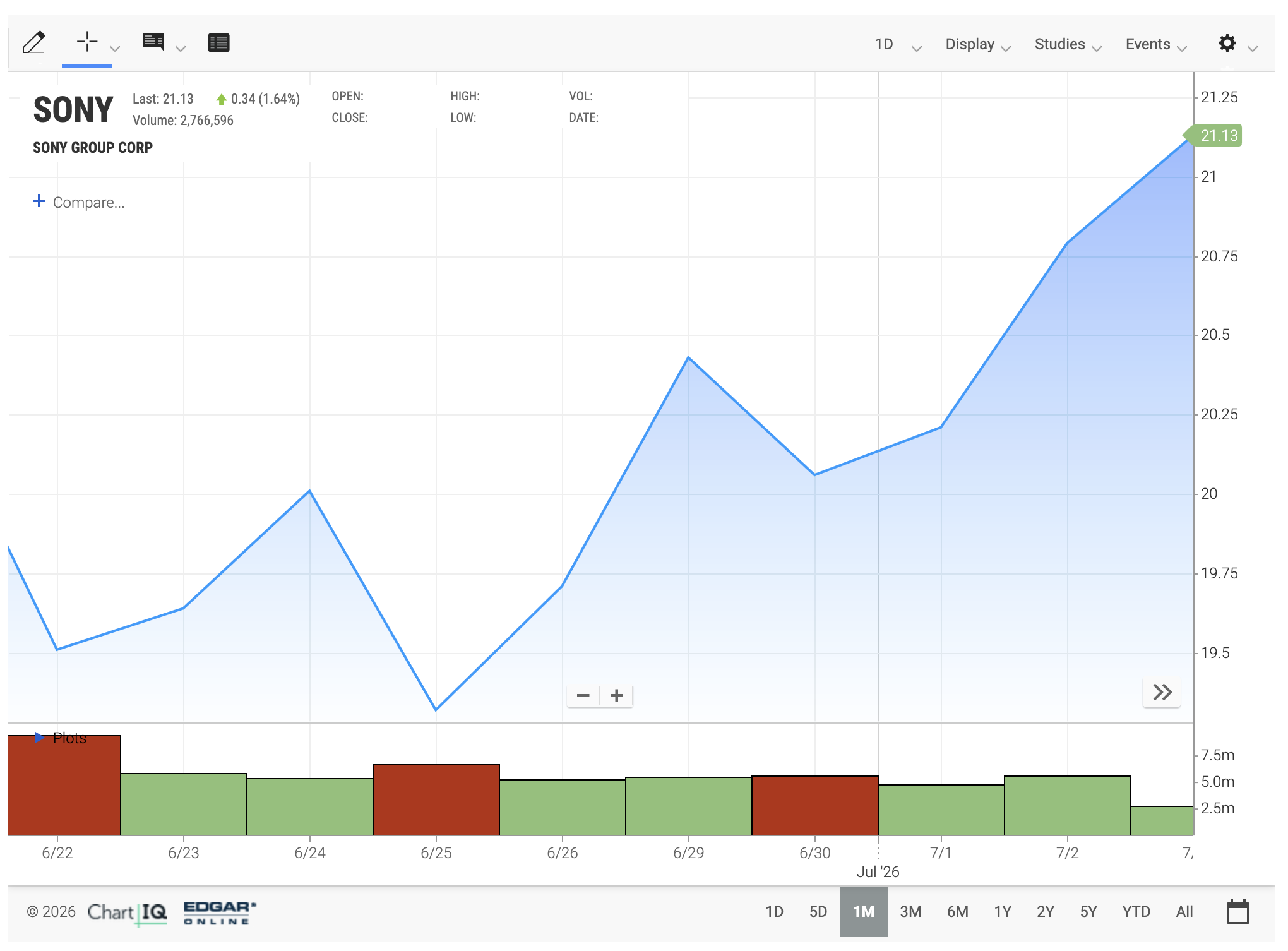
Many PlayStation owners have taken to social media to protest these changes, posting images of their physical game collections and vowing to avoid the console in the future should titles be available only digitally, whereas investors seem to view this move positively as the value of SONY stock has risen 8% on NASDAQ since June 26. (Obv. many other factors could affect this stock price.)
I don't normally cover video games on the Beat, and I don't plan to start doing so, but board gamers have had complaints similar to those of PlayStation owners over the years, wondering how long an app-based board game will be playable before publisher support ends or lamenting a Golem Arcana buy-in on Kickstarter after seeing the studio shelve development a few years later.
It's all well and good to complain about such things on BoardGameGeek and social media posts, but complaints mean nothing if sales remain strong. If you object to some aspect of a game release, I would argue that the only meaningful actions are to:
- Not buy the product, and...
- Contact the publisher to explain why you're not buying the product.
Sure, you might also record a video, write an article, post on social media, etc. to try to drum up support for your position, but publishers need to hear directly from buyers, potential buyers, and non-buyers in order for change to occur in the future.
I know from experience that while some (smaller) publishers have Google alerts for their name or look for feedback on Facebook and elsewhere, most publishers don't. They won't know that you're unhappy about a game unless you contact them directly, so please do that. Nothing might change in the publisher's plans — but if they don't hear from you, then nothing will change.
Like this kind of board game industry coverage?
Get Board Game Beat’s free posts by email — original reporting, designer interviews, and industry news, with no tracking, no ads, and no spam.
If, for example, you refuse to buy games that don't have quad-indexed cards, tell the publisher about this decision. Maybe they hadn't considered this an essential graphic design element before, but for the cost of $0 they can expand their future market. Refuse to buy a game without room for sleeved cards? Tell them. Refuse to back a publisher's project that features crowdfunding exclusives? Tell them.
The same goes for complaints about purchased games: unclear rulebooks, colored pieces too similar, lack of player aides, tiny cards, components that don't work, poor quality cards — whatever the point of friction is that might keep you from purchasing that publisher's games in the future, tell them. The first step to addressing a problem is knowing it exists, at least for some segment of the potential userbase, so please do your part.
Have you ever contacted a publisher about a product decision or component problem? Did you receive a response—or see anything change?


