

We've slipped into the second half of 2026, so perhaps it's time to focus more on games debuting at Gen Con and SPIEL Essen.
One company that will have something new at each show is Italian publisher Horrible Guild. I've already covered the July 2026 release Similo: Wonders, and that title will be joined at Gen Con 2026 by the debut of Rocking Raft, a 2-4 player design by Carlo Emanuele Lanzavecchia that plays in only 15 minutes.
Given that playing time and a suggested age range of 6 and up, you can anticipate simple, straightforward rules. Each player starts with two lifeboats featuring some combination of red, yellow, and blue gem containers.
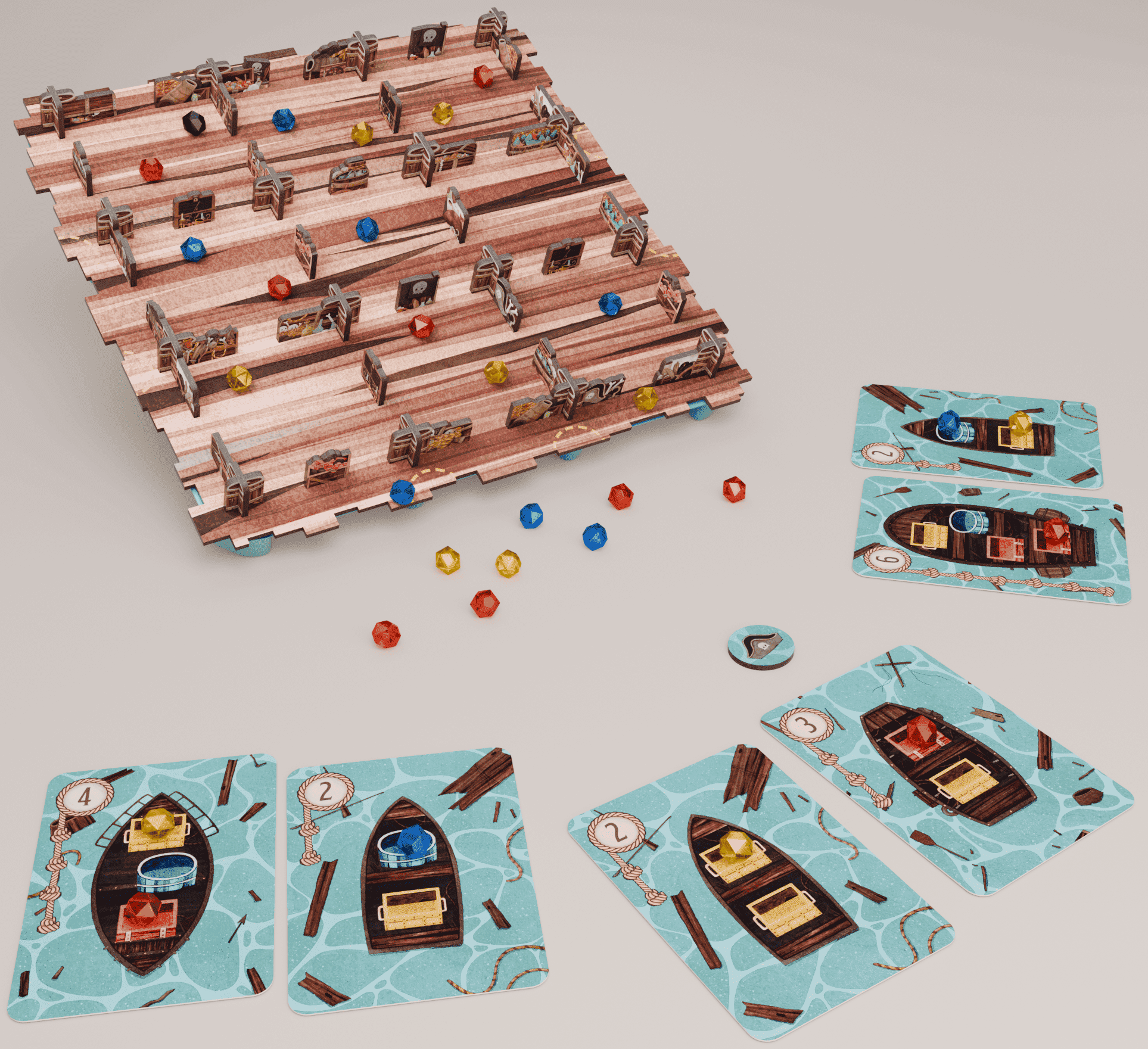
On a turn, you place a finger on one of the eight designated spaces, then press that edge of the raft to table, collecting any gems that fall off the raft through gaps in its walls. Fill your lifeboats as best as you can, with black gems going in any space, then pass any remainders to the left — and with opponents getting your leftovers, you want to picky about where you press on the raft and how long.
If you've filled a lifeboat, return those gems to the center of the raft and draw a new lifeboat. After a certain number of boats have been scored, complete the round, then tally your score.
The game includes a more challenging variant in which you place a water token on each of your lifeboats at the start of your turn. If an unscored boat has two tokens at the end of your turn, it sinks, freeing up those gems for others to grab.
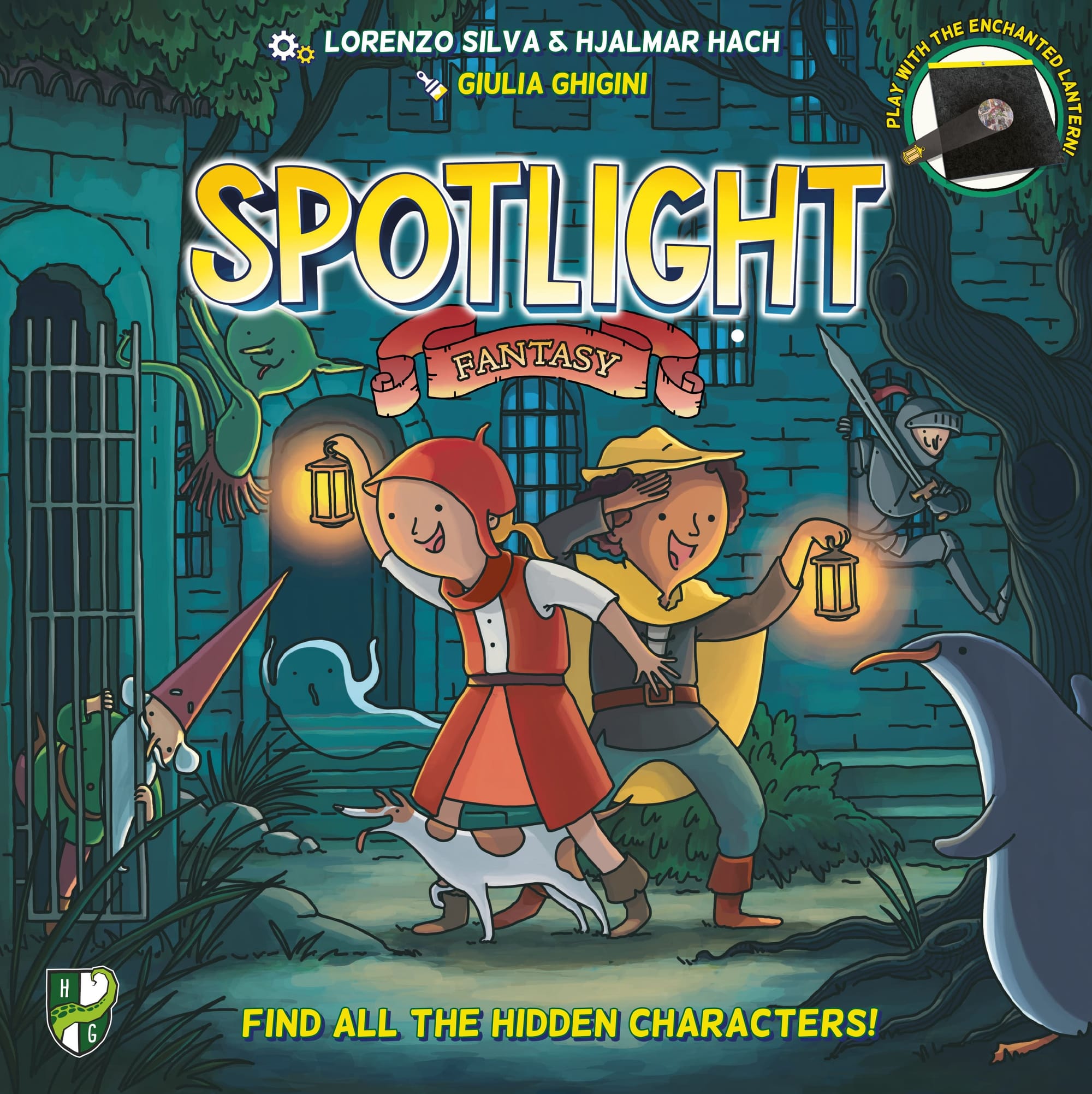
For SPIEL Essen 2026, Horrible Guild has two new releases, one of which — Spotlight: Fantasy by Hjalmar Hach and Lorenzo Silva — features gameplay identical to 2024's Spotlight, which I previewed in coverage of Gen Con 2024.
In this "Where's Waldo?"-style game, each player has their own game board with a different drawing on it, but you can see the drawing only by using your "flashlight" to reveal part of it. That "flashlight" is a long strip of thick paperboard that has a white circle at the end, and your game board consists of an illustrated piece of plastic on top of a black background, so when you slide your flashlight between the two surfaces, the white circle from the flashlight "illuminates" the scene.
In a round, you reveal a character card, then everyone has one minute to count how many times they see that character on their game board. You set your dial to that number, then once everyone is ready, you flip over the card to reveal the number. If you guessed more than the actual count, you score nothing; if you guessed less, you score stars based on the number you guessed; and if you guessed exactly the right number, you earn a bonus point. (Every board has the same number of each character on it, but the drawings differ on each board.)
The Amazing Journey is another Hach/Silva design, and it will be available during demo events at Gen Con 2026 ahead of its release in time for SPIEL Essen 26.
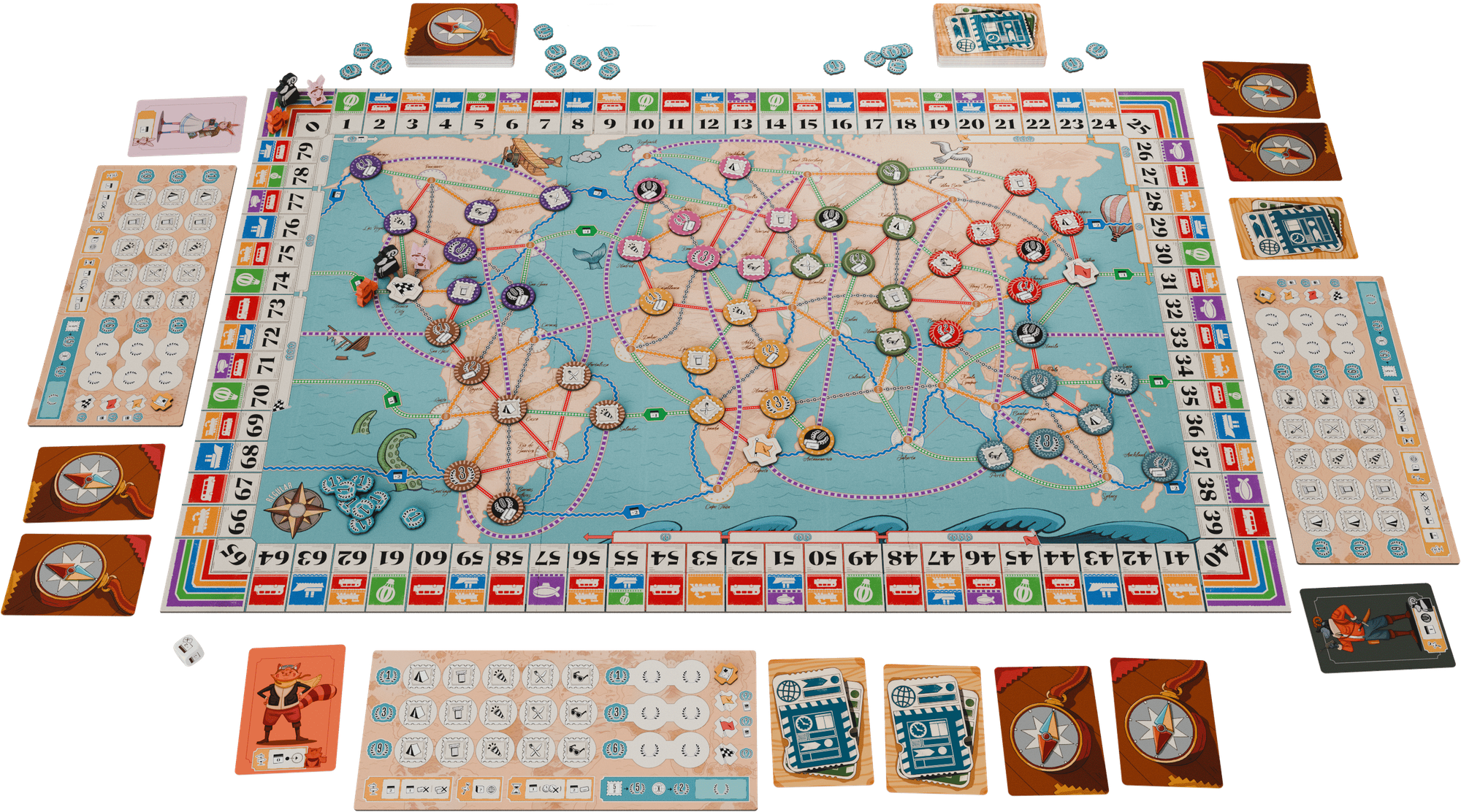
This game is another take on Jules Verne's Around the World in Eighty Days, with anthropomorphic animals being featured since this is a mid-2020s release. Each of the 2-4 players takes a different animal, as they all have a unique power, and makes a three-stage journey around the globe, but you're not trying to be the first to finish; instead you need to have the most points once everyone has finished their trip.
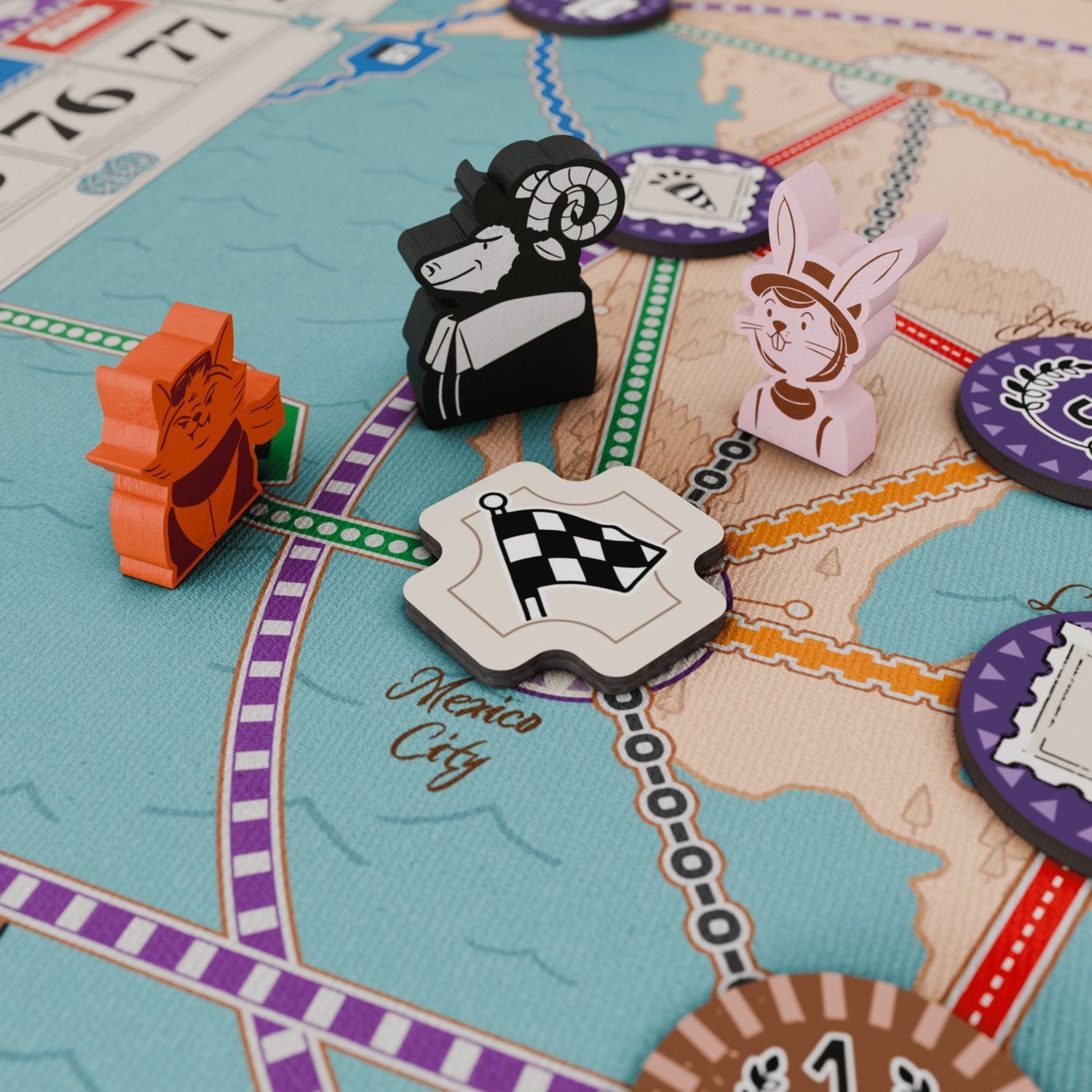
The numbers circling the board represent the eighty days you have available, and you'll move a figure around that perimeter to track how many days you've spent. A second figure is on the game board itself tracking where you are, so in theory you could record a game chess-style: 0-Mexico City, 2-Los Angeles, etc.
On a turn, you take at least two actions and must end your movement at least as far along the numbered track as anyone else. Actions consist of travel, explore, and wait, with a couple of variations mixed in.
To travel, look at the city where your figure stands and the number where your other figure stands. If you're on the 3, for example, you can take a bus (red) or train (yellow) route from your current city to another location on the same route at a cost of 2 days; if you hit a checkpoint or a location token — with 6-8 tokens in each of seven colors starting on the board — you must stop.
If you're on the 3 and want to travel via another method, you must pay a ticket card for that method (or two tickets as a joker) and spend 1 day making that trek. (The corners allow movement on any non-secret route; those require you to spend two tickets.)
If you're on a space with a location token, you can explore to collect it, spending 2-4 days (in addition to possibly discarding or drawing a ticket) based on a die roll to do so. Some tokens give you points and tickets, while others contribute to a set scoring system, with you wanting to collect all five experiences, three of the same experience, tokens from all seven regions, or (preferably) all of the above.
Collecting tokens can let you score objective cards, which are worth only 1 point, but you always have two in hand, so they can make exploring 23% more enticing.
Waiting costs 1 or 2 days, giving you the ability to move to a desired transportation method, while also gaining a ticket or flushing your objective cards for new ones.
You must hit the first checkpoint before the second, and the second before returning to the starting location, and you gain points based on when you reach those checkpoints. What's more, you refresh your unique power at a checkpoint, giving you three opportunities during the game to, for example, use a ship route for 0 days no matter which routes are depicted next to your figure, move your figure back one space on the track, or pass through cities despite them containing location tokens.
The route-planning aspect of movement, along with the points from location tokens, means you're not concerning solely about speed, but if you do take longer than eighty days, you'll up points to make up the difference, so don't dally too much.


