

In February 2026, I posted an overview of a few games coming from French publisher IELLO. A couple of those titles — King of Tokyo: Duel – Tokyo Bay and King of Tokyo: Godzilla — are new entries in existing game lines, so you'll generally know what to expect when playing them, i.e., monsters smash...but in new ways with new monsters!
Two other titles — Fragments: Solara and Fragments: Fungataï — present players with a novel experience, so I thought I'd give a teaser of what to expect should you try them. These games both come from Yohan Servais, who has previously designed Unlock! challenges and IELLO's Guilty game line. If you're familiar with those titles, you'll have some idea of what to expect when playing Fragments: You're placed in an unusual situation and must use tools at your disposal to...do something.
As I wrote earlier, Fragments is akin to an escape room-style, point-and-click adventure — except that instead of clicking, you'll "unlock" puzzle pieces from cardboard "sleeves" as you make your way through the story, then use these pieces to construct a scene or take actions, learning new information that will further the story and introduce new puzzle elements.
Each Fragments title includes a tutorial to teach you the game system. The tutorial's adventure book presents you with a situation, then instructs you to "open" an indicated piece. You'll find that piece's icon on a cardboard tab sticking out of a sleeve, then pull out just that one sleeve from the "wallet" and punch out the piece.
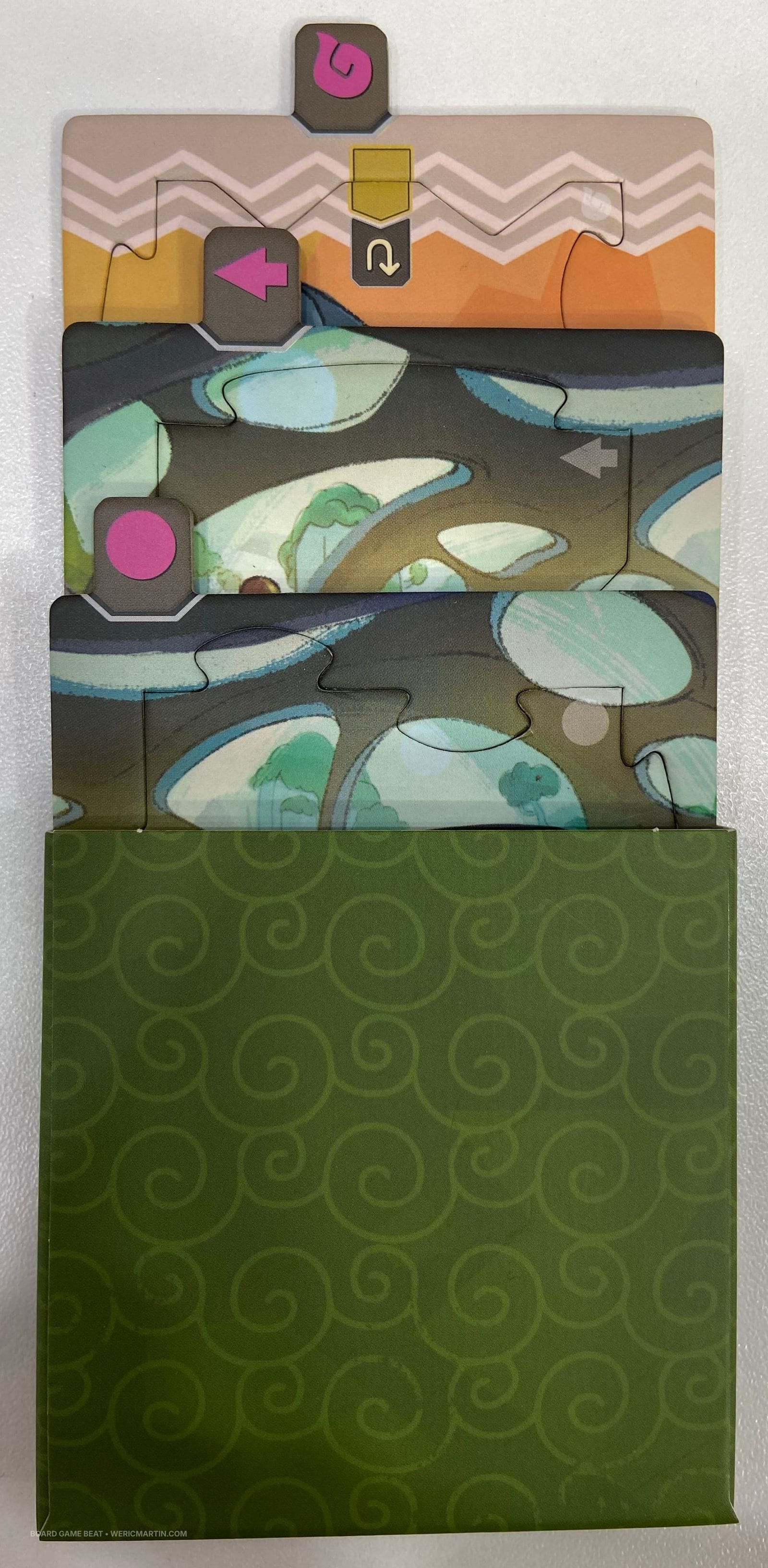
A piece might have an icon on it that sends you to a new page in the adventure book, with the book then telling you something about what you're looking at — or the piece might feature a lightning bolt next to an icon, which means you should pull out another piece. How do those pieces fit together? The piece might have a hooked arrow on it indicating that you can flip it to the reverse side whenever you choose to do so. When should you do that? These choices are up to you to determine by using the imagery on the pieces, along with elements from the story.
Fragments: Solara is a self-contained adventure that plays in 90-120 minutes, whereas Fragments: Fungatai is a four-adventure campaign that will collectively take 6-7 hours to finish. Fragments: Fungatai will debut at SPIEL Essen 26 in French and English editions from IELLO and a German edition from Pegasus Spiele, with Solara appearing prior to that.
If you want to know nothing else about these titles, skip everything else that follows, but IELLO gave me a mock-up of the first part of Fragments: Fungataï at Spielwarenmesse 2026, so I'll present a few gameplay elements below, keeping spoilers to a minimum in this first chapter of the story that takes an estimated 40 minutes to resolve.
To start, here are the components included in chapter 1 of Fragments: Fungataï:
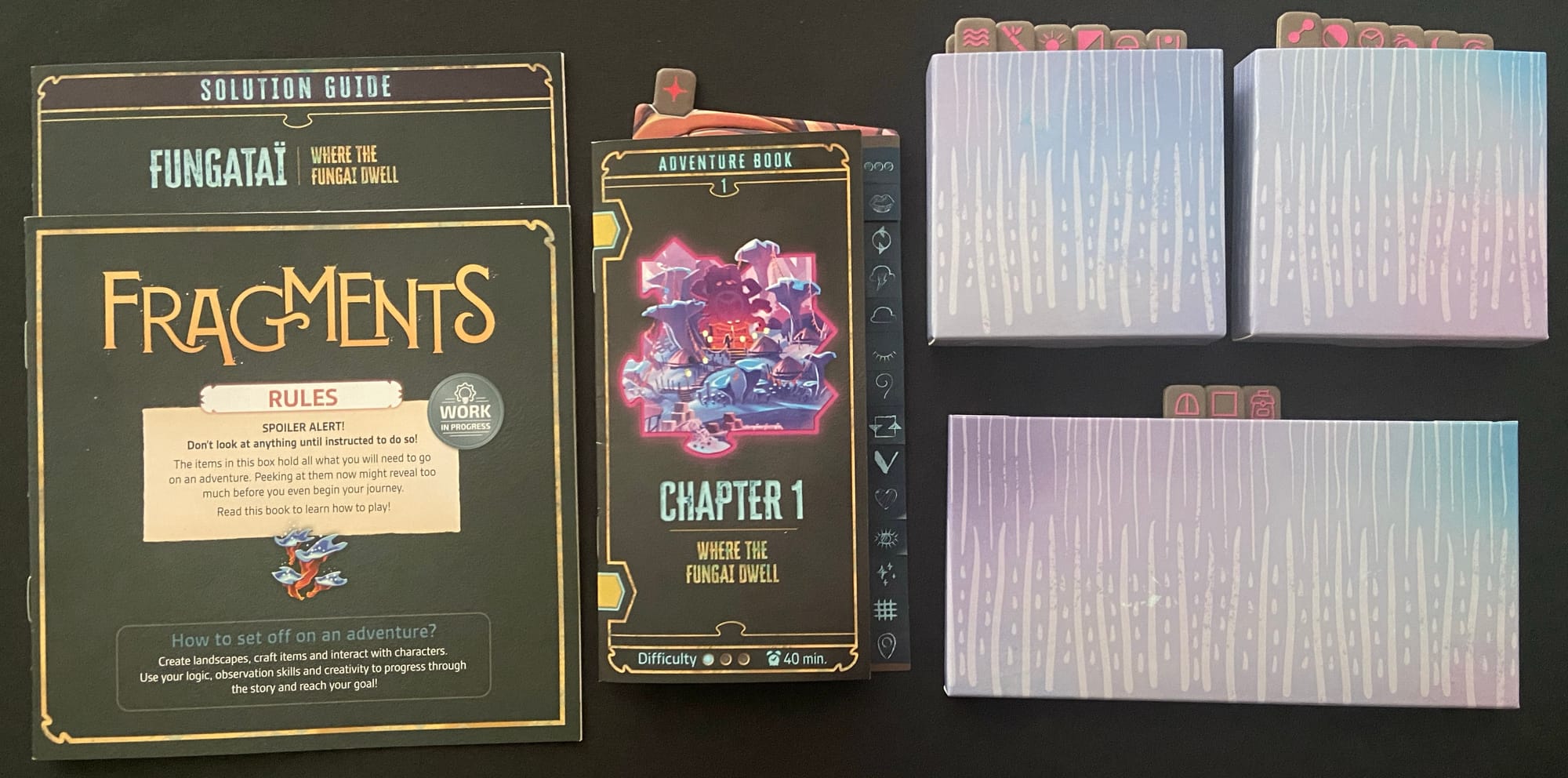
The rules manual details how to interpret icons included in the adventure book and on the puzzle pieces. At the bottom of this post, I'll include a summary of those icons from the back of the solution guide so that you can first see how intuitive you find these icons.
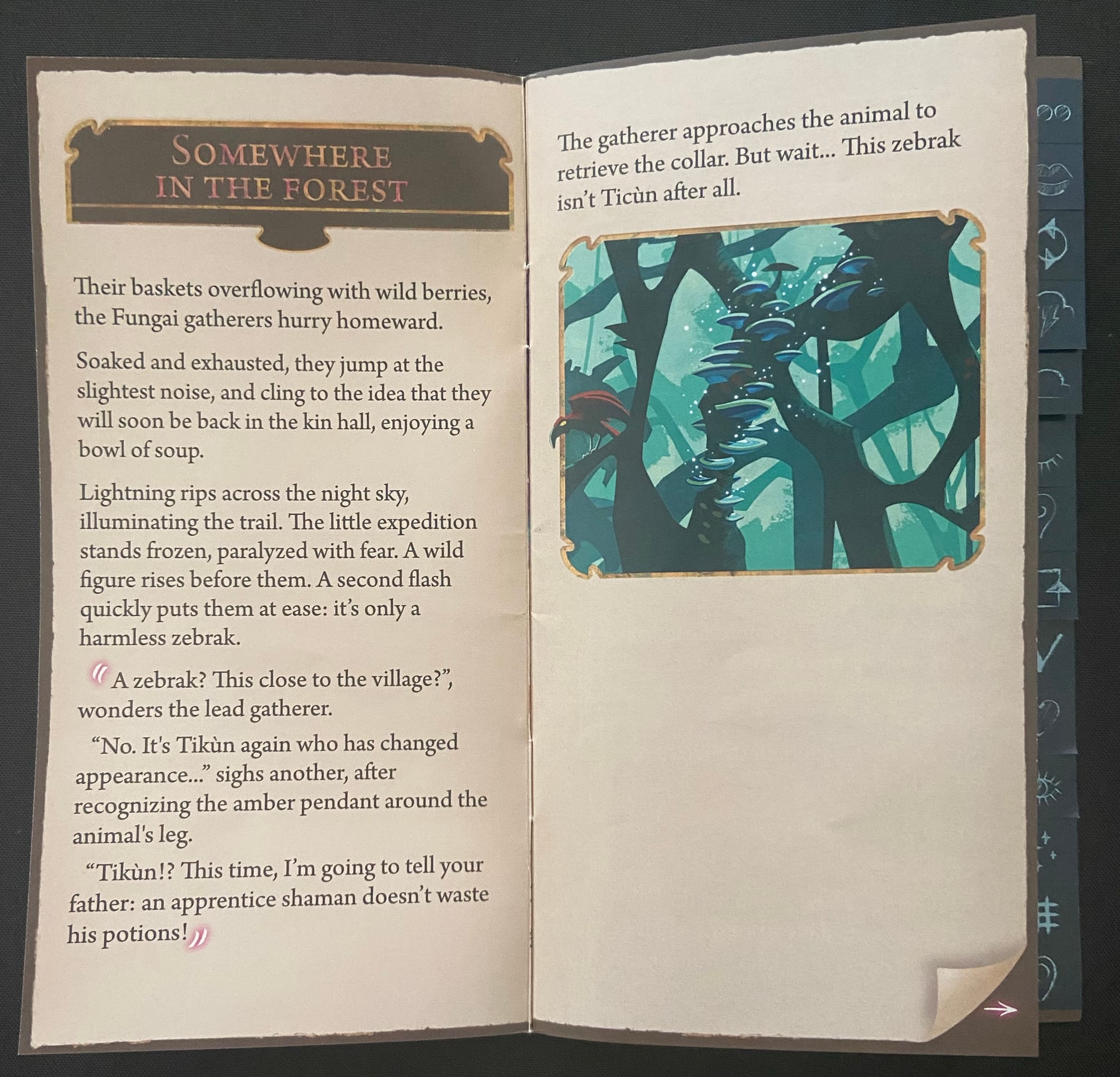
To get started, the rules manual tells you to read the first pages of the adventure book:
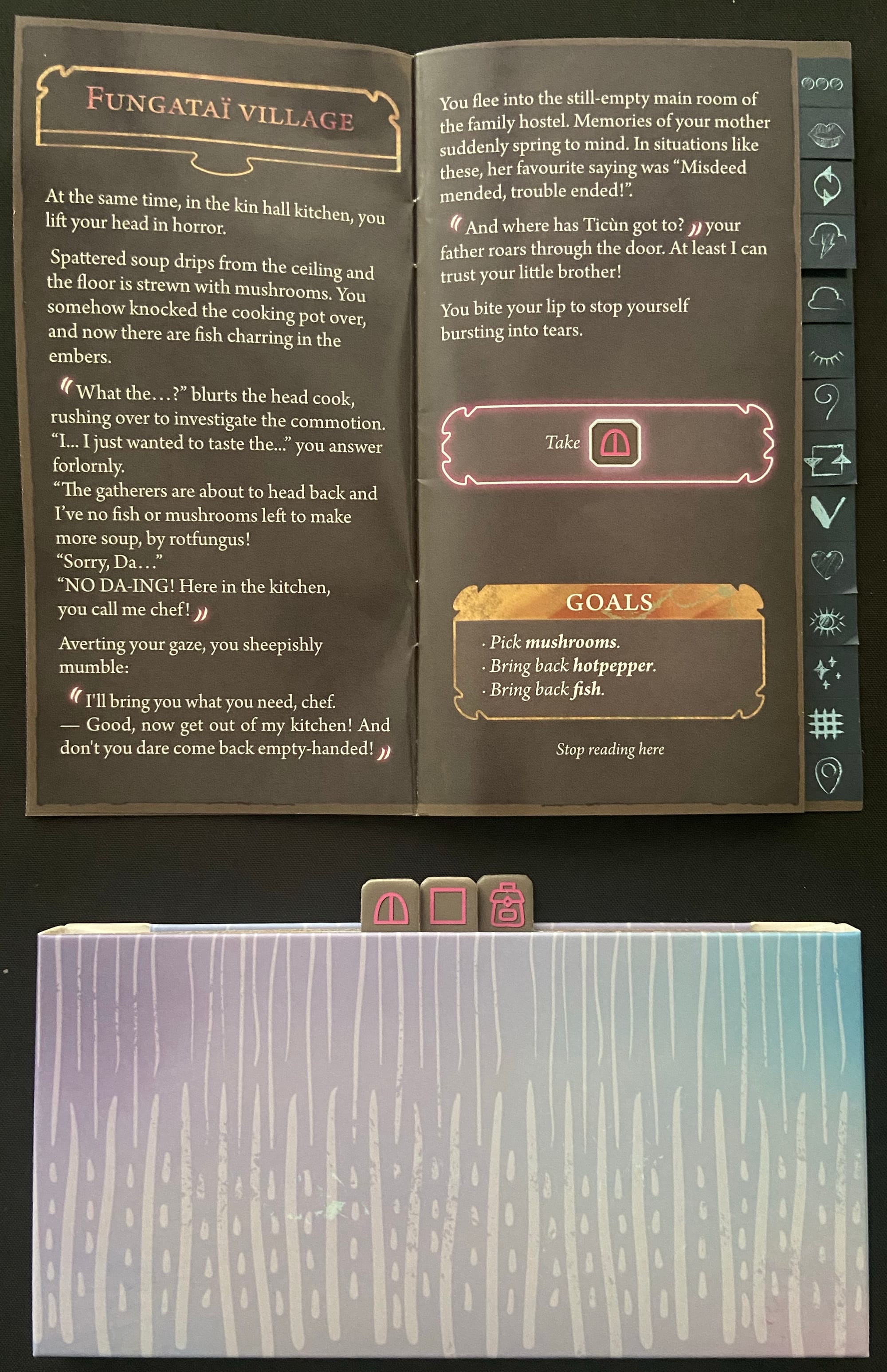
You now have a few goals — pick mushrooms, and collect hotpepper and fish — as well as your first "Take [icon]" command, so let's pull that sleeve from its wallet:
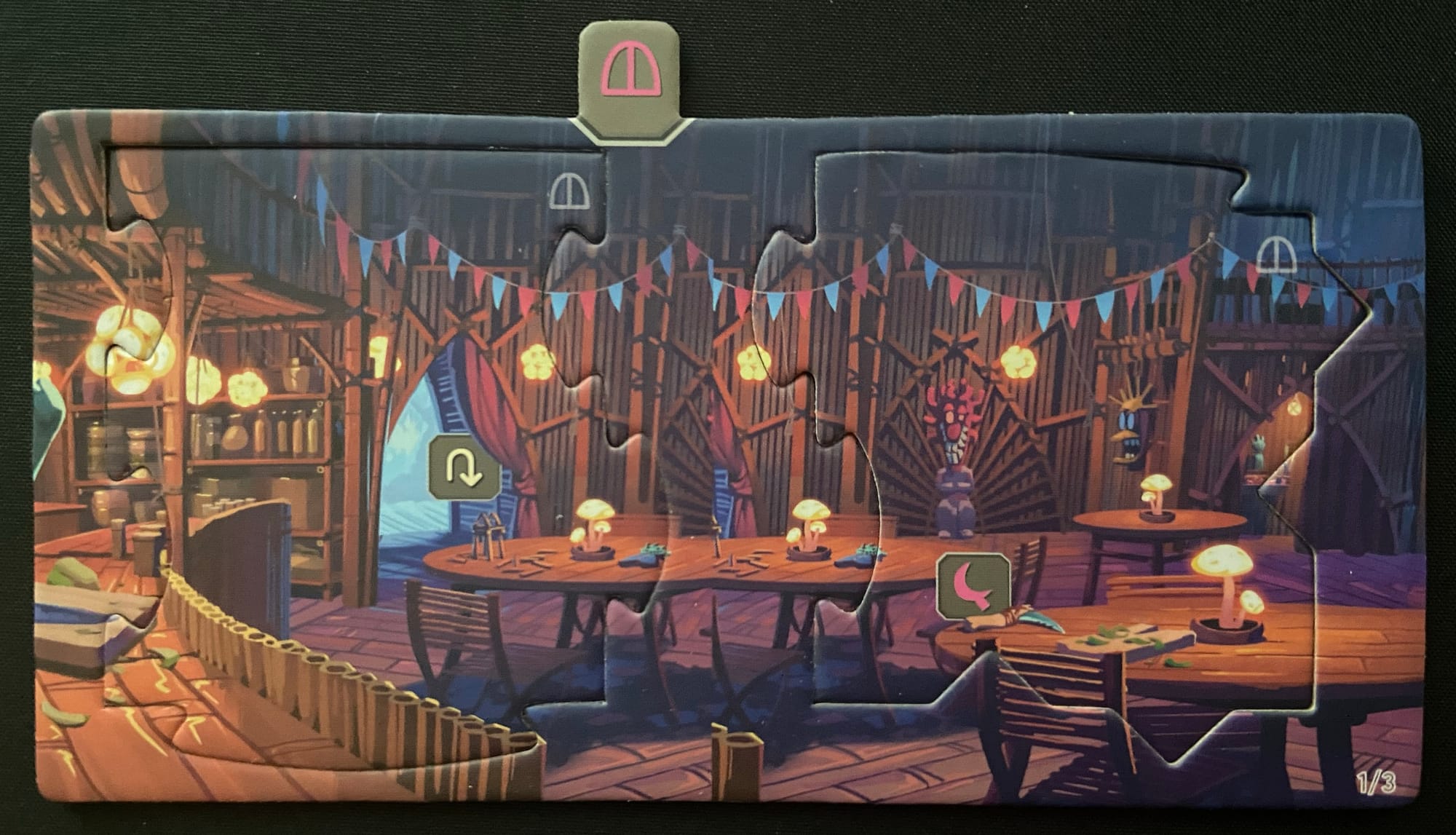
You should punch out puzzle tiles as soon as you pull a sleeve from a wallet...but you might be distracted by symbols on the tiles, such as the "flip over" arrow icon and another "Take [symbol]" icon.
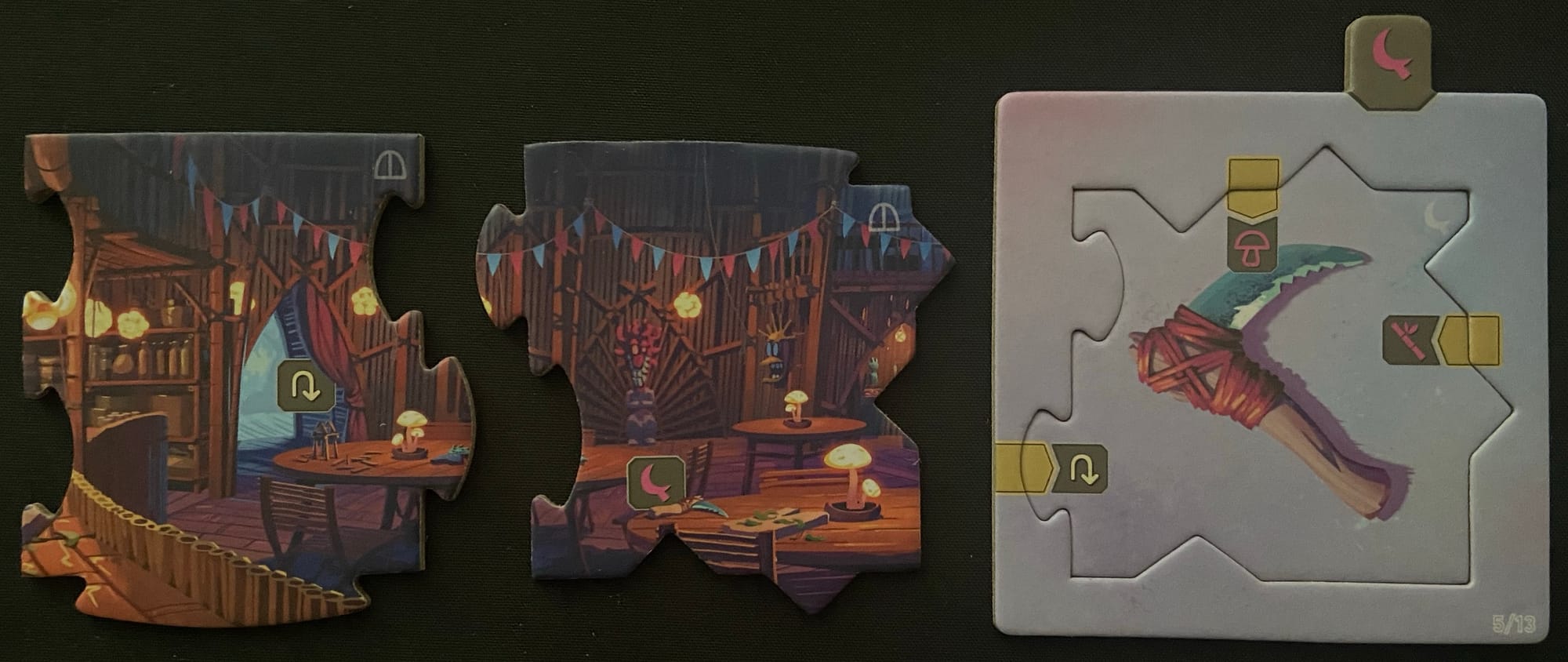
Some puzzle pieces have jigsaw-like connectors as with the two on the left above. If the connectors fit together — and the edges of the tiles line up(!) — then go ahead and piece them together.
The cutting tool on the right has a "flip over" arrow command, but the yellow arrow leading to the arrow means you must first connect this tile to another before flipping it over. The same is true for the "Take [mushroom]" and "Take [bamboo]" icons. You can't pull those sleeves from the wallet until you "use" the cutting tool correctly.
(Of course, you could pull all of the sleeves out immediately and punch every piece. You could flip over all of the tiles whenever you want, but the story is crafted in a way that gives you enough to work with, without being overwhelmed.)
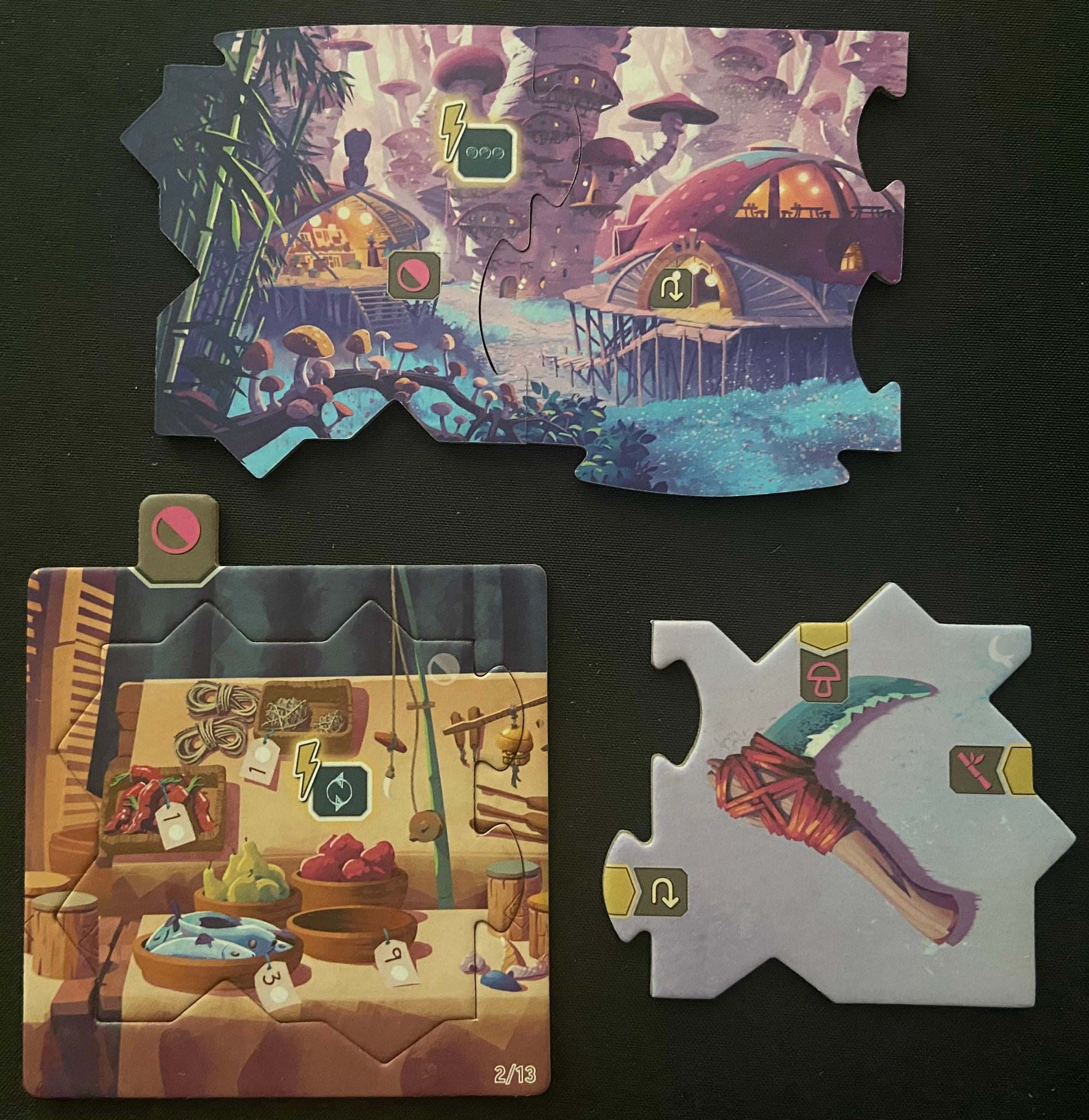
If pieces are jigsawed together and you use the "flip over" command, then all of those pieces flip together, as with the two pieces above. Those pieces revealed three things:
- A flip-over arrow, so you can go to the other scene and back here as you wish.
- A "Take [icon]" command, so that sleeve is now on the table.
- A lightning bolt next to an adventure book symbol, so let's open the book once again.
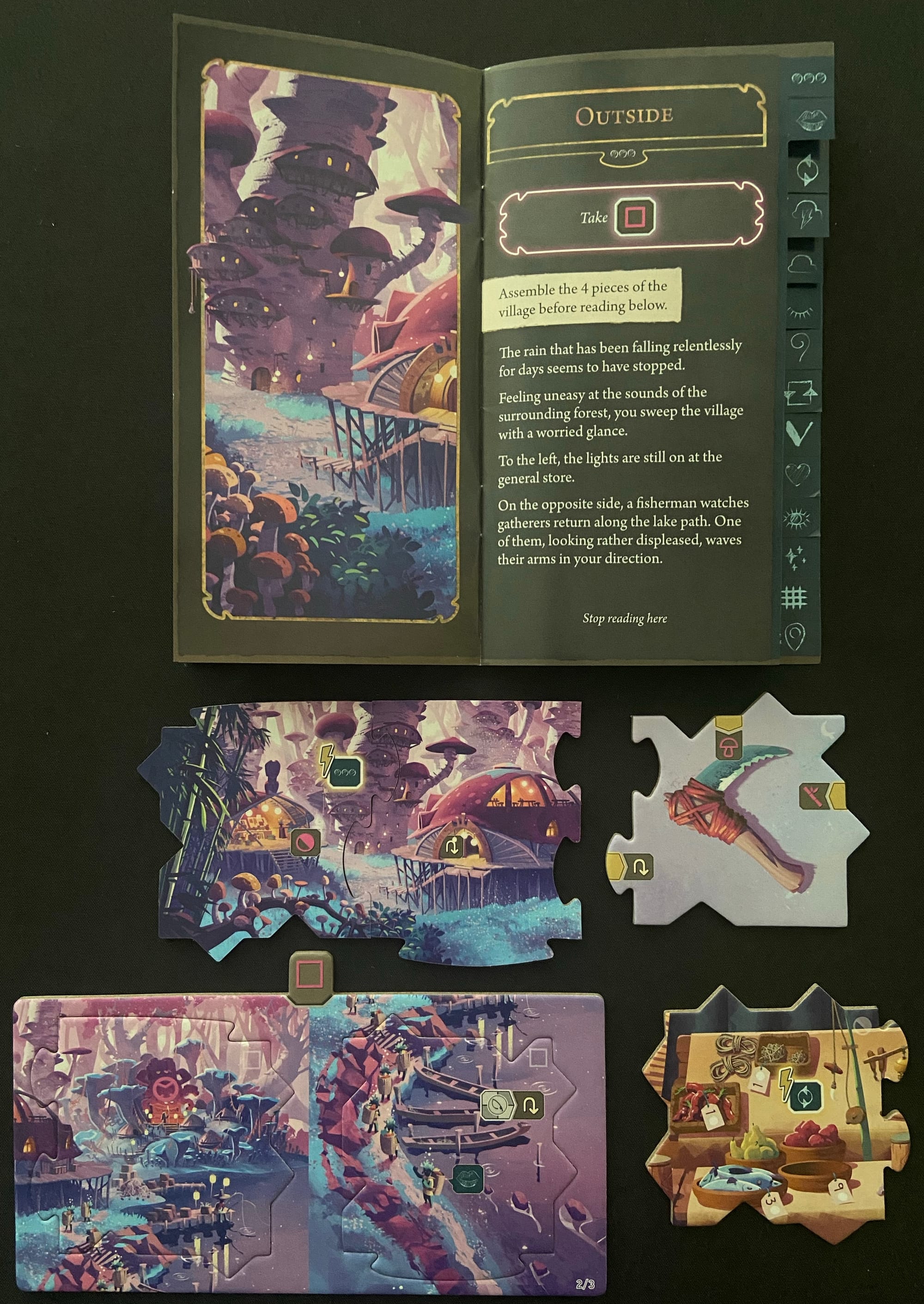
If you're going to find ingredients for soup — a common trope in adventure games — then you need to head outside, and the adventure book is taking us there by having us take out a new sleeve, then assemble those tiles into a village before continuing, and those tiles include another adventure book symbol, so let's flip to the "lips" page:
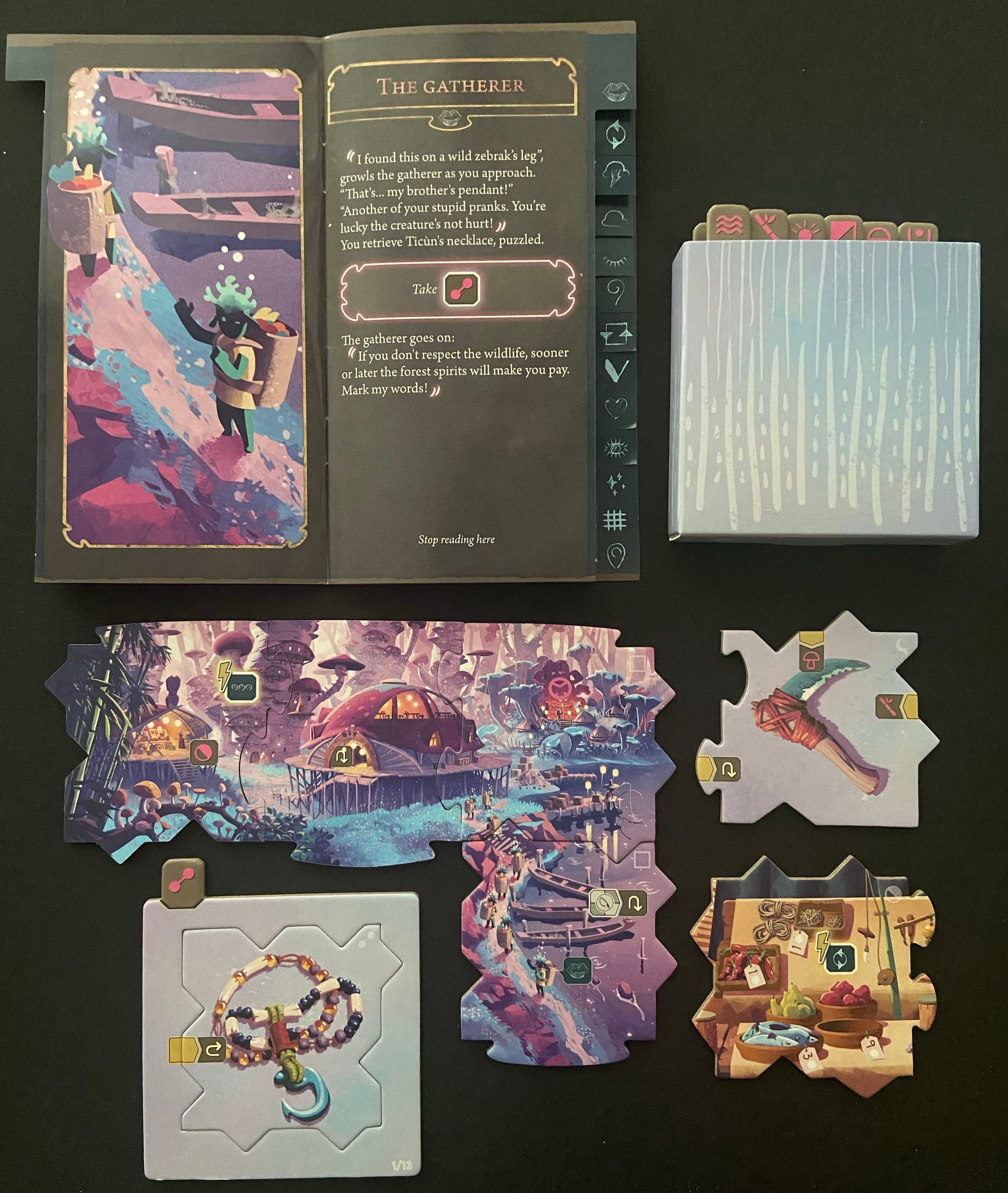
The "lips" has us talking with someone on shore, who tells us that they're recovered your brother's necklace...which means it's time to take out another sleeve. So much to work with here!
In addition to the jigsaw-style connectors, the pieces feature zigzag "connectors". You can try to fit pieces together to see whether they go, and the construction of the pieces will let you know whether tiles go together:
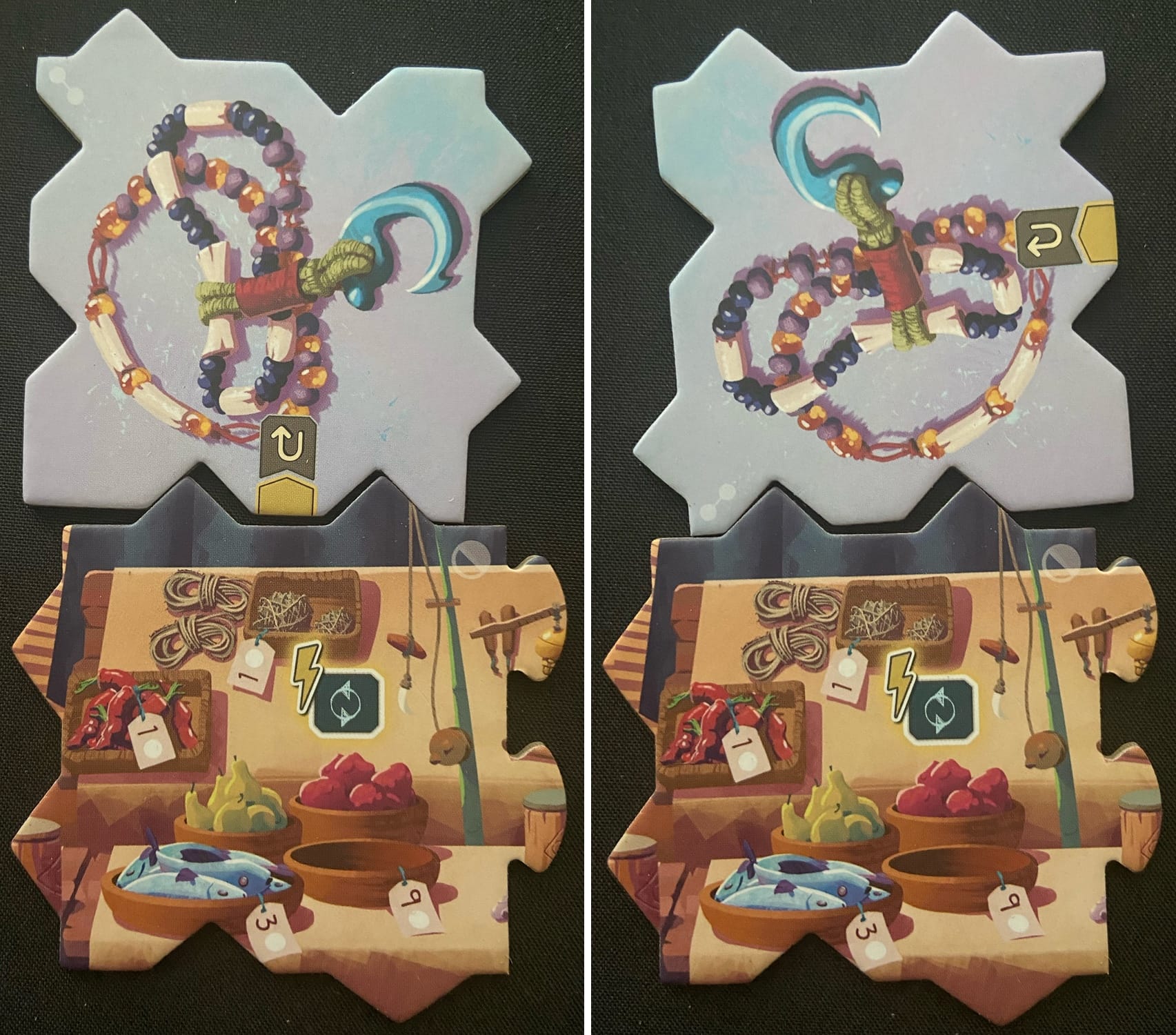
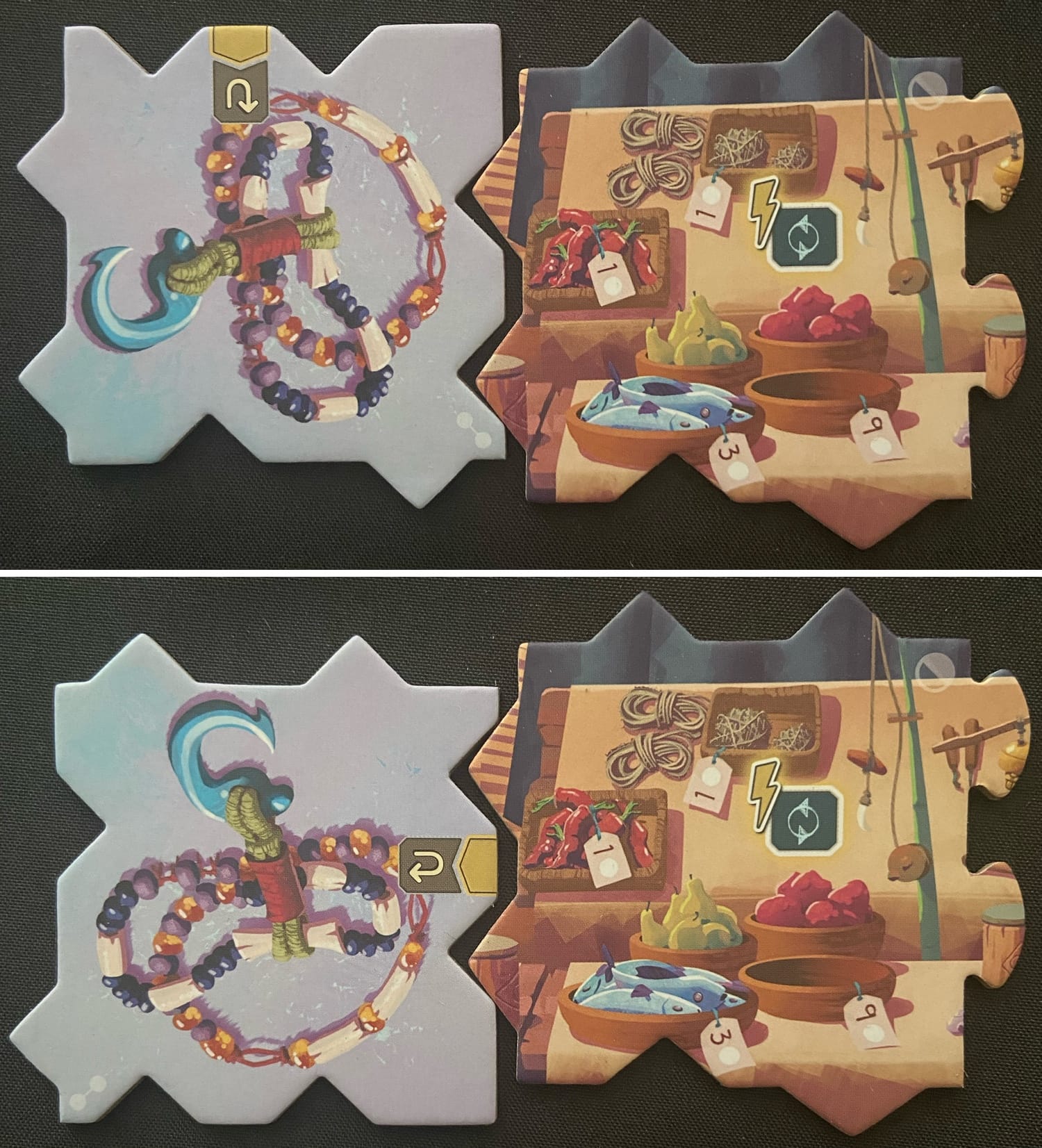
What's going on? What should we be doing? Maybe you need to revisit the story and see what you've been tasked with, such as picking mushrooms. Do you see mushrooms anywhere? If so, how would you collect them?
You might also review all that you've seen so far and realize you've overlooked something:
![The four-tile village scene is depicted, with a "Take [icon]" command circled because it's somewhat invisible on a background of the same color.](https://storage.ghost.io/c/5a/16/5a16635c-eb73-44ae-8dab-7c32ee8e4fd4/content/images/2026/08/fung12.jpg)
Yes, as in various Unlock! titles, you might have to look more closely at tiles than you originally thought. In this case, the village had a "Take [icon]" command I had overlooked.
Below this icon is a command I haven't yet explained that looks like a circle around a fishing pole on top of a grid of squares next to a "flip over" arrow. Here's how you read this command: You need to see a fishing pole symbol on a group of tiles that have been connected. Once you see this symbol, you can flip over this tile — and since this tile is connected only with a zigzag connection, not a jigsaw one, you don't flip over all four tiles in the village, only this single tile.
So you need to find or craft a fishing pole, which makes sense as your father told you to collect fish, so how are you going to get (or make) a pole?
As for the new tile we revealed, it features a lightning bolt and an adventure book icon, so we should head there before worrying about other things:
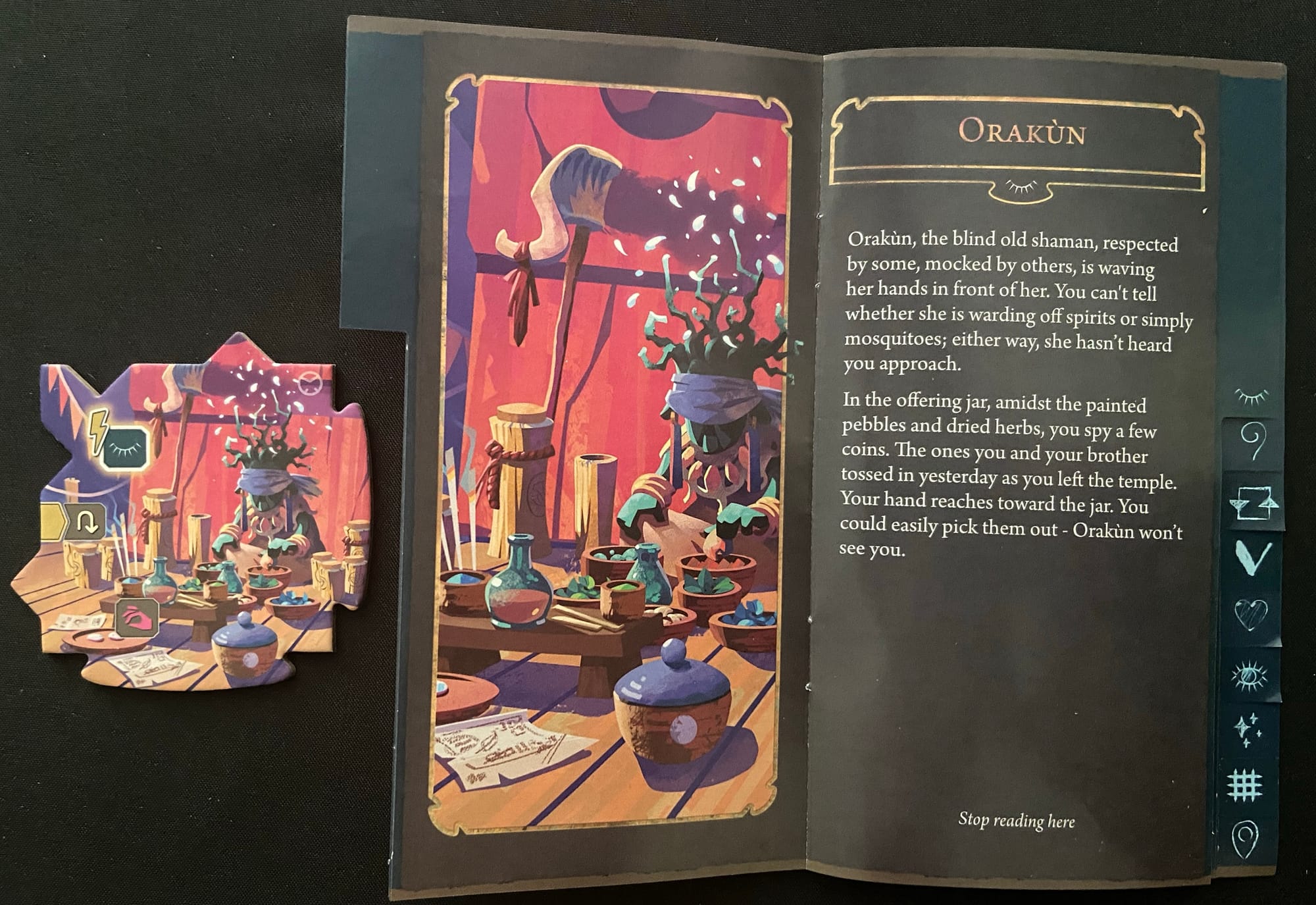
Ah, yes, the "Should you steal?" dilemma often presented in adventure games. Will you steal? Well, the "Take [icon]" command doesn't have a question mark on it. You're supposed to "Take [icon]", so grab that cardboard sleeve and see what comes of it. Congratulations, you're now a thief who robbed someone who's blind.
I'll leave off here in the playthrough of chapter 1, with only a handful of pieces punched out and much of the adventure book still untouched. You might have noticed in all of the above that you don't have choices for what to do. Fragments isn't a game in the sense of you having options, but rather a game in the sense of Myst and other point-and-click designs. Did you spot something or figure out how to assemble a tool or discover a new location? If so, then you've progressed. Keep going. Eventually you'll figure out everything and "win", although losing was never an option unless you just stopped altogether.
In my playthrough of chapter 1 — which I've done twice, missing the same thing (not mentioned above) each time — nothing is destroyed. You set aside the puzzle piece sleeves and can re-assemble everything, so once you're finished, you can sell or give away Fragments to someone else. Maybe this situation changes in later chapters, but I haven't seen those.
To close, here's a summary of commands from the back of the solution guide:
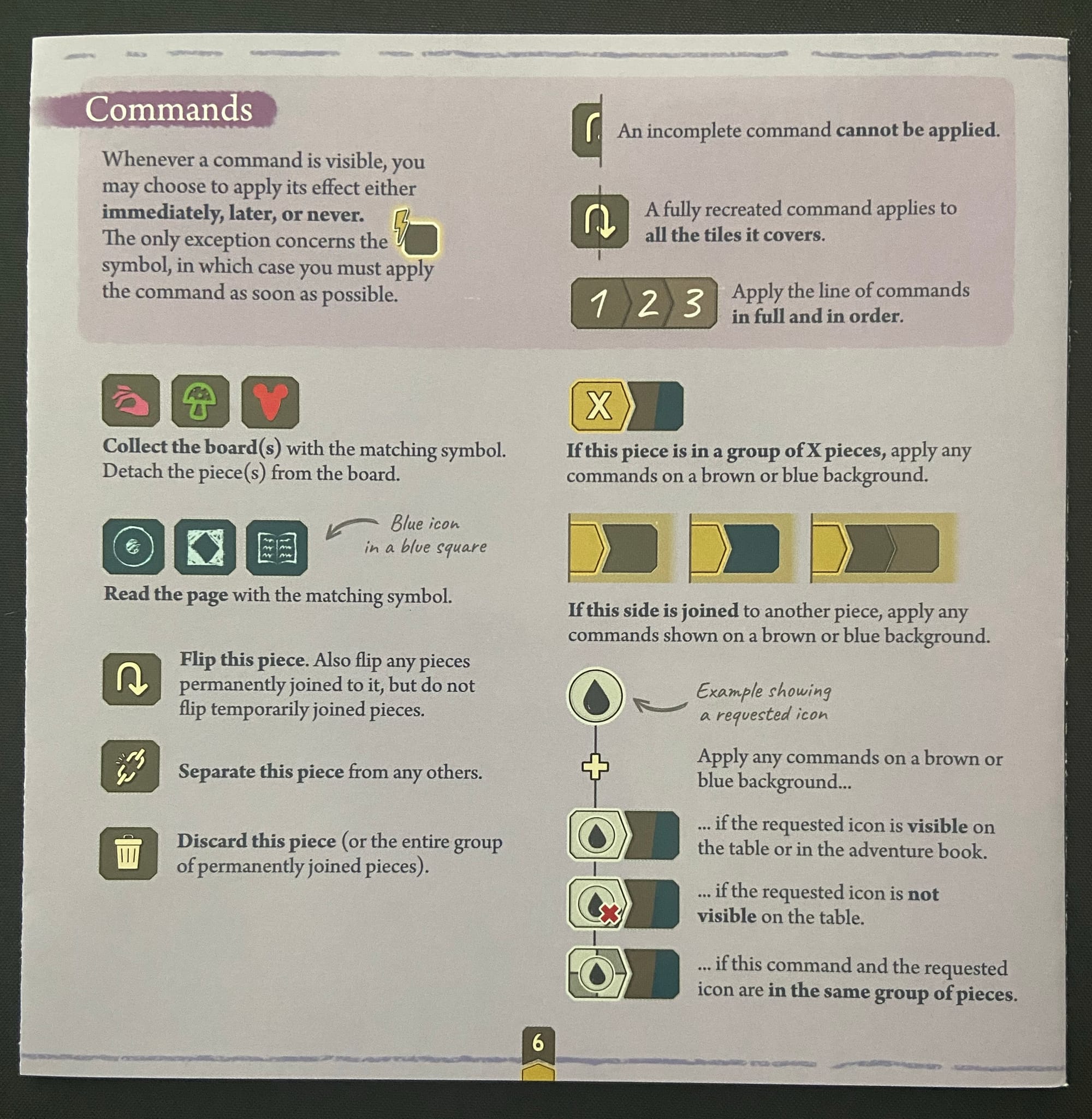
The commands on the lower right are what has messed me up. You need to see (or not see!) a specific icon, possibly on its own and possibly on a group of connected pieces. Additionally, you want to keep the story in mind. What are your assigned tasks, both immediate and more long term? Why are you doing something? What would be the next step?
I've played almost no computer games along these lines, so my brain doesn't naturally think in these terms. I want to start piecing together everything, brute-forcing a solution from what's on hand, but if I stepped back and considered my assigned tasks, I'd probably be able to figure out what to do more quickly.
Probably.
Want more game previews like this one?
Get Board Game Beat’s free posts by email — original reporting, designer interviews, and industry news, with no tracking, no ads, and no spam.


