

Let's sample a trio of after-dinner treats that might inspire you to clear away the dishes more quickly than normal:
Melted
Designer Ami Baio of Pink Tiger Games debuted in 2018 with You Think You Know Me and has crowdfunded other party game projects since then, but in July 2026 she released her first straight-to-retail game — Melted: A Messy Ice Cream Game — which also happens to be her first non-party game design. Says Baio, "Melted is my first game that isn't conversational — just a quick, fun, easy card game with a little sweet sabotage to play with anyone anywhere."

Melted is a traditional card-shedding game for up to seven players: If you can play a card on your turn, do so. Otherwise, draw a card, then play if you can.
You can think of players all working in the same ice cream shop and trying to satisfy a fussy customer who keeps changing their mind. You can add a matching flavor card to the existing cone, play a double-scoop card that allows two flavors to be played as long as it's visible, drop a cherry on top, use a napkin to discard the mess of the current cone and start a new one, and more.
To win, be the first to serve all of your cards or have the fewest cards in hand when the deck runs dry.
Fruit Cocktail
Designer Bruno Faidutti puts a different dessert in players' hands in Fruit Cocktail, a card game for 2-4 players released in late 2025 from Ghost Dog, a formerly independent publisher that Don't Panic Games purchased in mid-2025.
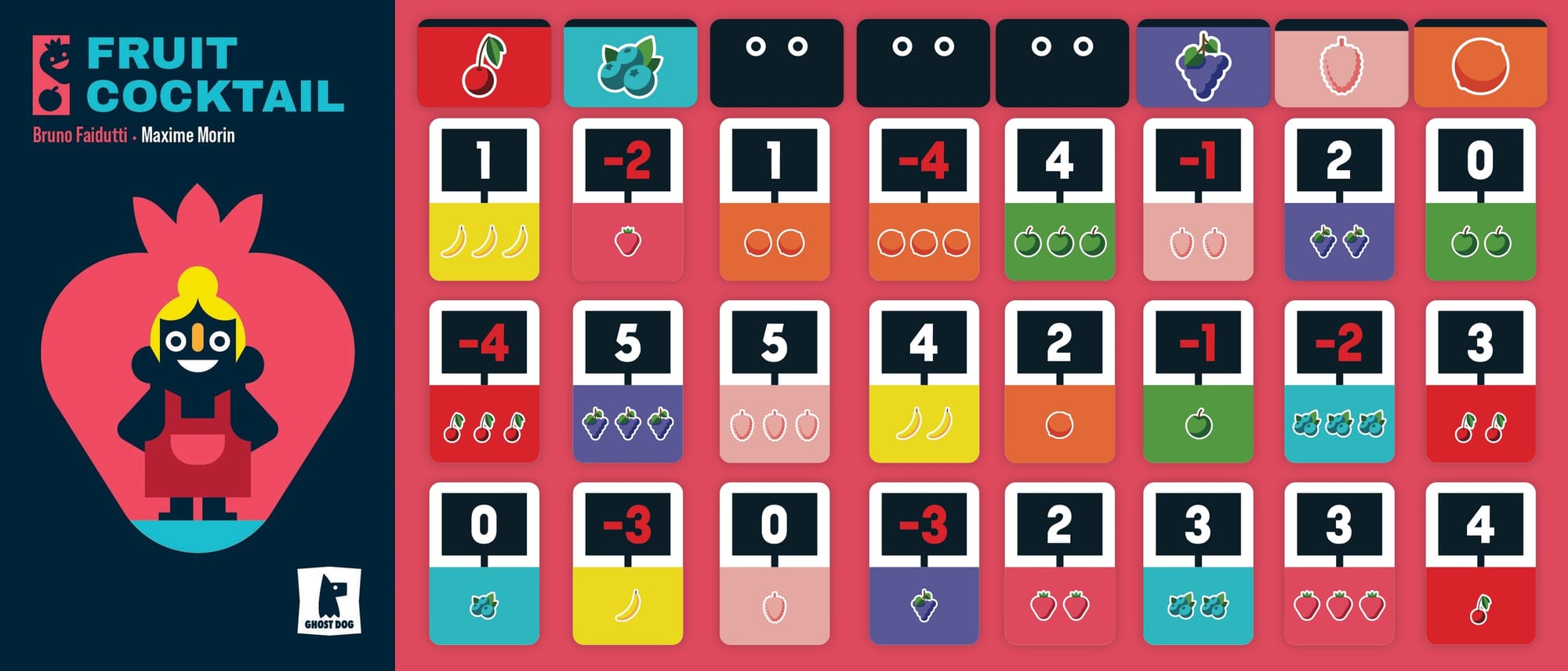
Gameplay is quick: Each turn, a player takes one of the cards underneath a fruit. When two cards have been claimed, the remaining card becomes the value for that fruit! Will blueberries be worth 5 points each, or less than zero? Time will tell...
Three of the fruits start face down, and players each get to peek at one of them, so the game contains a smidge of hidden information, which allows for a bit of bluffing and deduction — a tiny bit, given how short the game is. Perhaps you'll want multiple servings to improve your chances for a sweet ending.
Moonshine
Should you prefer treats in a liquid form, you might instead turn to Moonshine, a 2-5 player design from Thomas Dupont that French publisher BLAM! released in October 2025 and that U.S. publisher 25th Century Games is importing as part of a crowdfunding campaign.
Each player starts with a speakeasy and two clients — anthropomorphic clients, mind you, so I guess you're not actually dealing in illegal hooch. Not sure what the laws are for animal drunkenness in the 1920s.
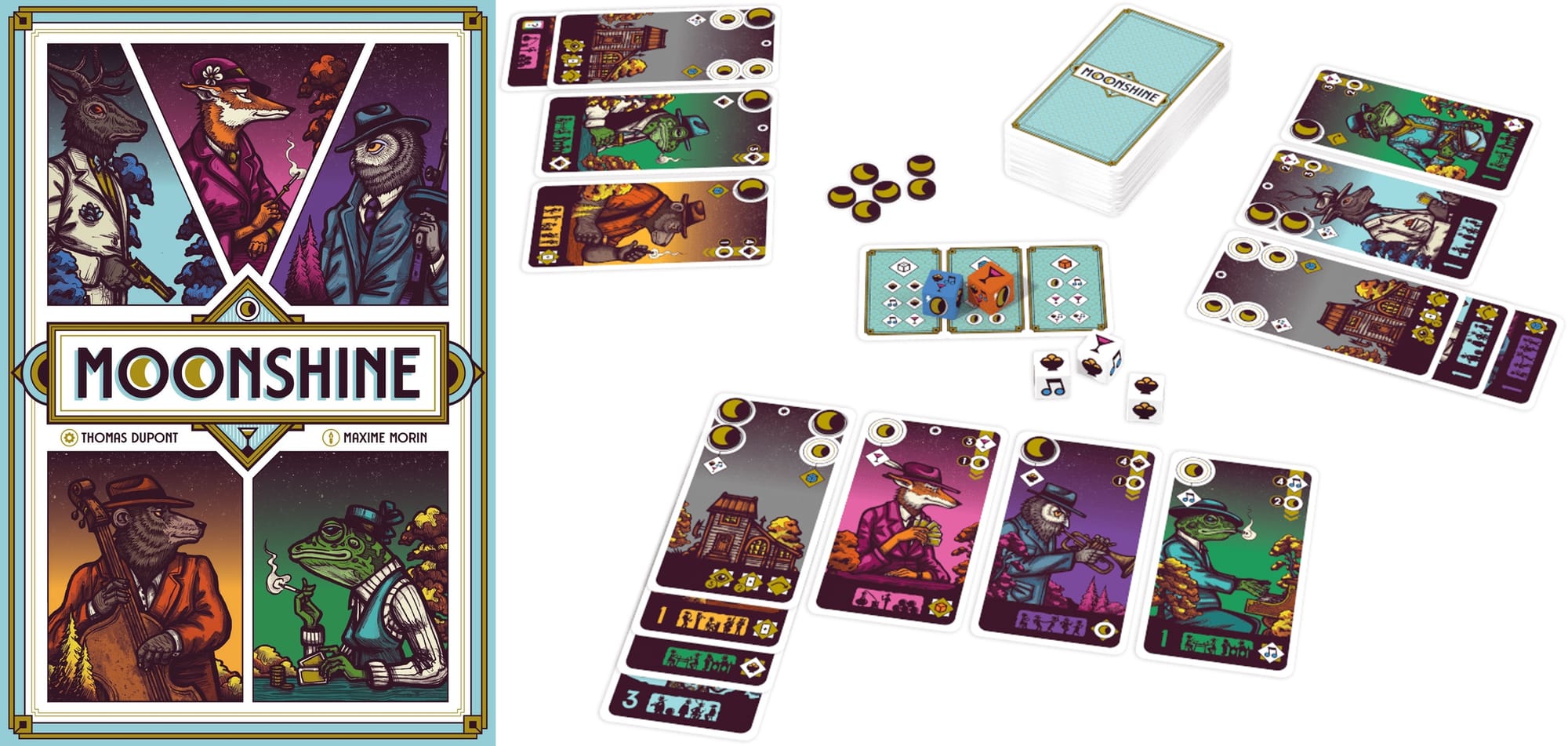
On a turn, the active player rolls the three white dice, then uses any re-rolls if they wish. All players then use the results to either validate a client card (assuming you can spend what's listed in the upper right corner); draw client cards, then optionally replace one of your current clients; or add a moon token to a card to possibly activate its special power.
How do moons do this? Your speakeasy and your clients have one or more moons in the upper corners, and if all moons in a column have tokens on them, you activate the depicted special power. The left column of your speakeasy, for example, gives you a resource icon of your choice, while the right column allows you to use the blue die, with this die being rolled only if the active player has this symbol activated. (The same is true for the orange die, and these special dice feature moons and joker resources.)
Once you validate a client, you tuck that card under your speakeasy, gaining the power in its lower-right corner. The powers from validated clients and full moons affect the number of re-rolls you have, cards you draw, current clients you have, and resources you add to the dice rolled — and since client validation requires you to spend one or more moons, you'll gain and lose powers over the course of play, akin to an inebriated frog swaying back and forth while deciding whether to squat back on its stool or start fighting some mouthy owl.
The game ends the round that someone hits 12 points, although experienced players can opt for a variant with a client draft, more powerful speakeasies, and a higher point threshold.
Want more games worth knowing about?
Get Board Game Beat’s independent coverage of new releases, industry news, and the people behind tabletop games delivered by email—free, private, and without tracking.


