

▪️ If you're curious as to what a day in the life of a board game designer/publisher might be like, Jason Tagmire of Button Shy Games has just the post for you. (I don't think I've played anything from Button Shy, but I enjoy Tagmire's posts about design the way that I enjoy video essays about movie production. More generally, I like learning about people solving problems while trying to make stuff. Any recommendations?)
▪️ In early May 2026, the research data and analytics group YouGov surveyed 1,131 U.S. adult citizens about their thoughts on board games. Some of the questions are routine, as demonstrated by this chart—
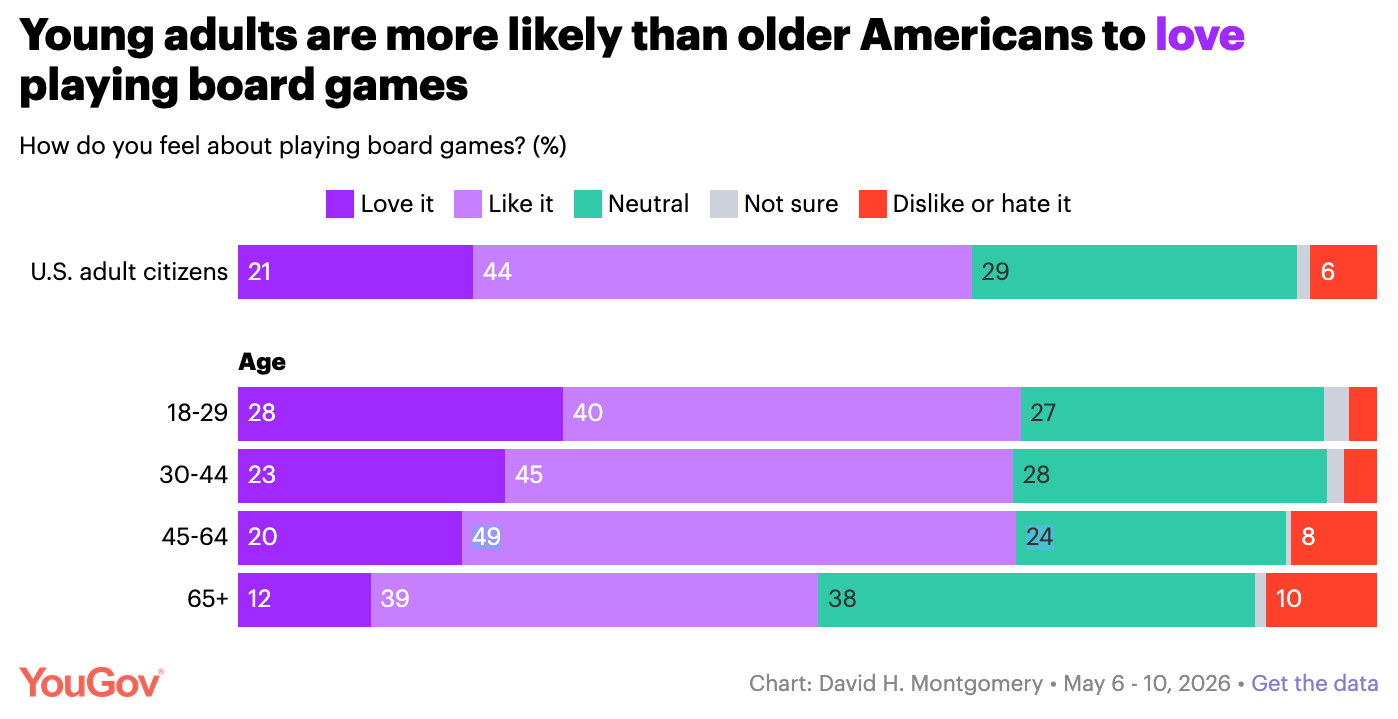
—while others dive into specifics, as with one that asks how often respondents have played 33 board games. Monopoly ranks the highest in the "played many times" category, with checkers and Scrabble coming next. An excerpt:
Other games are less widely popular, while still familiar to much of the population. 13% of Americans say they've played mahjong many times while 50% have never played it; 10% have played Risk often and 46% have never played it.
Even some of the most popular modern board games haven't been played by large majorities of Americans. 76% have never played Catan, 76% have never played Ticket to Ride, and 84% have never played Carcassonne.
Flipping that around, that survey suggests that 18-19% of U.S. citizens have played CATAN or Ticket to Ride at least once and 11-12% have played Carcassonne, Wingspan, or Azul at least once...which seems unlikely. (The numbers don't add to 100% due to "Not sure" responses.)
The survey also divides these responses into age brackets, with 32% of respondents from ages 18-44 having played Ticket to Ride, CATAN, or Codenames at least once, whereas only 5-9% of respondents aged 45+ have played any of those games.
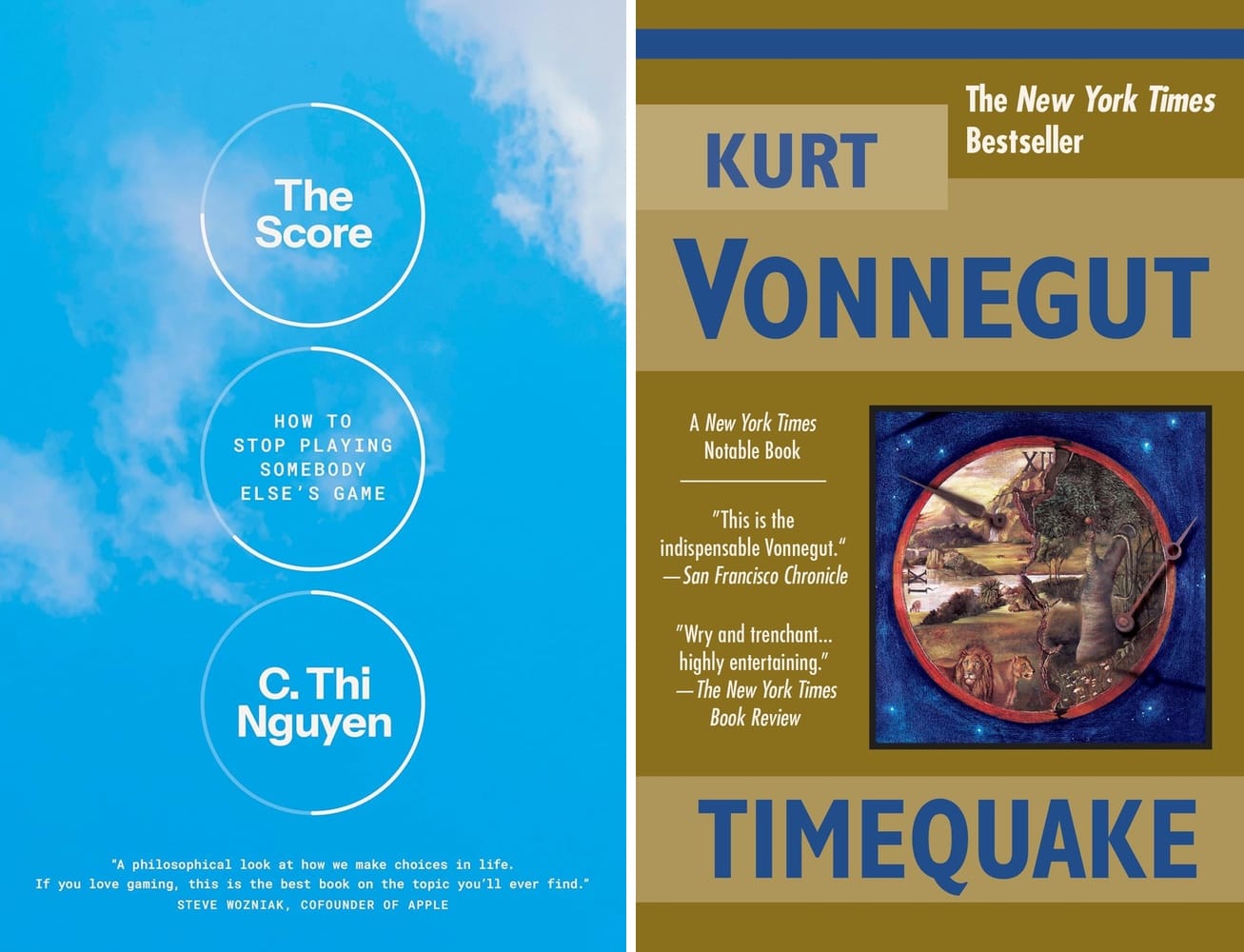
▪️ The July 7, 2026 episode of the podcast 99% Invisible features a conversation between host Roman Mars and philosopher C. Thi Nguyen about Nguyen's book The Score: How to Stop Playing Somebody Else's Game. While I found The Score rambly (my review) and disagree with Nguyen equating real-world metrics with scoring systems in games, the podcast distills his book into a 16-minute presentation, once you skip past the ads.
▪️ On Boundless Play, Keith Stuart writes about why grown-ups should play video games. An excerpt:
We never worry that we're too old to watch films, listen to music, or visit the theatre or art galleries; it is not considered bizarrely immature to play chess or cards into old age. Why video games?
The answer is longer than "Because we want to", but I hope that would also suffice as an explanation as you shouldn't have to justify an activity you do for enjoyment (as long as no one else is harmed in the process).
This essay also relates to part of Nguyen's conversation during the 99% Invisible podcast. Nguyen mentioned that while working on the book, he got really into yoyoing and would talk about yoyoing at dinner parties only to receive stares of disapproval and bafflement from others at the table, as if they couldn't imagine why one would want to spend time on such a thing.
For such situations, I suggest pulling out this Kurt Vonnegut quote from his book Timequake: "Listen: We are here on Earth to fart around. Don't let anybody tell you any different!"


