

I've been posting round-ups of new games from Japanese creators and companies that will be present at Game Market Spring 2026, but companies from outside of Japan participate as well, so here's a sampling of what will be on hand from two such companies.
▪️ Korean publisher Playte typically releases a bushel of new games each season, with "new" often meaning new versions of old games. Titles Playte is taking pre-orders for include:
- North American Railways, a tiny edition of Peer Sylvester's 3-5 player game from 2016. NAR is akin to an 18xx game that removes the geographical element. Five companies have shares that can be purchased — although only the bottom-most share in a column is up for bids — and anyone who has shares in a company is able to add cities to its network, paying from the company's funds, which comes from players buying shares. One twist is that the director of a company can match your share offer and buy the share themselves, but in that situation you keep half of what they paid.
- Nebular Colors, a new edition of Marceline Leiman's self-published Heavenly Bodies, which has a gin rummy feel, with the two players trying to collect large enough sets to score points and be able to trigger the end of a round.
- Finger Pirates, a 4-5 player game by Mashiu in which players reveal fingers each round to determine who gets to draft new boats in which order. The more fingers the better, unless you collectively exceed that round's limit in which case whoever has the most fingers goes last...getting nothing. At game's end, whoever has the most ghosts is eliminated, then those not killed by the spirits of raided vessels count their points.
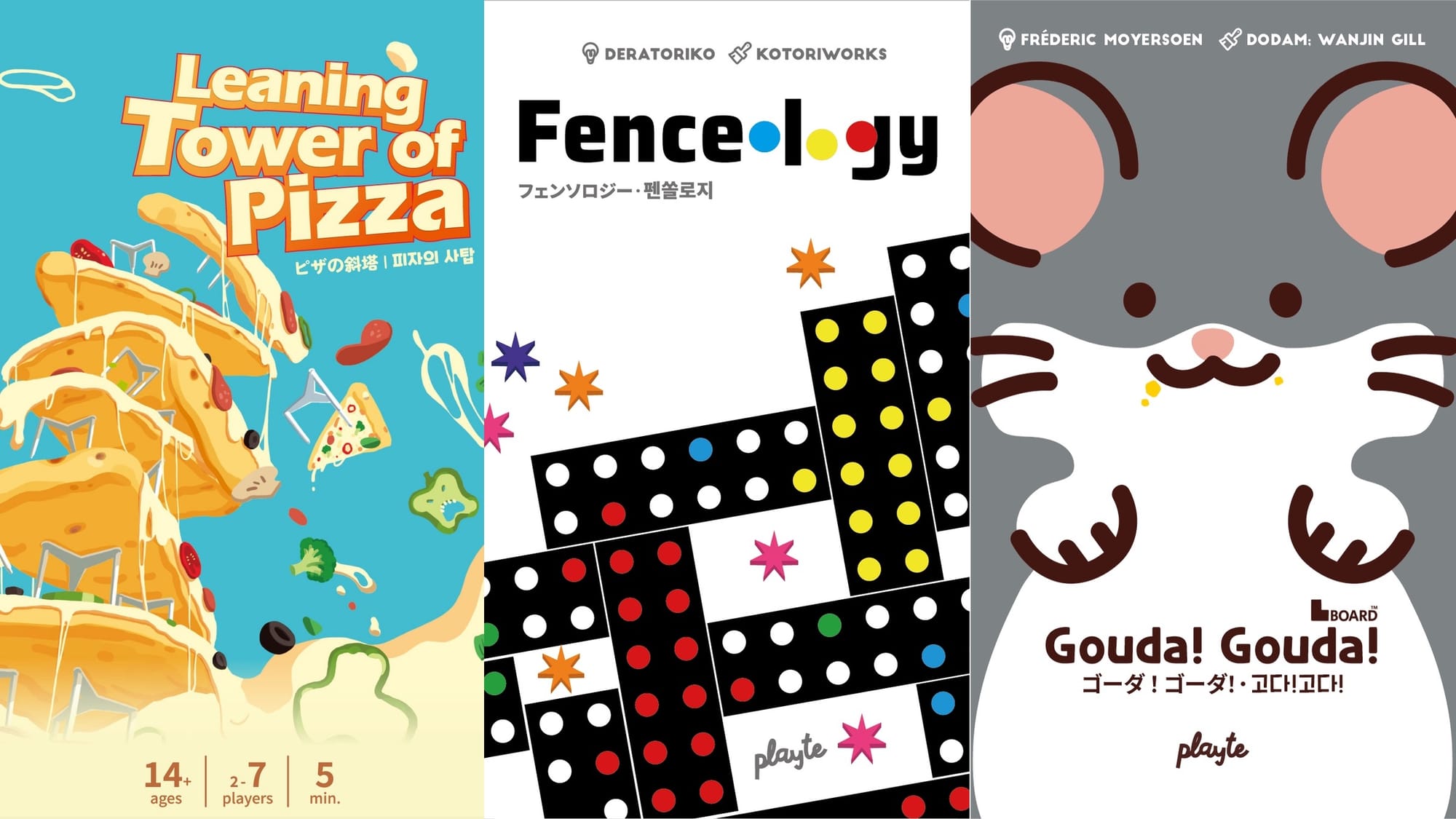
- Leaning Tower of Pizza from Andrew Greenrain (the pen name of Playte president Junghee Choi) is a stacking game made from real plastic pizza stackers — the triangular doodads that keep the pizza box lid from crushing your pie — and pizza slice cards. On a turn, optionally place a slice on the pile, then add a pizza stacker. Whoever knocks over the tower loses. The rules suggest that a game expansion can be found in every pizza you order, so recycle and play!
- Fenceology, which designer deratoriko had self-published in 2025, has two players using long skinny cards to create enclosed areas. Each time you place a card, at least one colored dot on that card must be adjacent to a dot of the same color. Create seven enclosed areas first to win.
- Gouda! Gouda! is a Fréderic Moyersoen design that first appeared in 2002. Players each have five mice near the bottom of a game board, and each turn you choose a space with mice, then roll dice equal to the number of mice in that space (but at most five). For each green result, move a different mouse ahead one space; for each red, move a mouse back. If you're on a space with cheese at the end of your turn, claim it, which each cheese tile having a hidden value. Collect the most cheese to win.
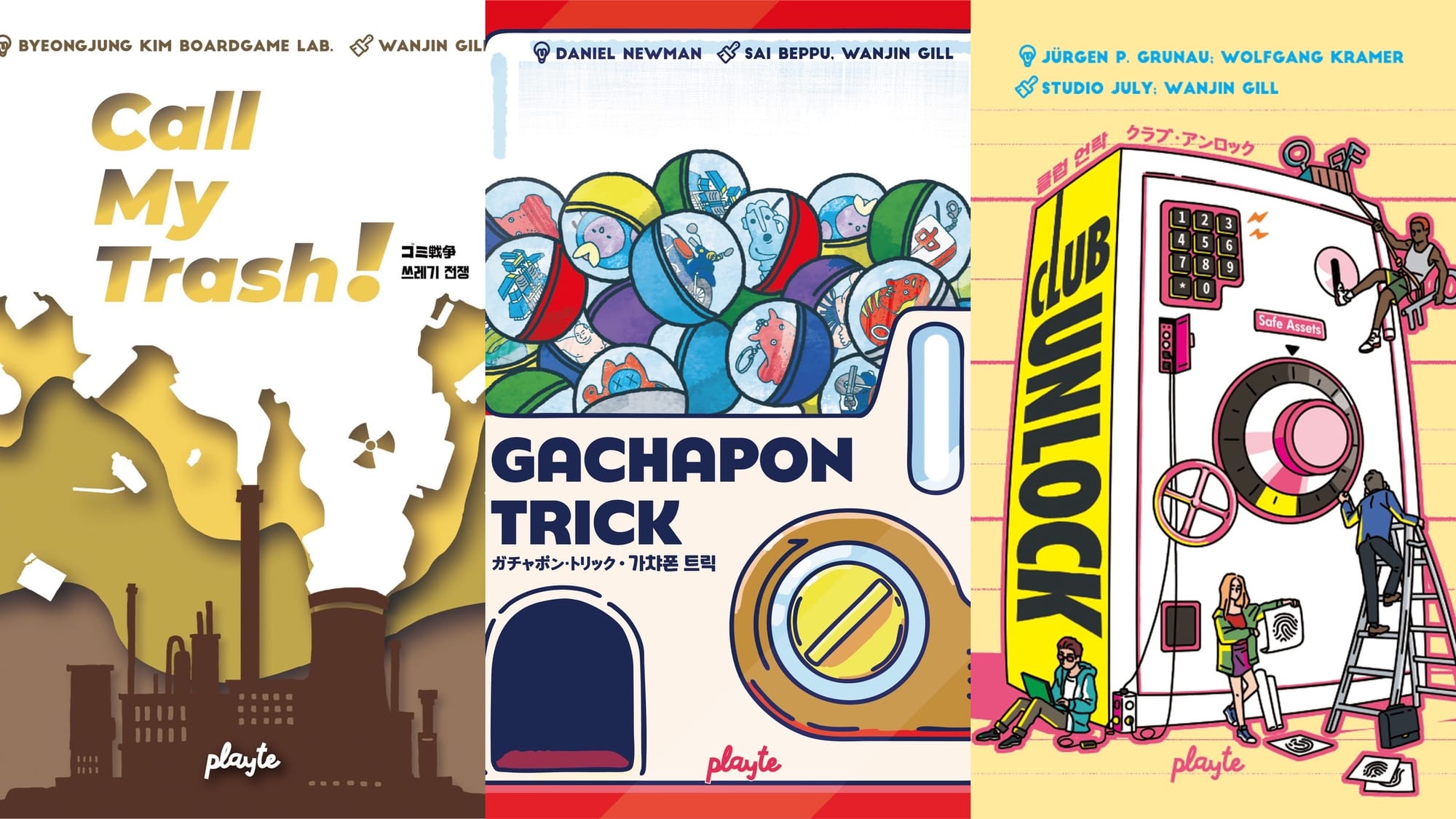
- Call My Trash by Byeongjung Kim is, as you might guess, a bluffing game. The game has cards numbered 1-30 twice and industrial waste cards with no numbers. On a turn, you play one or more cards of the same value or in a sequence that are equal to or higher than what was last played; if you can't play or don't think you can lie about what you're playing, draw a card — but you must lie to ditch waste. You can call out potential liars at the risk of being penalized as you race to ditch your hand.
- Gachapon Trick is a 2-4 player trick-taking game that Daniel Newman self-published in 2024. You must follow suit, if possible, but you can follow any suit played in a trick. The highest rank of the most represented suit wins the trick, then the winner must purchase one card from the trick, purchasing more if desired. They can also purchase the top card of the deck. You're trying to collect sets of cards, scoring n² points for a set of n cards, in addition to scoring leftover money. Play three rounds, then add up your scores.
- Club Unlock is a 3-6 player game from Jürgen P. Grunau and Wolfgang Kramer that first appeared in 1990 as Cash. Yes, Playte sometimes resurrects titles long forgotten. On a turn, you either add a key card in one of four colors to your hand, or you hand in four keys in the proper color(s) to unlock a safe on display. Safes vary in value, and if you can unlock additional safes on the same turn, you earn 10 extra points for such safes. Seven safes are available in each of five rounds.
In case you, like many, can't make it to Game Market, you can perhaps look for theses titles at SPIEL Essen 26 instead...assuming you can make it to that event.
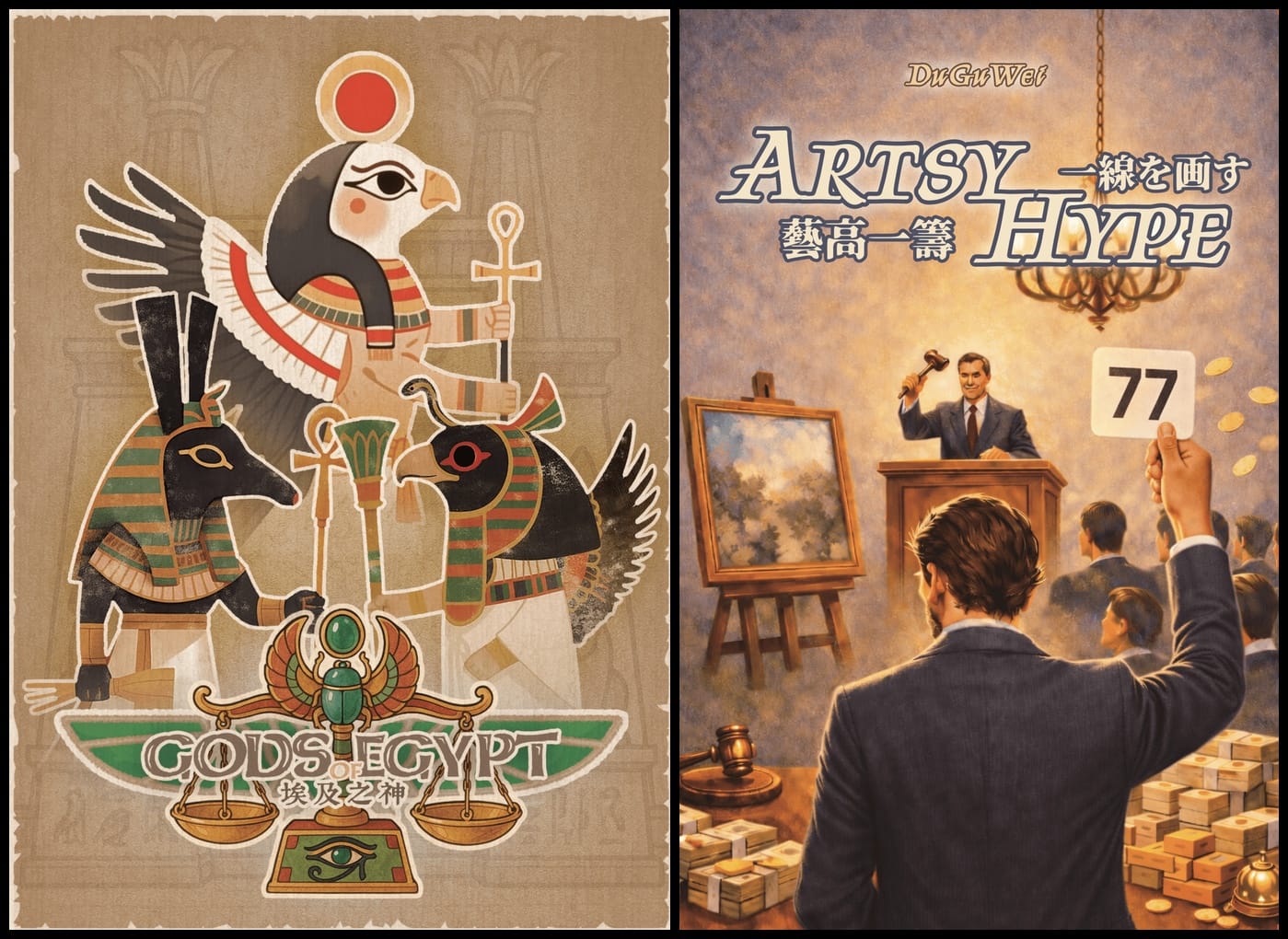
▪️ Taiwanese publisher Board Game Rookie will feature two new trick-taking designs at Game Market Spring 2026: Gods of Egypt and Artsy Hype.
In the former, a 1-4 player game by designer Ag Yu, players secretly represent the followers of Horus and Set, trying to make their god rule supreme, as well as the followers of Ra, who are trying to keep a balance between the other two gods.
The winning card of each trick moves an influence marker based on the card's suit and value. When the marker reaches certain spaces on the influence track — which has Horus at one end, Set at the other, and Ra in the middle — players can place a prophecy token next to the track to indicate where they think the marker will end up.
When each player has only five cards in hand, they each lay one card face down to indicate their allegiance, with these cards each moving the marker after all cards have been played. Score points if your allegiance matches the location of the marker or you prophesized correctly. Play three rounds total.
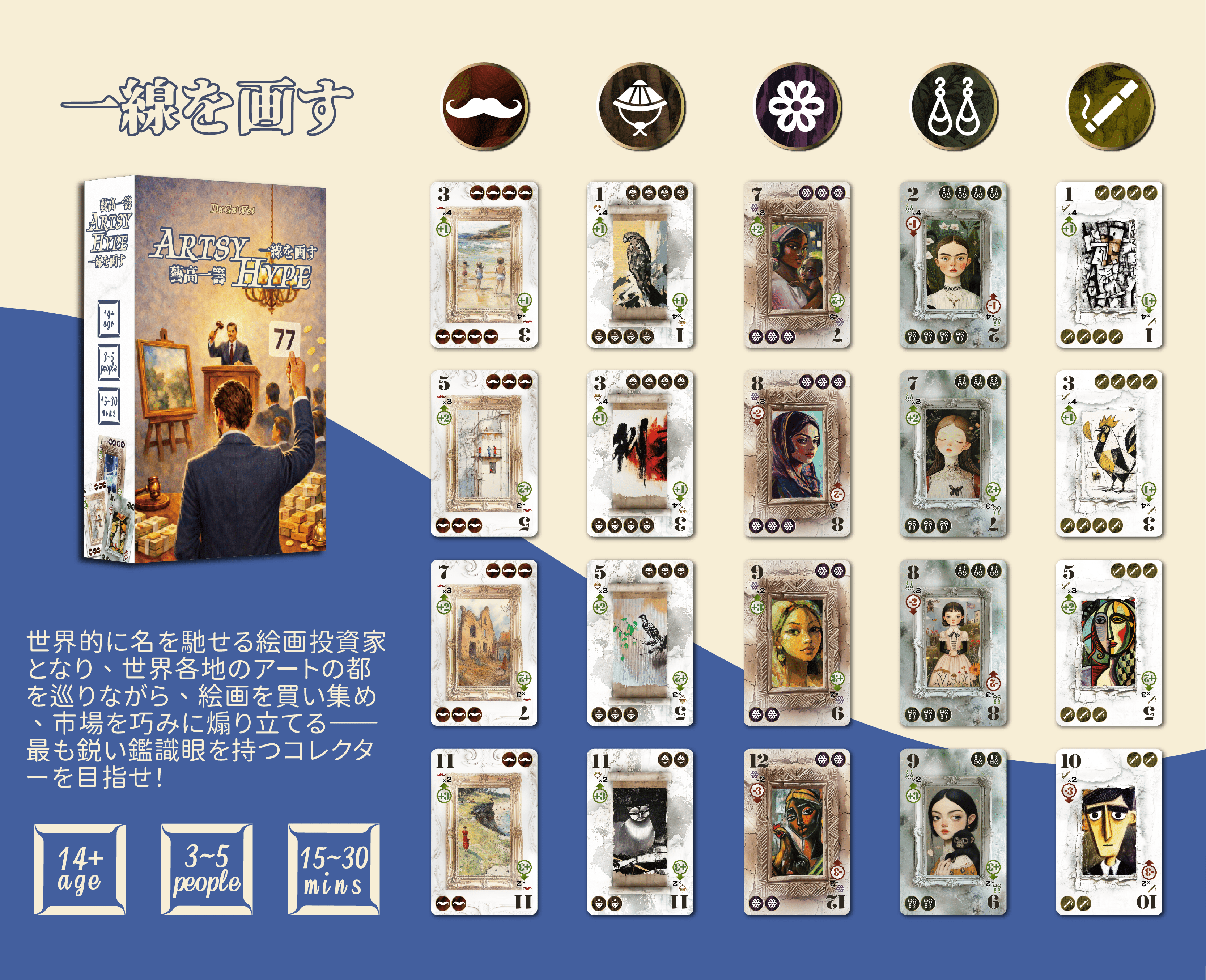
DuGuWei's Artsy Hype, which is for 3-5 players, features a similar gameplay element. The deck contains numbered cards representing 4-5 artists, along with a few event cards, and the value of each artist's work starts at 0. (You can imagine this being whatever value you wish, with the important thing being how the value rises or falls from this baseline.)
In this "must follow, no trump" game, the winning card is kept by who played it, representing artworks purchased by that player. If two or more players play cards of the same value, they also keep those cards. All other cards are discarded. The lowest-valued card(s) in a trick, regardless of suit, raise or lower by a listed amount the value of works of the depicted artists.
Event cards can be played into a trick regardless of whether you can follow suit, and they either affect the value of all works by artists currently represented in the trick or change which cards in the trick will affect an artist's value.
The game lasts two rounds, with the value swings doubling in the second round.


