May 1 is May Day, and a May Day tradition that you may or may not observe is the practice of leaving a basket or bouquet of flowers on someone's doorstep. For details, let's turn to The American Girl's Handy Book, written by Lina Beard and Adelia B. Beard and published in 1893:
A May-day custom, and a very pretty one, still survives among the children in our New England States. It is that of hanging upon the door-knobs of friends and neighbors pretty spring-offerings in the shape of small baskets filled with flowers, wild ones, if they can be obtained; if not, the window-gardens at home are heavily taxed to supply the deficiency. When the dusky twilight approaches, it is time for the merry bands of young folks to start out on this lovely errand of going from house to house, leaving behind them the evidence of their flying visit in these sweetest of May-offerings. Silently approaching a door, they hang a May-basket upon the knob and, with a loud rap, or ring of the bell, scamper off, and flee as though for life.

These little Mayers are sometimes pursued, but few are ever caught, for the recipients of the baskets know that to capture a child, carry her into the house and treat her to sweetmeats, usually dear to the youthful palate, will not compensate the little prisoner for being held captive and thereby missing the fun going on among the other children.
Susan McKinley Ross, a game designer I know, still practices this May Day tradition, and in her honor, I've picked a few games dealing with flowers, nature, and other growing things and left them for you on this digital doorstep:
▪️ In late April 2026, Chris Couch Games wrapped a crowdfunding project for two titles from Kristen Mott and Andrew Stiles: Garden Club and Petal.
In Garden Club, two players plant a garden together, each with secret goals for what they want to achieve. The game lasts three rounds, and on each turn you place a garden tile on the shared 4x4 garden (with overlaps being allowed) and place a harvest tile in your personal area. (Tiles are double-sided, and the produce on a harvest tile is missing on the garden tile on the reverse side.)
Garden tiles feature a central flower and produce in three or four corners, and you can score a project card either when the flower pattern on it is present in the garden or when you feel "enough" of the depicted fruit is present in the garden to cash in the card — and produce scores only for each pair of produce on adjacent tiles. Tools let you manipulate tiles, and you get more tools and project cards as you advance on the score track.
At the end of each of the three seasons, whoever has collected the most harvest tiles of a type of produce scores for that produce, with a multiplier being added in later rounds.
A solo mode pits you against a night gardener, and advance modules provide more challenging projects and tomatoes.

▪️ The gameplay elements in the two-player card game Petal resonate with those of Garden Club as players build a 4x4 grid of double-sided cards to maximize points on a private objective card.
Each turn, you place a flower card in an empty space in the grid and take a multiplier card for one type of flower. After seven turns, the grid will be filled, and players will score points two ways for the large flowers and the flowers made of matching halves:
- Score your objective card: 1 point per depicted completed flower, and 9, 6, and 9 points if the listed conditions are met.
- Multiply the number of multiplier cards you have for a flower by the number of completed flowers in the grid.
Whoever has the higher sum wins the round, with the loser getting a one-shot "apron" power for next round. Win two rounds, and you've won the game.
Both Garden Club and Petal are due out in Q4 2026.
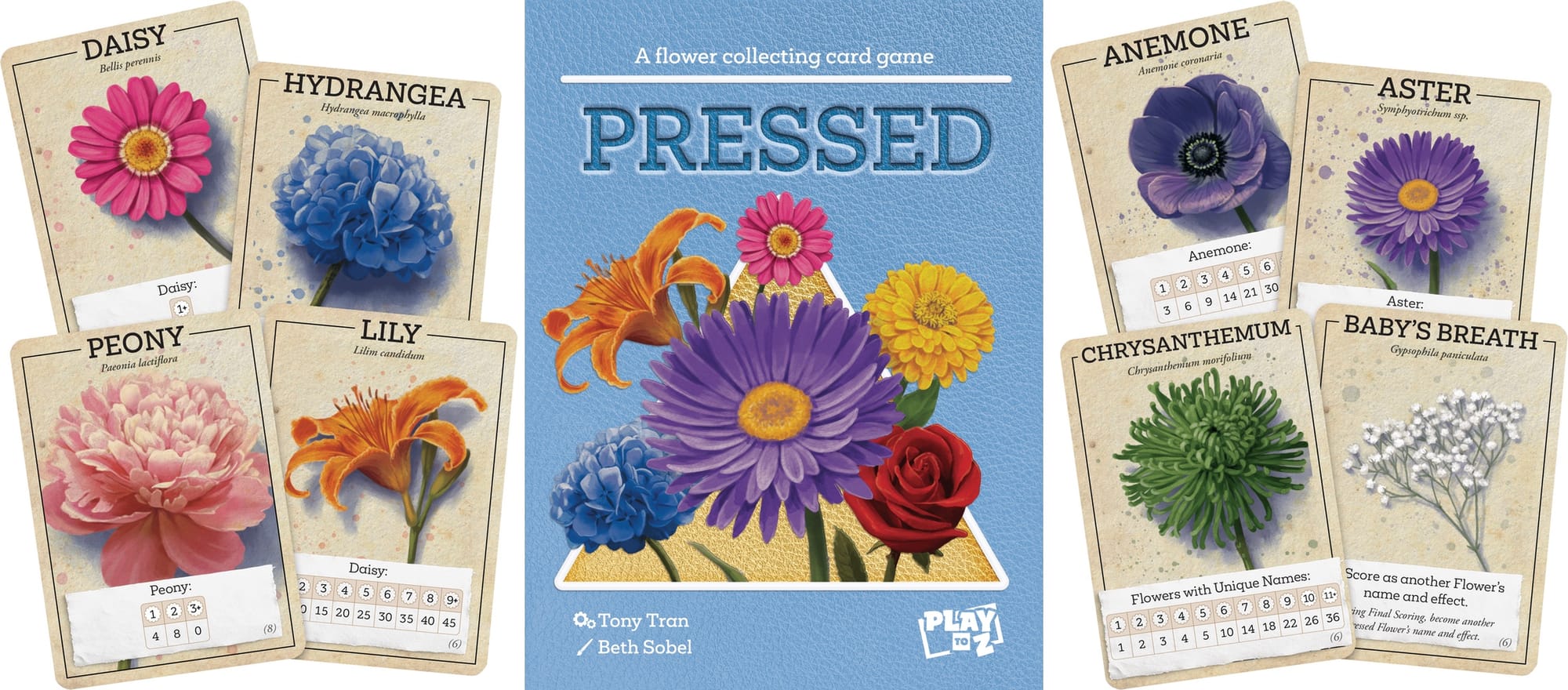
▪️ Pressed is a 2-5 player card game from Tony Tran that Play to Z plans to crowdfund in May 2026. As with the titles above, Pressed plays over three rounds, with a final scoring at game's end.
Each player has four cards in hand at the start of a round, and multiple columns of cards are present on the table with one or more random cards in them. On a turn, you place a card at the end of a column, then score points for that card based on its scoring condition, which usually relates to the quantity of that flower in the column and row where it was placed.
After all players have played their cards, players take turns drafting a column of cards and keeping at most four of those cards. After three rounds, you take the twelve cards you have set aside and score for them based on their scoring condition.
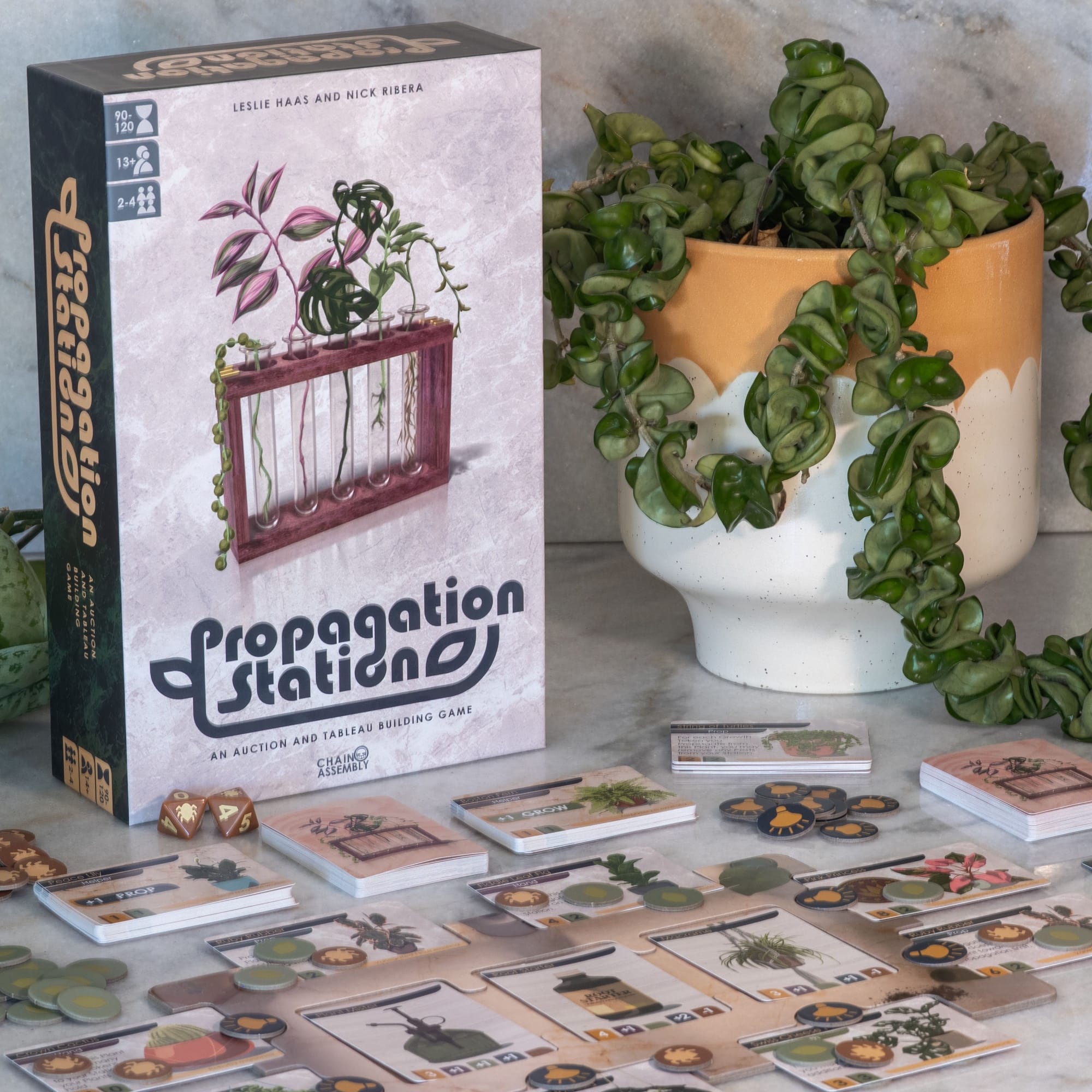
▪️ In May 2025, Chain Assembly, a business owned and run by artist Nick Ribera crowdfunded two games co-designed by Ribera and Leslie Haas: Propagation Station and Dirt Baby. These games were delivered to backers in Q1 2026 and are now available for purchase from the publisher.
Propagation Station may be all about growing plants, but this 2-4 player game seems anything but cozy. Each player starts with a station board that has two spaces that receive sunlight and six spaces with room for grow lamps. They also have three starting plants and three growth tokens, which is one of the game currencies; the plants themselves are another currency, with each plant having a value listed in yellow.
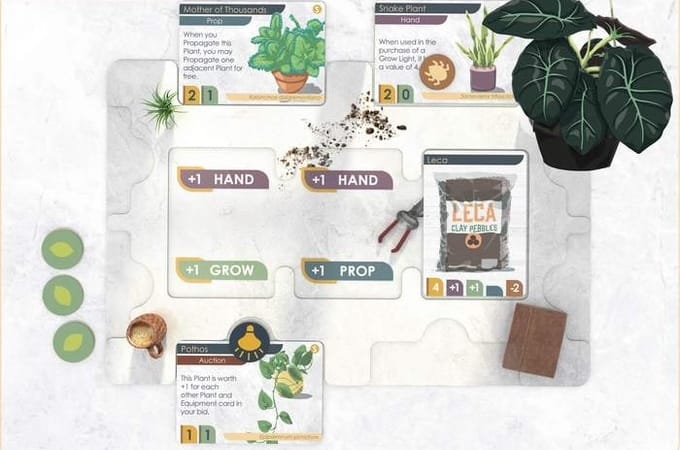
The game lasts multiple rounds, with the endgame trigger being a player's purchase of a sixth grow light. In a round, each player first receives growth tokens from the reserve; the base amount is +1 on your station, but equipment placed on your board can modify it.
Next, 3-4 lots of a single plant or equipment card are up for bidding, with each player secretly choosing the lot they want and their sealed bid, which consists of some amount of growth tokens and plants in hand. If no one contests your bid, you compost the items in your bid, then add the new card to your hand. If two or more players bid for the same lot, the high bidder wins the cards and splits their bid as they wish among the other bidders, who keep their own bids. If lots remain after the initial bidding round, you do it again, repeating the process until all lots have been claimed, after which you reveal new lots.
Players can then modify their station as they wish: buying one growth light; adding plants and equipment to their board or returning previously played cards to their hand; purchasing one or more helper cards; and selling cards for growth tokens equal to their listed value.
Someone then rolls the two d8 pest dice, with each plant not exceeding the pest sum with its combined value and "max growth" stats receiving a pest token. Players can then remove pests equal to their station's pest value — initially -1 — which you'll want to do since three pests will kill a plant, spreading one pest to each of its neighbor's Pandemic-style in the process.
Receive new growth tokens equal to your "prop", i.e. "propagate", stat, placing them on plants in your station up to their max growth, then ditch cards down to your hand size. Many plants have bonus effects or stat boosts to upgrade your station or give you special abilities.
At game's end, you sum the value of all plant and equipment cards in your hand and station, with a 15-point bonus if you managed to get six grow lights. The game includes secret goal cards you can optionally use, with each player getting two easy and two hard goals, then scoring one of each at game's end.
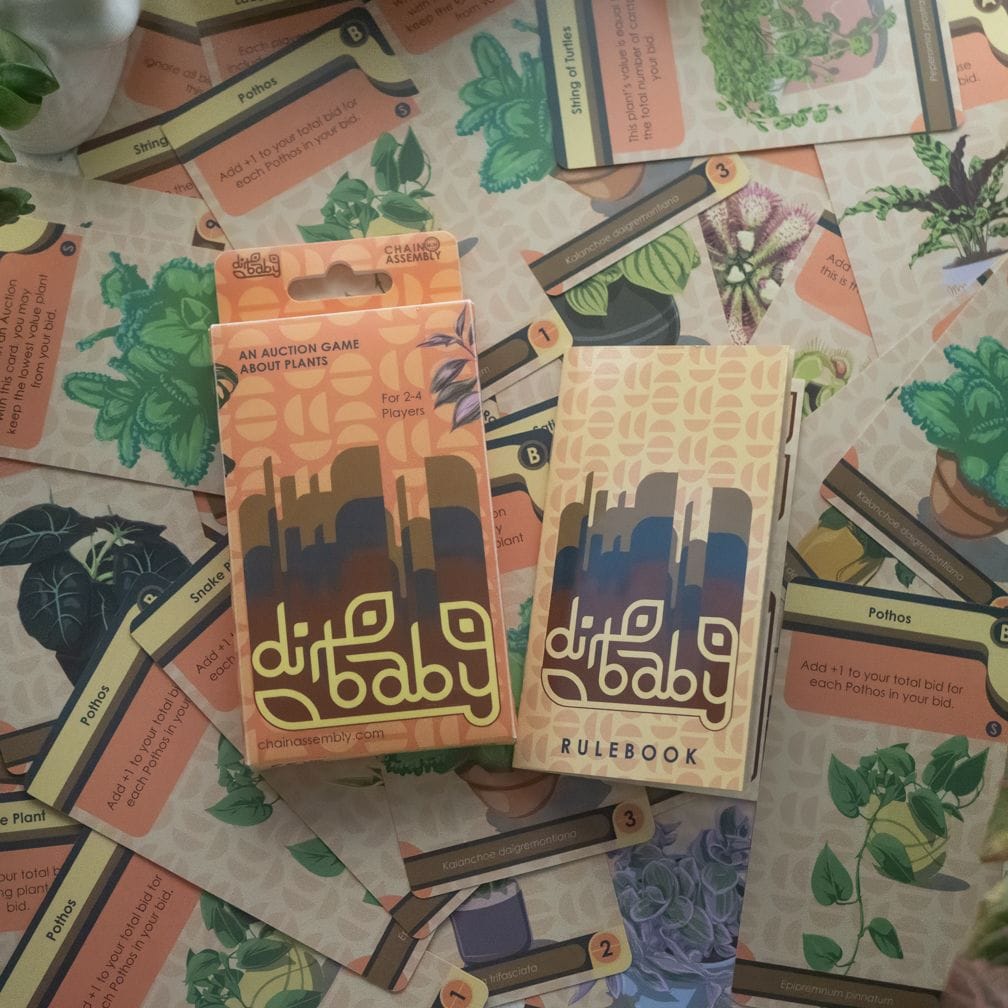
▪️ Dirt Baby is a 2-4 player card game from Ribera and Haas that's essentially the auction system from Propagation Station plucked out and released on its own. Players have hands of cards and will bid on lots, with the loser(s) of a contested auction receiving cards from the winner.
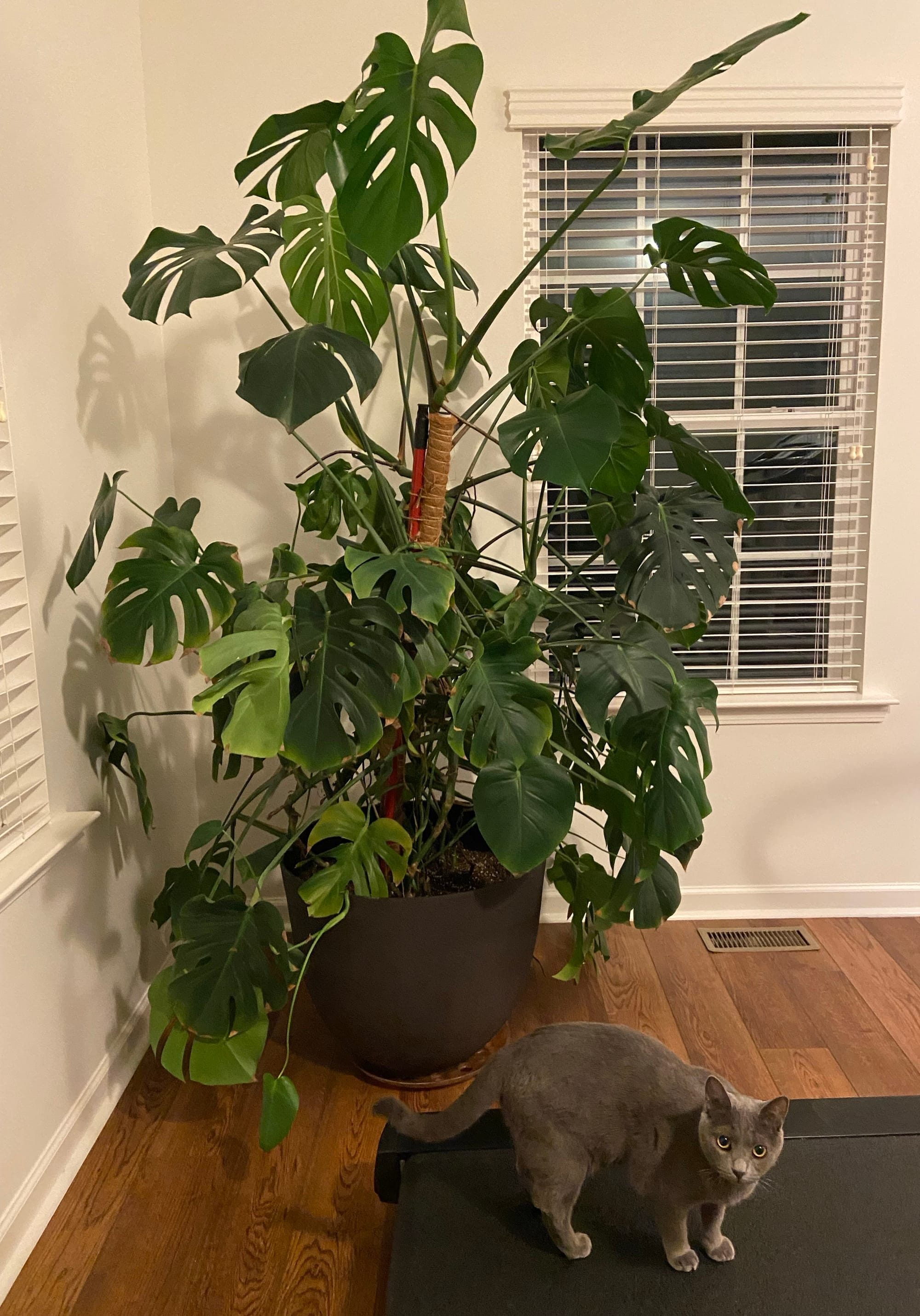
To close, I'll include a pic of the monstera plant that we purchased ahead of the Covid pandemic and that has grown massively over the years: