

The Crew: The Quest for Planet Nine was released at the end of 2019 and was the first game in The Crew series. Even in my first test rounds in 2018, the game worked perfectly, and it felt to me as if I had found the game rather than invented it. That is something rare and gives you the feeling of having something truly special.
All of this naturally created a strong desire for me to dig deeper and explore further. The Crew was like a treasure that I was allowed to recover, and I was curious to see what I would discover as I opened the lid of the treasure chest further.
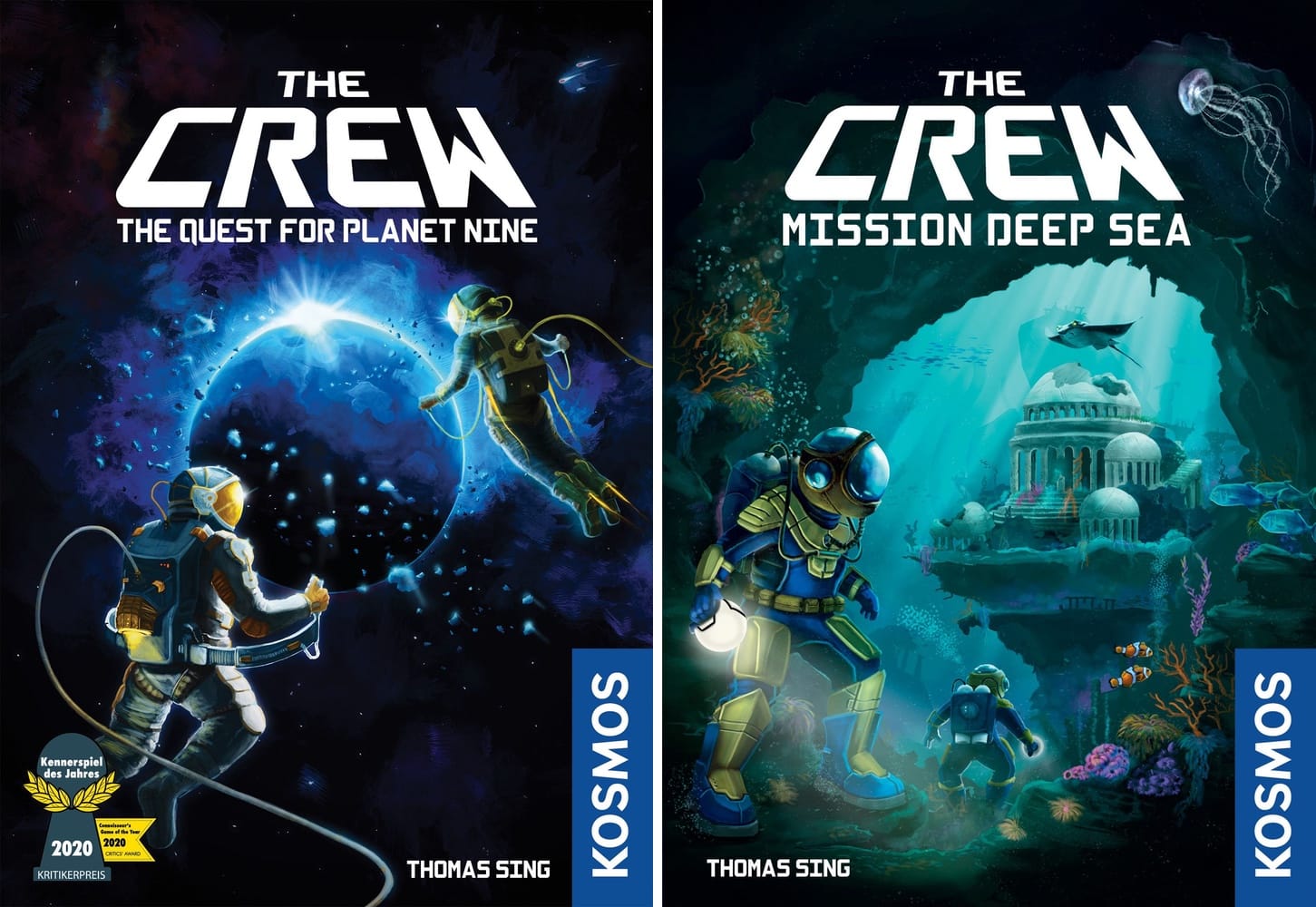
When I refer to "Crew 3" later in this article, I always mean the new Crew game, The Crew: Journey to the Ends of the Earth. Back in 2019/2020, I wrote down everything I could think of pertaining to how to iterate on the original Crew system, and many of those ideas are now found in The Crew: Mission Deep Sea (a.k.a., Crew 2) and in Crew 3. The development of Crew 3, therefore, actually began unconsciously many years earlier, even partly before Crew 1 was published.
But for me, the question is always how to assemble the new ideas. The easiest option, of course, would have been to simply keep The Crew gameplay and change only the story and the tasks. The Crew gameplay in a nutshell is:
- Read the story text aloud.
- Place the task cards in the center of the table.
- Choose the task cards.
- Complete the tasks through a fully co-operative trick-taking game.
- If all tasks are completed, move on to the next, slightly harder mission.
- If a task is not completed, repeat the mission.
When I talked with Kilian Vosse, my editor at KOSMOS, about a sequel to Crew 1, we realized that every new game needs both proximity to and distance from its predecessors. In Crew 2, I developed completely new tasks and integrated task difficulty into the gameplay, which gave the game enormous replayability — but to make Crew 3 something entirely its own, it was obvious that I had to redesign the gameplay from scratch.
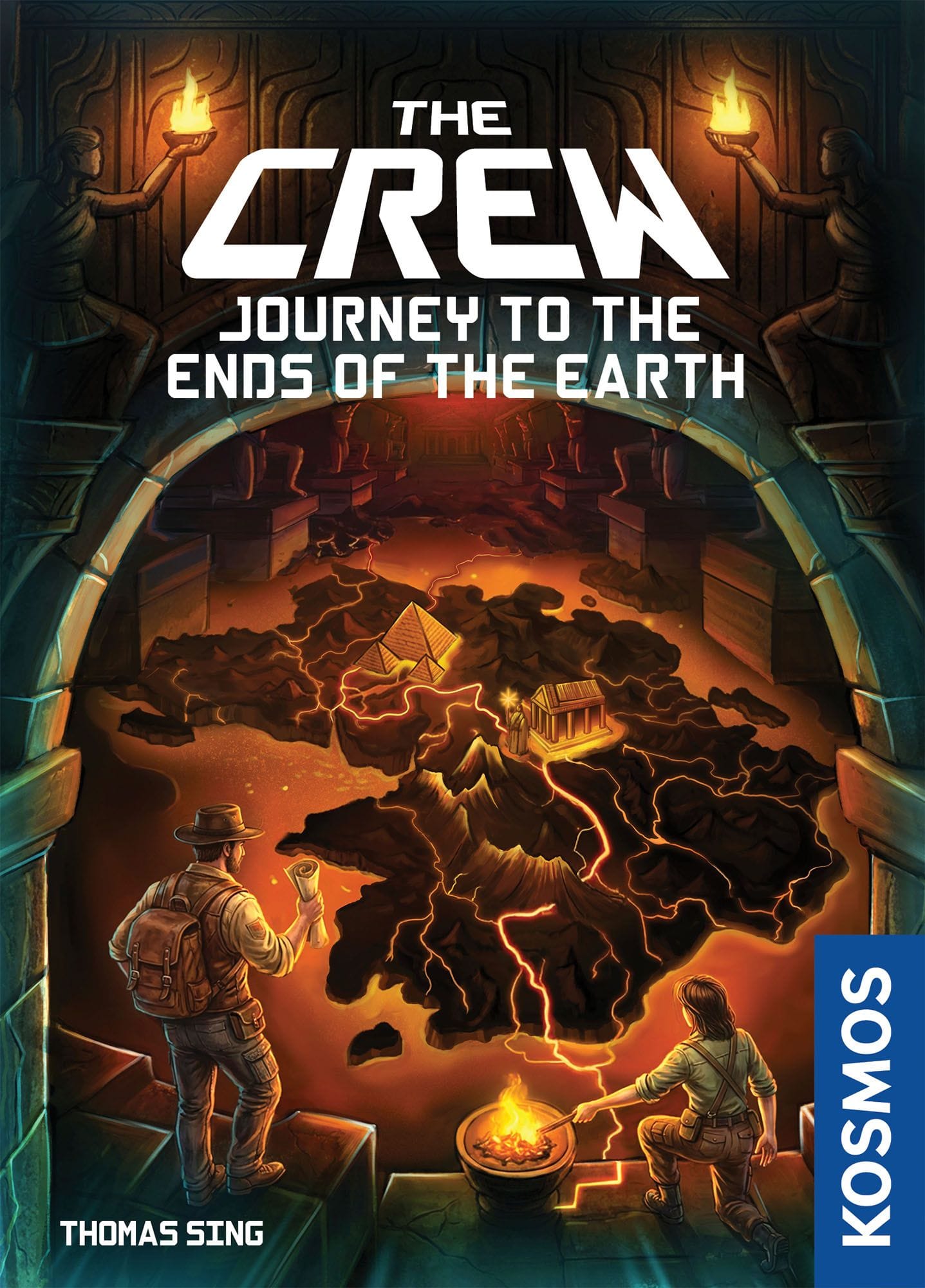
I decided there should be only one task for everyone to complete. The game now includes more than one hundred different tasks with varying difficulty levels. Before each round, you always choose between two tasks. The game is a race between our crew and time. When a task is completed, you move forward based on the task's difficulty. A difficult task will advance you further in the race than an easy one, while your opponent — time — always moves forward at a steady, slow pace.
Another unique aspect of Crew 3 is that it is structured in stages, and your goal is to reach the end of a stage before the opponent. A stage, therefore, consists of completing several tasks. The advantage of this is that you can fail at some tasks as long as you don't arrive at the end of the stage after the opponent. That loosens the game up a bit and reduces some of the pressure of having to win at all costs.
Thematically, I first conceived the game as a journey in the Himalayas, then as an adaptation of the race to the South Pole between Amundsen and Scott. In discussion with Kilian, however, we concluded that that event contains tragic and awful elements and would give the game a rather sad mood, which we did not want. Instead, we decided to embark on a world tour.
Since each of my games is somewhat autobiographical, I started the world tour in Konstanz, Germany, where I was born and where I live. Konstanz lies right on the Swiss border, so it made sense to go to the Swiss mountains next, then Italy. The rest of the story features a cast of both familiar and more unusual locales.
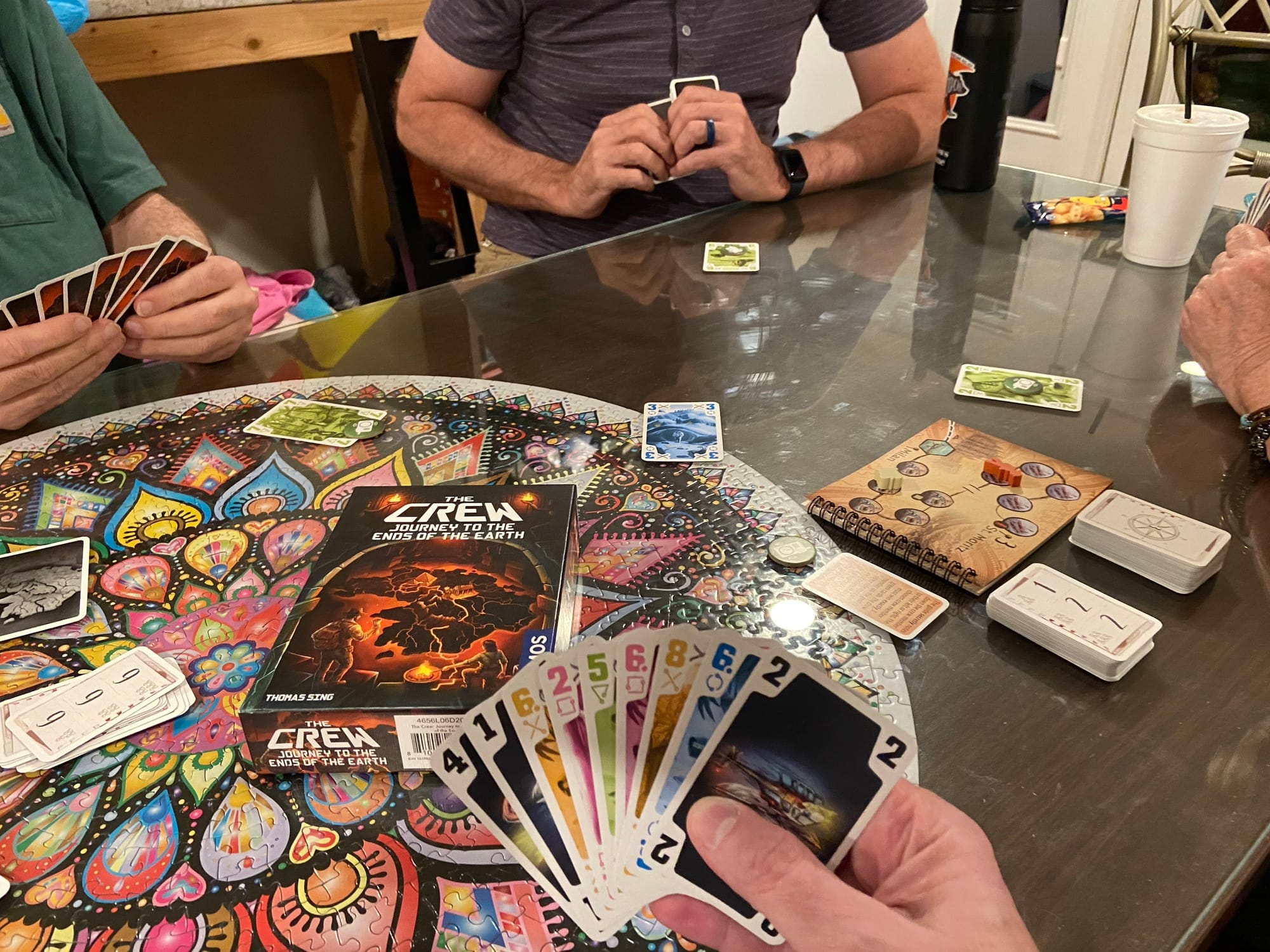
When the game was basically finished, in my opinion, I sent it back to Kilian, who had since received energetic support from his colleague Elena Gross. As you might expect, the two of them came back with a whole range of suggestions about what we should reconsider in the game. I always look forward to this final phase of game development. I have worked on all Crew games with Kilian so far. He is a clever mind, and I have seen firsthand in previous games that he often looks at things from a completely different perspective and can give the game a new drive.This time I had two editors at my side, and so there were a lot of changes. My heartfelt thanks go to Elena and Kilian for the inspiring collaboration.
Fiore GmbH brought the game to life by illustrating the cover, cards, and logbook. It is wonderfully done and gives the game the perfect atmosphere. Many thanks to Fiore GmbH.
So, that’s it. Now it’s your turn. I wish you all a lot of fun playing, and I very much look forward to your feedback.
Tom Sing
The Crew: Journey to the Ends of the Earth launches mid-2026 at Gen Con at the KOSMOS booth #2605. The Globetrotter mini-expansion will be available at the show while supplies last, free with the purchase of the base game, in addition to being available for the first five hundred people to pre-order The Crew: Journey through Thames & Kosmos.
Like this kind of board game coverage?
Get Board Game Beat’s free posts by email — original reporting, designer interviews, and industry news, with no tracking, no ads, and no spam.


