

Wavelength 1-10
After releasing nothing in the first eight months of 2026, U.S. publisher CMYK released Grabble in late September and now in late October it's brought out a smaller version of 2019's hit party game Wavelength from Alex Hague, Justin Vickers, and Wolfgang Warsch. (If you want metrics for what makes a game a hit, CMYK notes that more than two million copies of Wavelength have been sold, while the Wavelength app has been downloaded more than eight million times.)
Wavelength 1-10 is a pocket-sized version of Wavelength that retails for US$10 and that transforms this head-to-head team game into a co-operative game for 2-6 players that consists of nothing but cards.
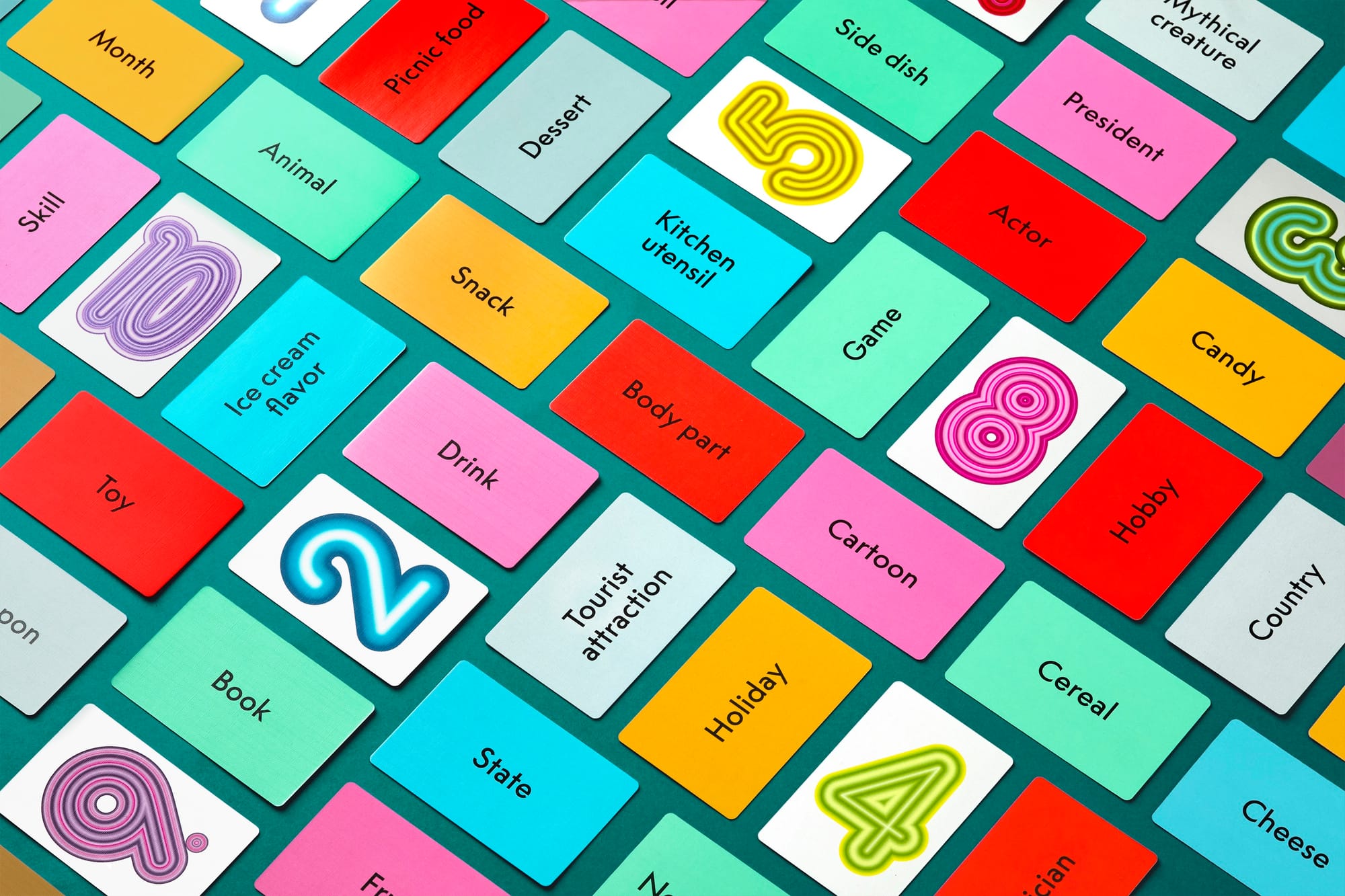
To set up, lay out six topic cards at random. The active player chooses a topic, secretly draws from a deck of cards containing the numbers 1-10, then names something fitting the chosen topic that they hope the other players will rate appropriately, that is, matching the number they chose on a scale from 1-10. What toy counts as a 7? What side dish merits a 10? Which president would have others guessing 1?
The other players debate, with the player to the left of the active player breaking ties. If they guess the number exactly, the topic card is worth 2 points; if they're one off, it's 1 point; anything more than that, and you score nothing.
You play five of the six topics cards, then sum your points, which will be 0-10 (ooh, off brand there!) — but if you nail that fifth topic card exactly, you deal out another topic card, then choose from those two in a bonus round. In fact, the number of rounds is limited only by your skill, your patience, and the number of cards in the deck.
Who You Know
Susan Baltrus is a first-time designer who started a publishing company in order to bring a family favorite pastime to tables everywhere. "Who You Know began as my family's post-Thanksgiving tradition in the 1970s", she wrote me.
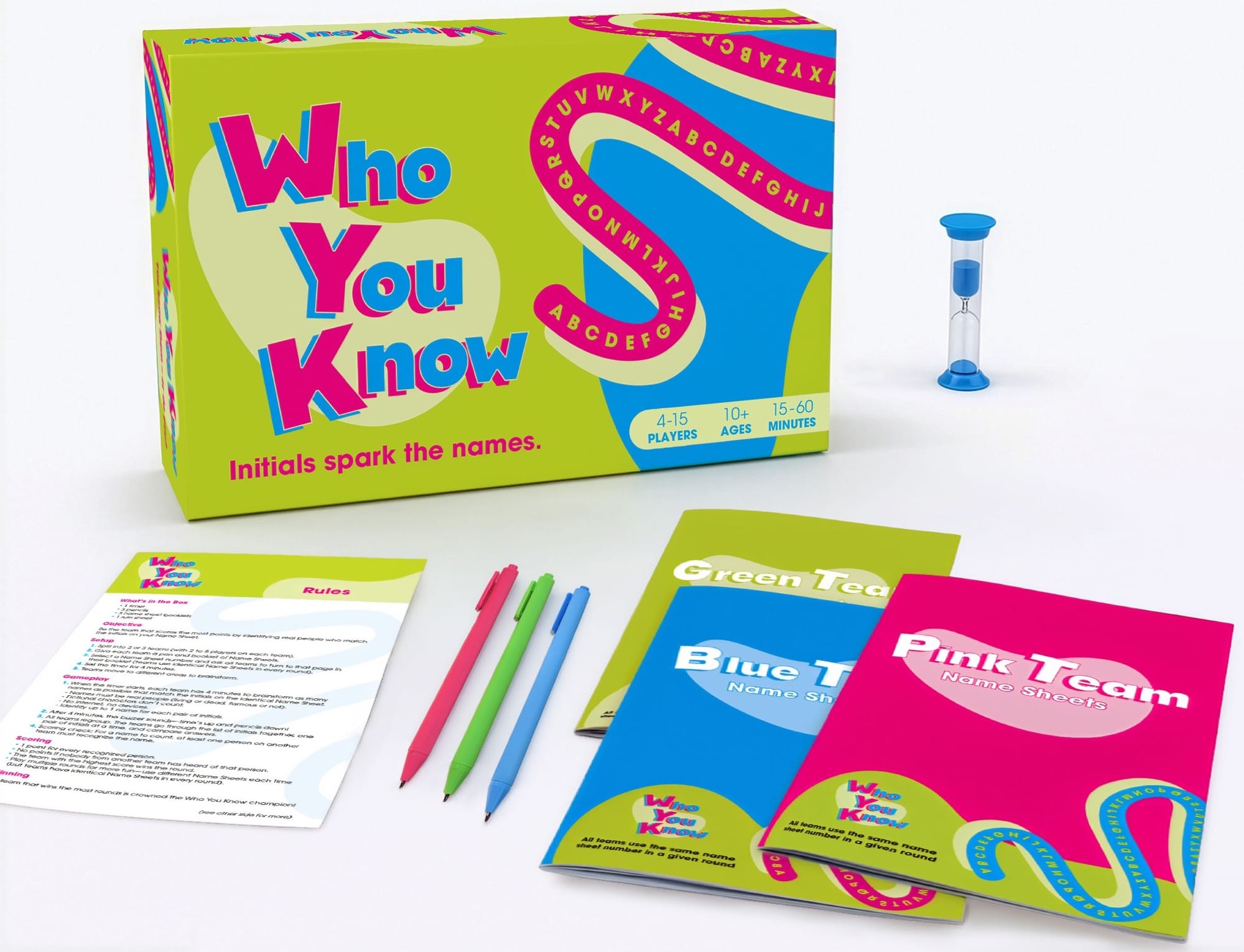
Who You Know is a party game for 4-15 players who compete in two or three teams. Each team receives a sheet showing 26 pairs of initials, then has four minutes to write down a person who has those initials. Can you write down just anyone? Sure, but you score for a name only if a player on the other team recognizes that person, so you want to find someone you think they'll know.
Writes Baltrus, "I've learned a lot about design, manufacturing, and finding an audience outside the hobby (which I thought would be critical given that it's a party game rather than a strategy game — but I'm still figuring it out!). My business background is in a different area, and this industry is a whole new world!"
Want more game announcement coverage like this?
Get Board Game Beat’s free posts by email — original reporting, designer interviews, and industry news, with no tracking and no spam.


