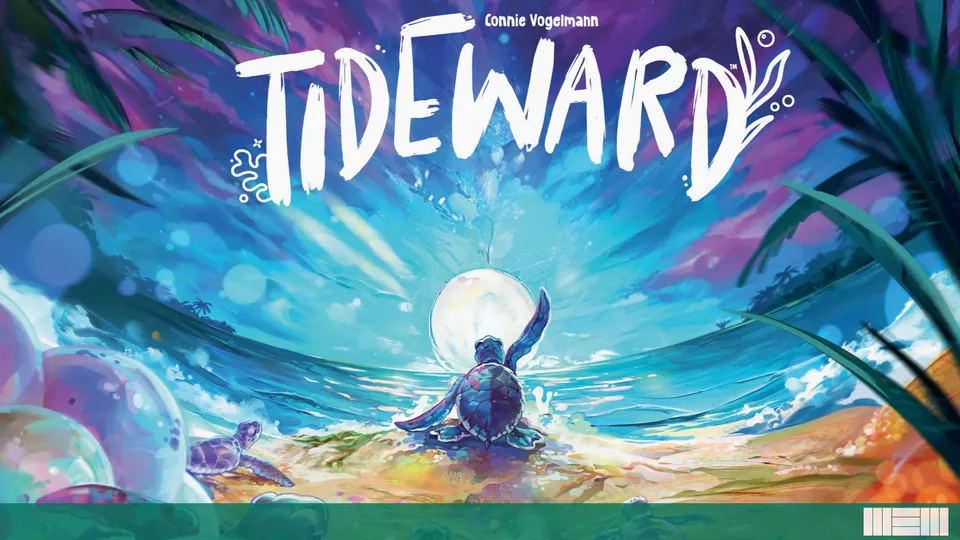
I've met with Jade Yoo from Korean publisher BoardM at SPIEL multiple times, but always in a restaurant or another publisher's booth. BoardM releases Korean editions of games from publishers large and small — Cthulhu: Death May Die from CMON, Take Time from Libellud, the 2026 Spiel des Jahres winner JinxO from Tabletoys Games — but in past years it's been one of dozens of companies with a business presence in Essen, but not a public one.
That changes in 2026, with BoardM having a public booth for the first time. What will you see there? These three titles among others:
Flamenco
Designer/artist Nutgoo.Lee self-published Flamenco in 2025, and now BoardM has a new edition with art by Sai Beppu.
Flamenco is a shedding game in which you can lead a set of one or more cards of the same value and others can beat that set with the same number of cards of a higher value. The twist of the game is that even numbers can be beaten by a "split" comprised of twice as many cards of half the value, e.g., a round might go 1 - 2 - 11 - 33 - 44 - 2222 - 5555.
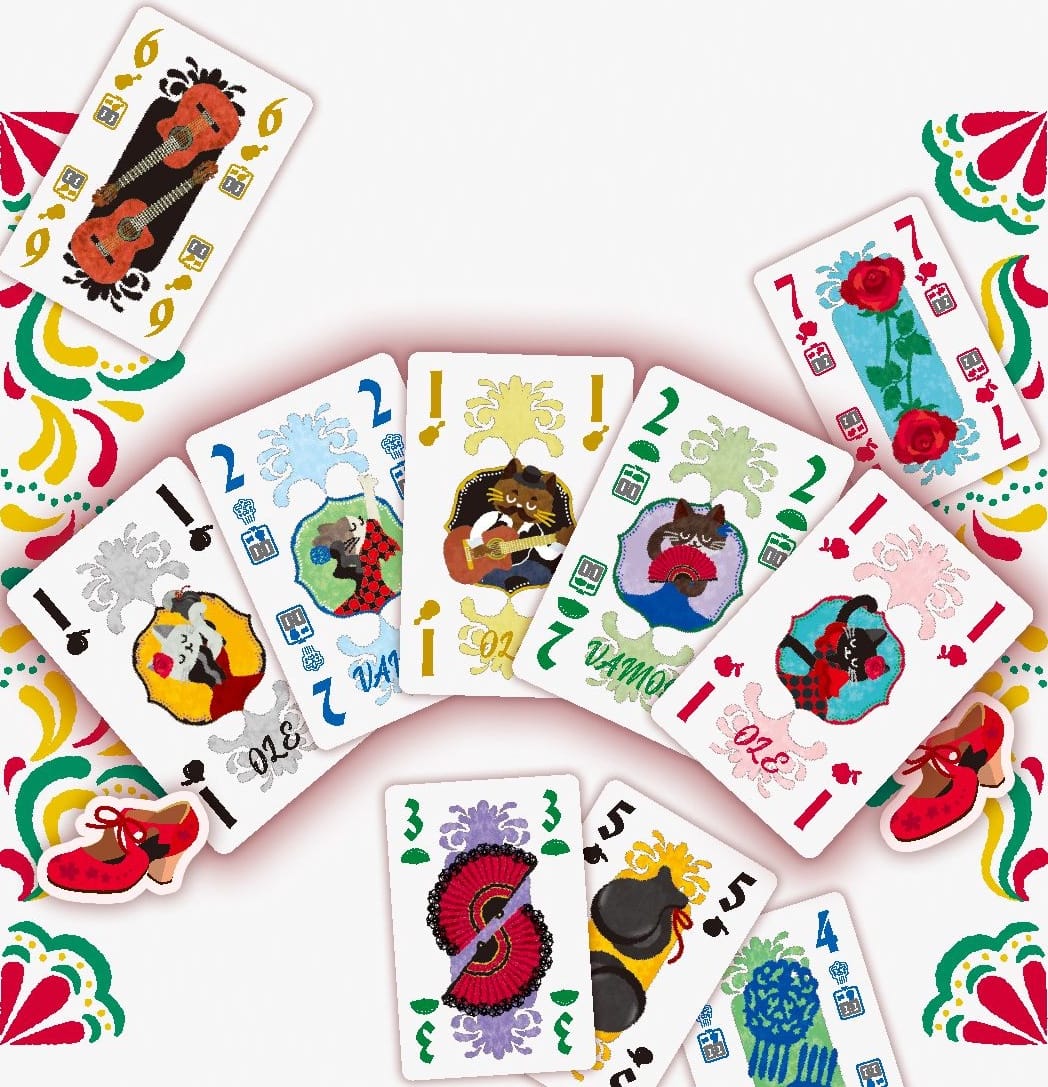
Two additional wrinkles in play: In a split, each lower pair of cards must not share a color with the higher card it beats. Additionally, a 7 can be beat by a 12 played together as long as the 12 differ in color from the 7. Thus, 777 could be beat by 111222 as long as you can pair the 1s and 2s the proper way.
Players score points in the order that they empty their hand, and whoever has the most points after 3-5 rounds wins.
P.I.
In 2012, designer Martin Wallace published P.I. through his Treefrog Games brand, and now BoardM has released a second edition of P.I. with new art, a two-player mode (for this 2-5 player game) that introduces a new victory condition, and a companion app that allows for timed solo play.
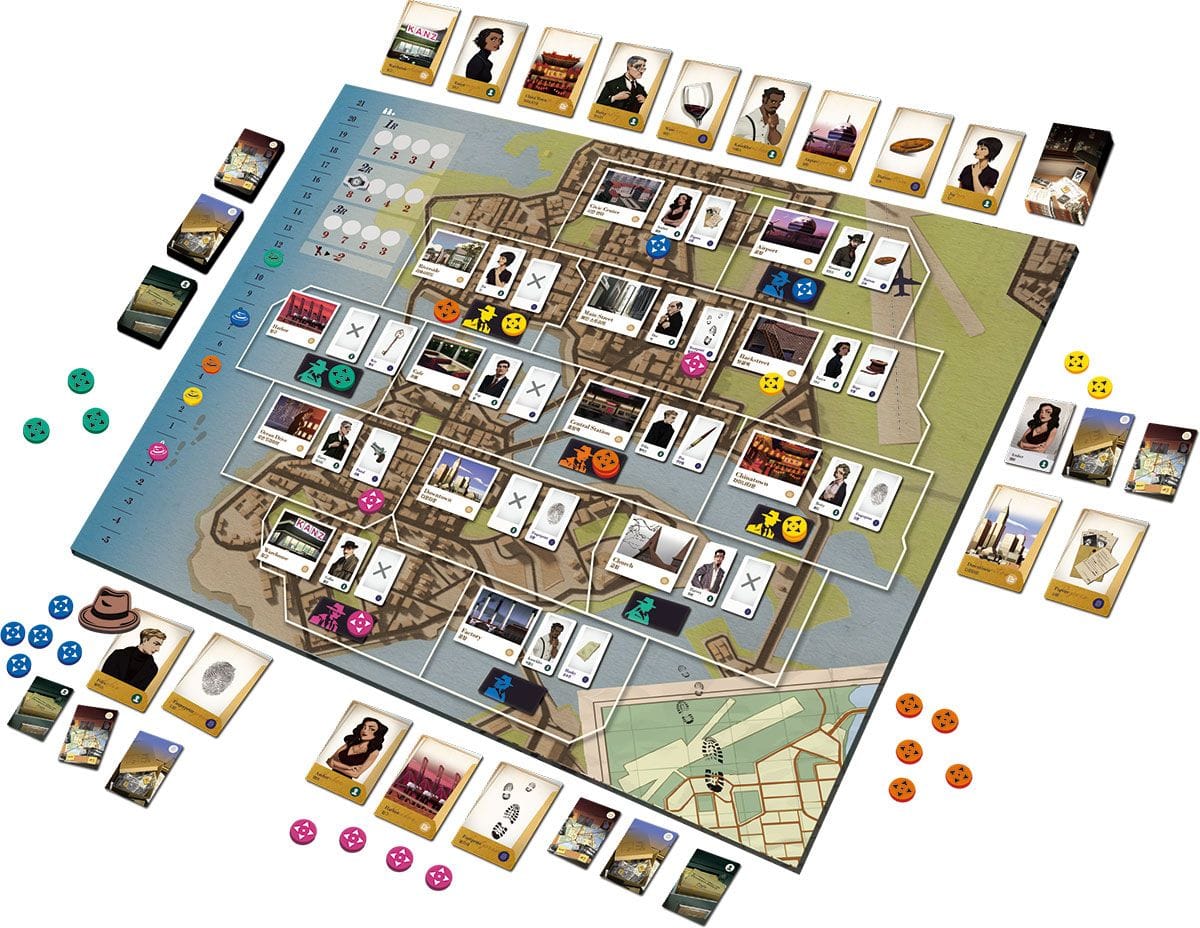
The game lasts three rounds, and in each round you need to guess the suspect, evidence, and location cards held by your left-hand neighbor, a.k.a., your target. The earlier you do it relative to others, the more points you score, as in Flamenco (and six thousand other games). On a turn, you do one of the following:
- Place an investigator tile in a location, then your target places a rectangular spot marker on the investigator for each item in that location matching a card they hold as well as a trace marker for each item they hold that's in an adjacent location. You won't know whether a marker relates to the suspect, evidence, or location, but you can move them around on the board as you like as you learn more or make deductions.
- Identify a clue card from the nine on display. Your target marks the matching tile with a spot marker if they hold the matching card or a trace marker if the item on the game board is adjacent to the item of the same type that they hold. If neither of these is the case, you keep the clue card as a reminder that nothing on the game board around this item matches what you're looking for.
- Guess the target's cards. If you're wrong on any of the three cards, you lose 2 points; if not, score points, then sit out the rest of the round.
When at most one person hasn't guessed at the end of a round, clear the board, then set up for the next round the same way, with the only difference being that correct guesses score more points and investigator tiles are limited to five per game.
For the two-player game, when you guess, you either get the opponent's items right and win the round, or you lose the round. (If you're the round's first player, your opponent gets one chance to guess.) Whoever wins two rounds first wins the game.
Memory Island
Gary Kim's Memory Island appeared from Bloom Games, an imprint of BoardM, in 2022 in a card game format, and now it's being re-issued with tiles instead of cards.
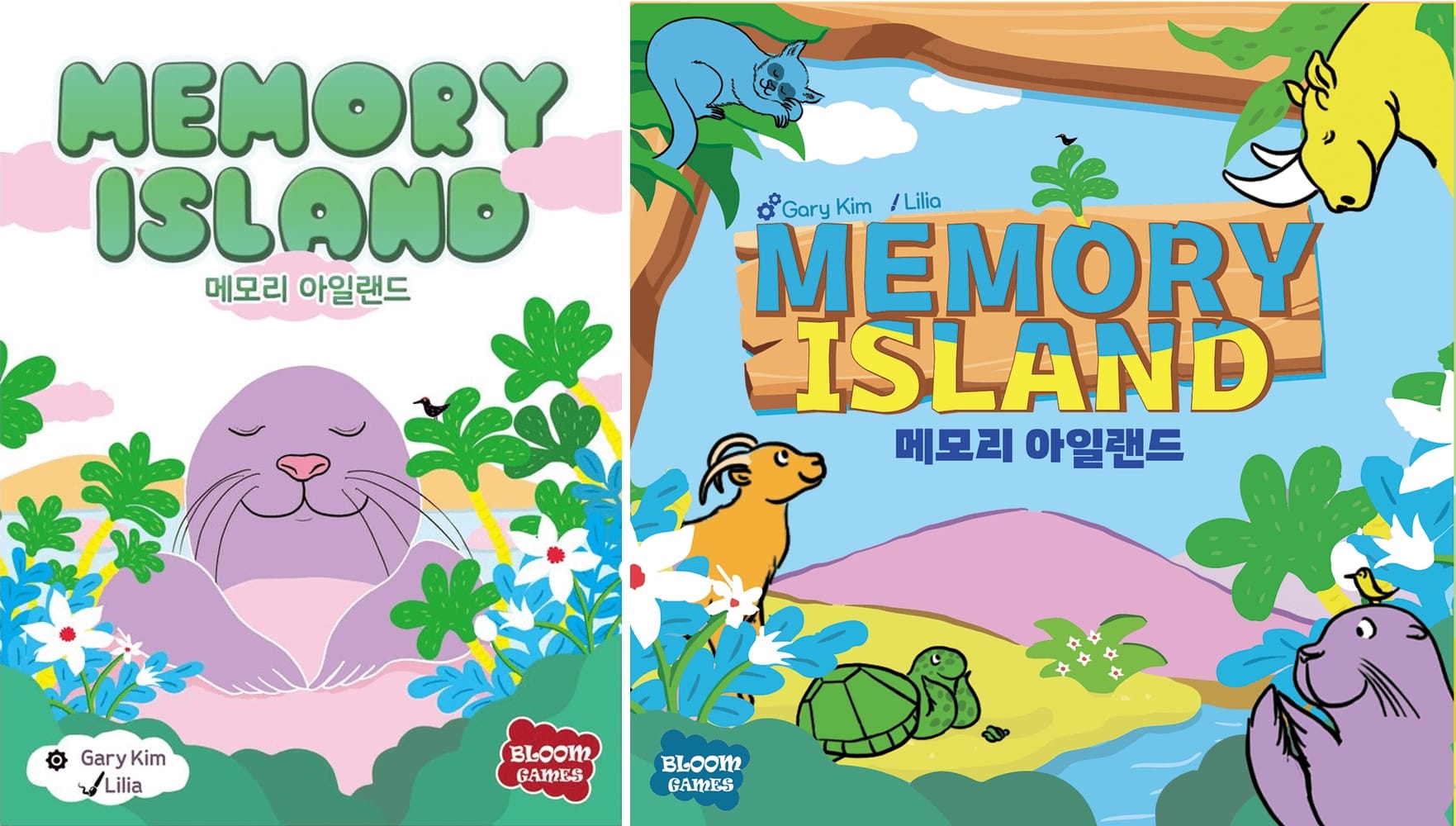
Memory Island gives young players a slightly harder memory challenge game. Lay out 48 tiles that show numbers from 1-10 face down. On a turn, flip over tiles one by one. If they sum to exactly 10, claim those tiles! If the sum is higher than 10, flip them face down again. If you flip a 10, claim it, then take another turn.
If you have claimed ten tiles, you win — and you can never claim more than ten, so if you have eight tiles, you need to flip two tiles that add to 10 or claim two 10 tiles. Alternatively, when all seven 10s have been claimed, whoever has the most cards wins.
Want more SPIEL Essen 26 coverage like this?
Get Board Game Beat’s free posts by email — original reporting, designer interviews, and industry news, with no tracking, no ads, and no spam.