Should you be short on reading material this weekend, I offer the following breadcrumbs toward coverage of games and the game industry elsewhere:
▪️ At the start of September 2026, Chris and Suzanne Zinsli published the 2026 edition of their "Board Game Licensing Contract Terms" survey on Cardboard Edison. (You can see a portion of those survey results above.)
For this report, they surveyed game designers who had signed a licensing contract between 2000 and 2025, collecting data on 265 contracts, then compiling that information into three huge graphics that cover pre-publication contract terms; post-publication terms; and what might happen over a game's lifespan. For comparison, Cardboard Edison includes previous surveys published in 2021 and 2015.
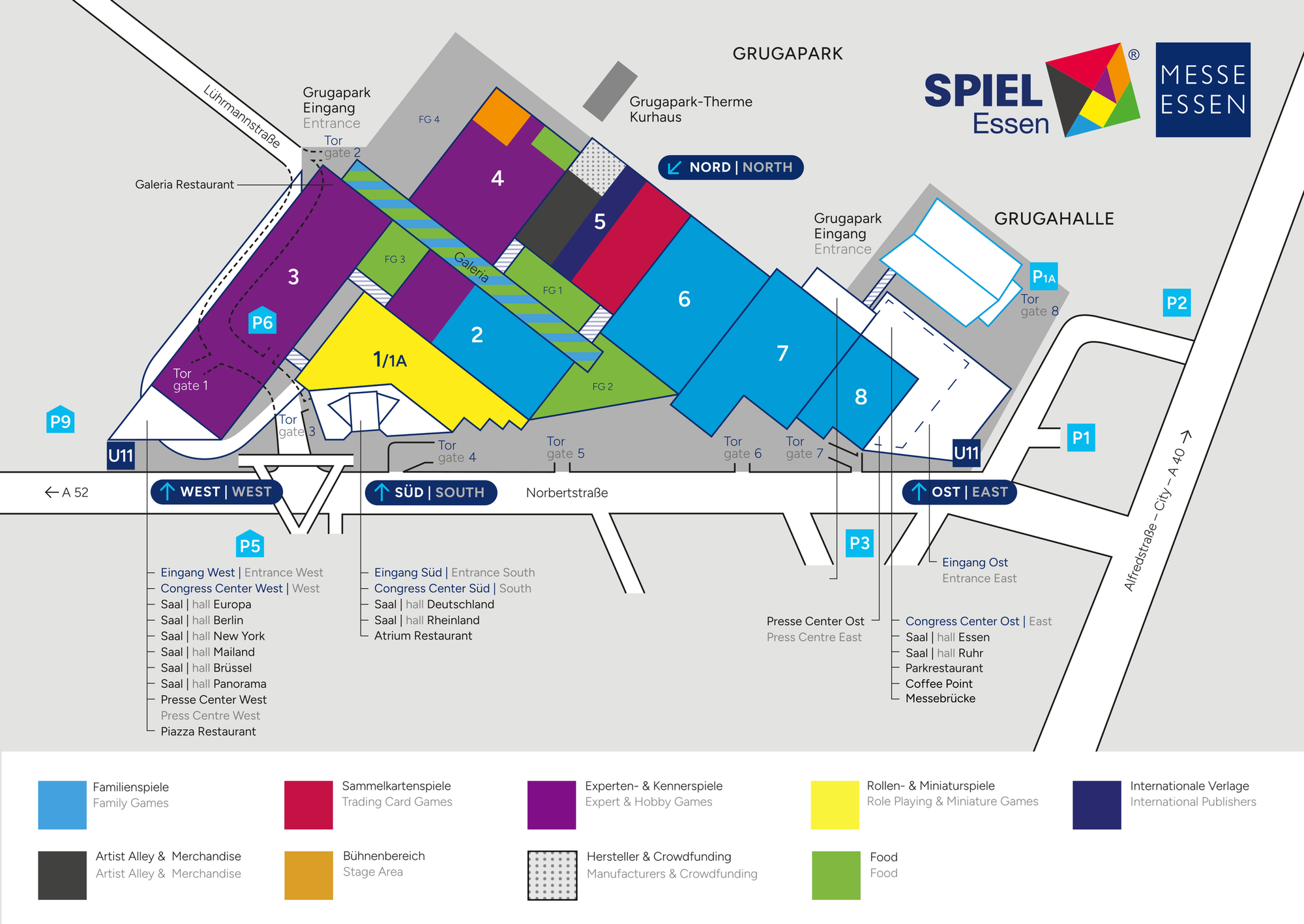
▪️ Merz Verlag has published hall plans and an exhibitor list for SPIEL Essen 26, in addition to releasing a 2026 update for its SPIEL Essen app. With all eight halls of Messe Essen being used for the fair this year, SPIEL Essen 26 will take up 81,200 m² of floor space, with the addition of Hall 8 allowing for more visitors — up to 230,000, with 75% of the tickets for Thursday, Friday, and Saturday already being sold. Currently 921 exhibitors from 53 countries are scheduled to be present.
▪️ Evie Lake at the BBC has profiled James Purcell and Andy Taeger, who she describes as "[t]wo friends from Newcastle [who] have set themselves the challenge of completing a board game which has never officially been completed", with that game being Richard H. Berg's The Campaign for North Africa: The Desert War 1940-43. They estimate they will need twenty years to complete the game, and they've already published 94 episodes of their "War with a Mate" podcast about their preparations and their eighteen-month-long, six-turn practice game.
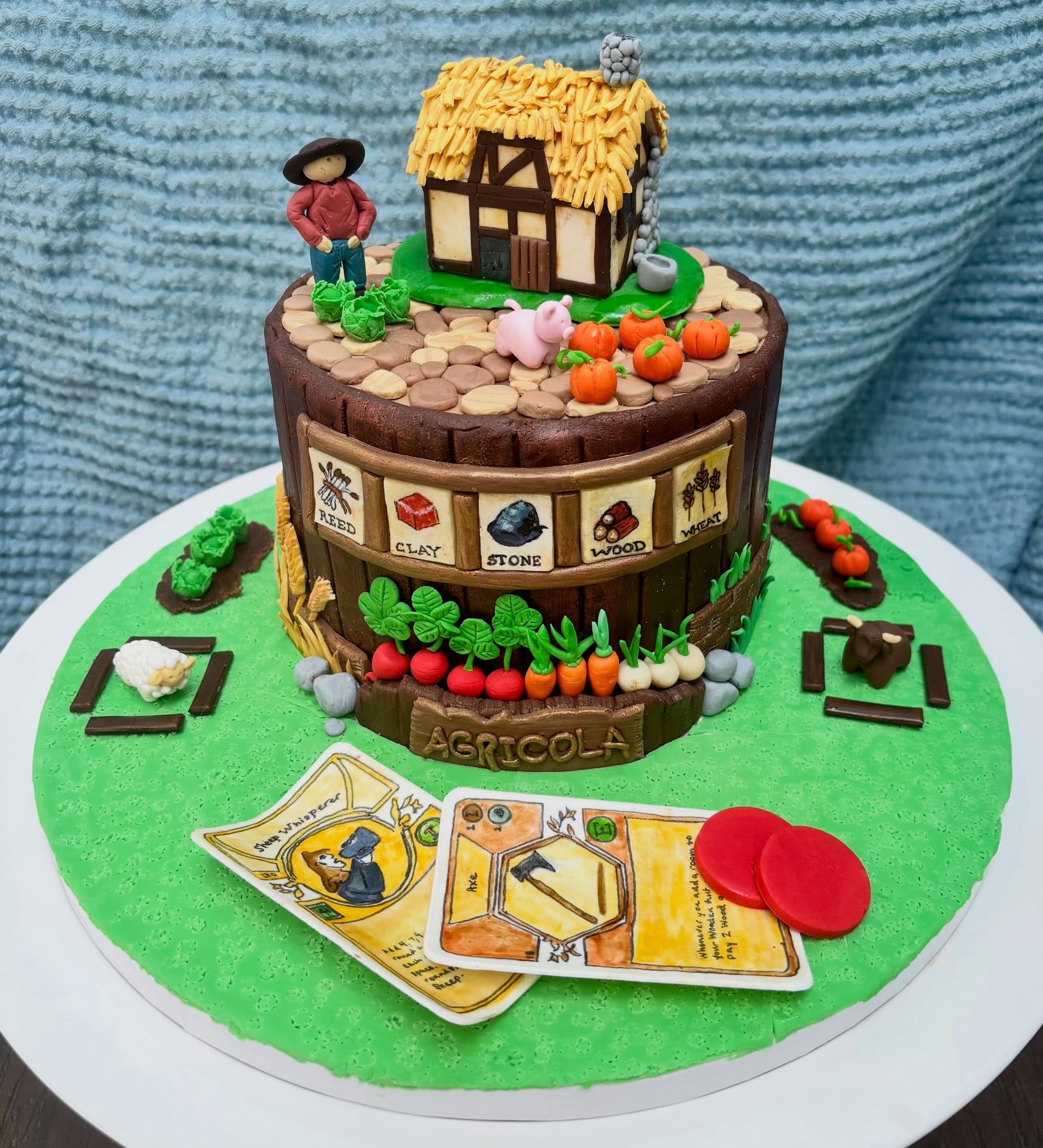
▪️ On BoardGameGeek, Beth Heile posted a round-up of game-themed cakes presented at the 2026 Minnesota State Fair, with many images of cakes courtesy of Greg Sorenson. Sara Dauscher Sather won the "Game On!" cake competition with her presentation of Agricola in cake form:
▪️ On Rascal, Khee Hoon Chan writes about UK Games Expo's new prohibition of "[i]tems and products that have been created or generated completely or in significant part by the use of AI tools and programmes". Writes Hoon Chan:
This notice follows a lack of response by UKGE on its generative AI stance during the event in June 2026, despite calls by several tabletop creators to prohibit the sale of products that utilizes AI-generated images and text, as reported by Wargamer. As such, games that contained material generated by LLMs and commercial AI tools, such as Adventure Bears and Blocks of Glory, were allowed to successfully exhibit alongside human-made games without any disclosures.
▪️ In July 2026, Lucca Crea and SAZ Italia named the five finalists for its Board Game Designer of the Year award, and it's now announced Paolo Mori as the winner, writing:
From 2024 to 2026, Mori moved with rare ease between widely differing styles. These ranged from historical wargames in both accessible and more traditional, simulation-driven forms, to family games with international reach, as well as a foray into narrative puzzles that took his distinctive design style into entirely new territory. In every case, the designer retained his signature approach, built on streamlined rules, consequential decisions and unfailing mechanical balance. Equally significant is the fidelity with which Mori treats his historical and cultural sources, whether wartime events reconstructed in meticulous detail or literary works adapted into game form with respect and precision. This makes the setting an integral part of the gameplay experience, never mere background.
This stylistic range is matched by a remarkable ability to speak to different audiences, from the most discerning historical simulation enthusiasts to casual players. This quality has made his games effective vehicles for promoting board game culture and expanding the audience for modern board games.
Want more reading material like this?
Get Board Game Beat’s free posts by email — original reporting, designer interviews, and industry news, with no tracking, no ads, and no spam.