This Boardcast is sponsored by Czech Games Edition.
The Boardcast is audio narrations of select articles. Listen to all episodes (or find out how to get them in your favorite podcast app) here. Prototype+ members can access an ad-free version here.
Over the past few years, I've noticed publishers in both Europe and the United States moving toward smaller game releases. Neither region is in a recession — although tariffs imposed by the U.S. government on goods being imported into the country might push various economies over that line — but publishers have been hearing from retailers that their customers want less expensive games, so they're listening to feedback and creating products that fit that request.
Two publishers told me at Toy Fair NY 2026 that US$40 is the upper limit for a game's MSRP these days. To be clear, these publishers primarily release games for mass, i.e., mass market/mainstream outlets, not for hobby stores, although you will often find their titles in both locations. (Crowdfunding sites are a third retail outlet with v. different rules regarding pricing.)
The Q1 2026 issue of Around the Table, a quarterly publication by GAMA, features an article by Lyle Lowery titled "The Incoming Wave of Card Games" that hits the same point, quoting Eric Price, owner of Japanime Games and a GAMA board member, as saying, "I've put a halt to several games we were developing in the $50 to $60 range. We quit doing big-box or even medium-weight games to focus on [standalone] card games, accessories, and collectible card games."
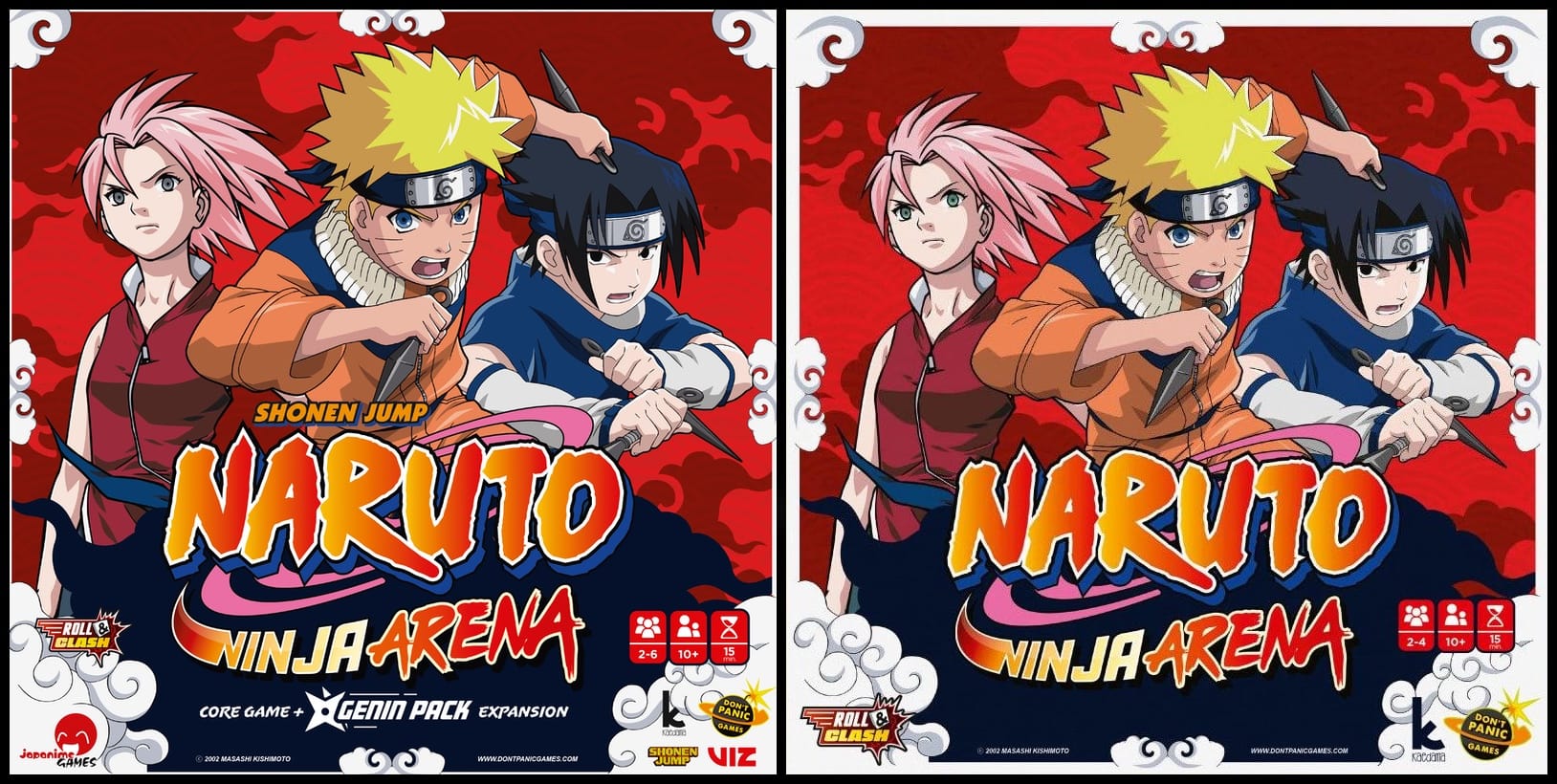
I saw an example of this from Japanime Games at GAMA Expo 2026 in early March. In 2021, the company had released Naruto: Ninja Arena from French publisher Don't Panic Games in a compilation edition, with the base game and Genin Pack Expansion in a single box featuring ten characters and components for up to six players for US$50.
For 2026, Japanime has repackaged Naruto: Ninja Arena in a smaller box with only four characters and dice for up to four players and with the price now at US$35. (Six additional characters — with no extra dice — are sold for US$18 in a Sensei Pack Expansion previously available solely in France and Spain.)
Like this kind of board game coverage?
Get Board Game Beat’s free posts by email—original reporting, designer interviews, and industry news, with no tracking, no ads, and no spam.
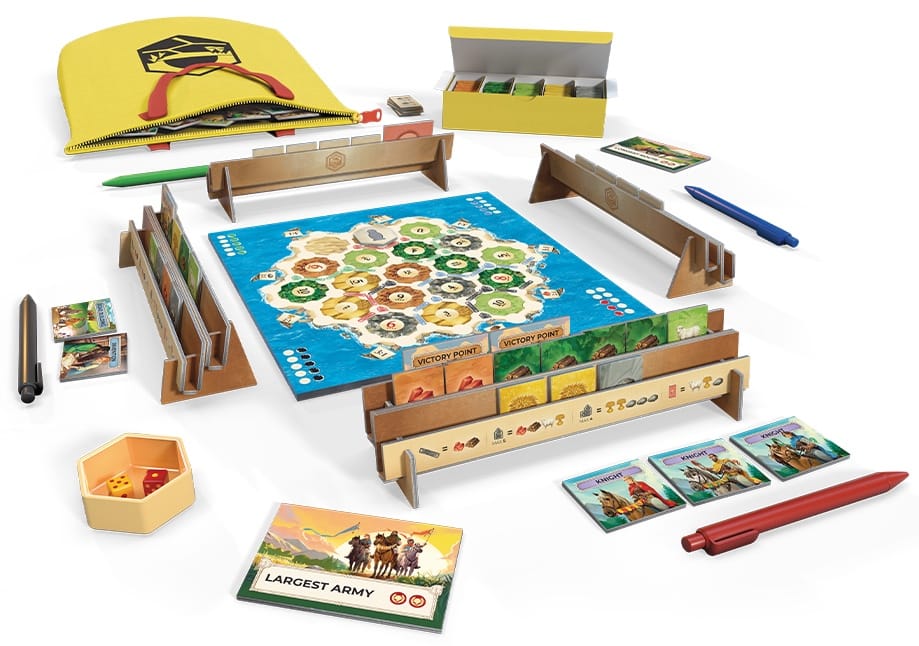
Many other examples of shrinking games are already on the market or have been announced for release in 2026. I've already written about CATAN: On the Road, a US$10 card game from Benjamin Teuber based on his father Klaus' classic CATAN, but in early March 2026 CATAN GmbH announced CATAN: ZIP! Edition, with this portable version of the game featuring punchboard resources and development tokens, punchboard tile holders, and a mapbook that features fifty unique paper maps that you'll draw on with pen.
CATAN GmbH listed May 1, 2026 as the release date, with a US$25 retail price.
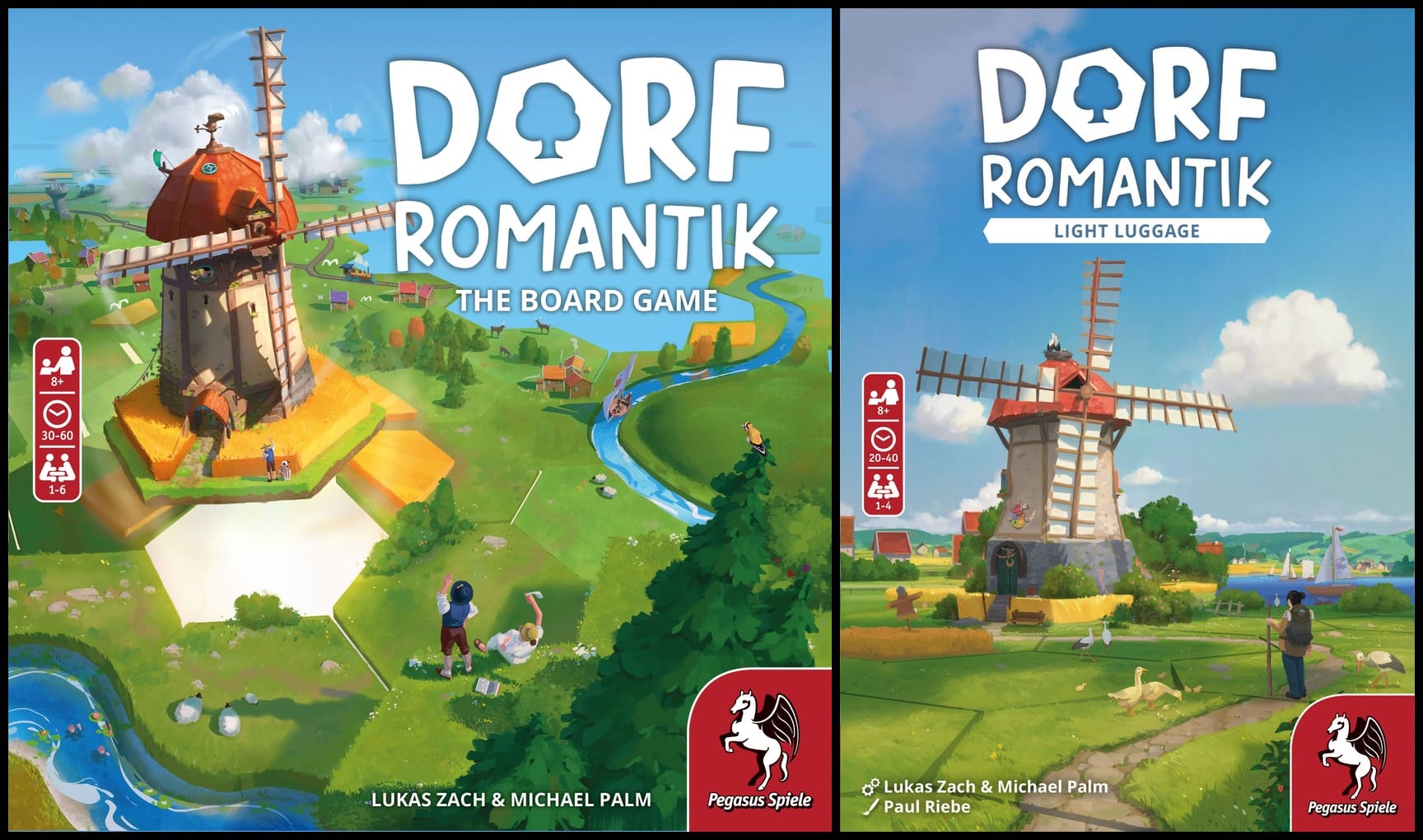
In October 2025, Pegasus Spiele released Dorfromantik: Light Luggage, with this being a new standalone game in the Dorfromantik series from Michael Palm and Lukas Zach. Gameplay is the same as in the original 2022 Dorfromantik: The Board Game, but Dorfromantik: Light Luggage features a new co-operative campaign that is simpler and easier to keep track of, according to Zach.
Whereas Dorfromantik: The Board Game and the standalone sequel Dorfromantik: Sakura both retail for US$45, Dorfromantik: Light Luggage sells for US$25, and its box is one-quarter the size of the original game, with smaller tiles to match.
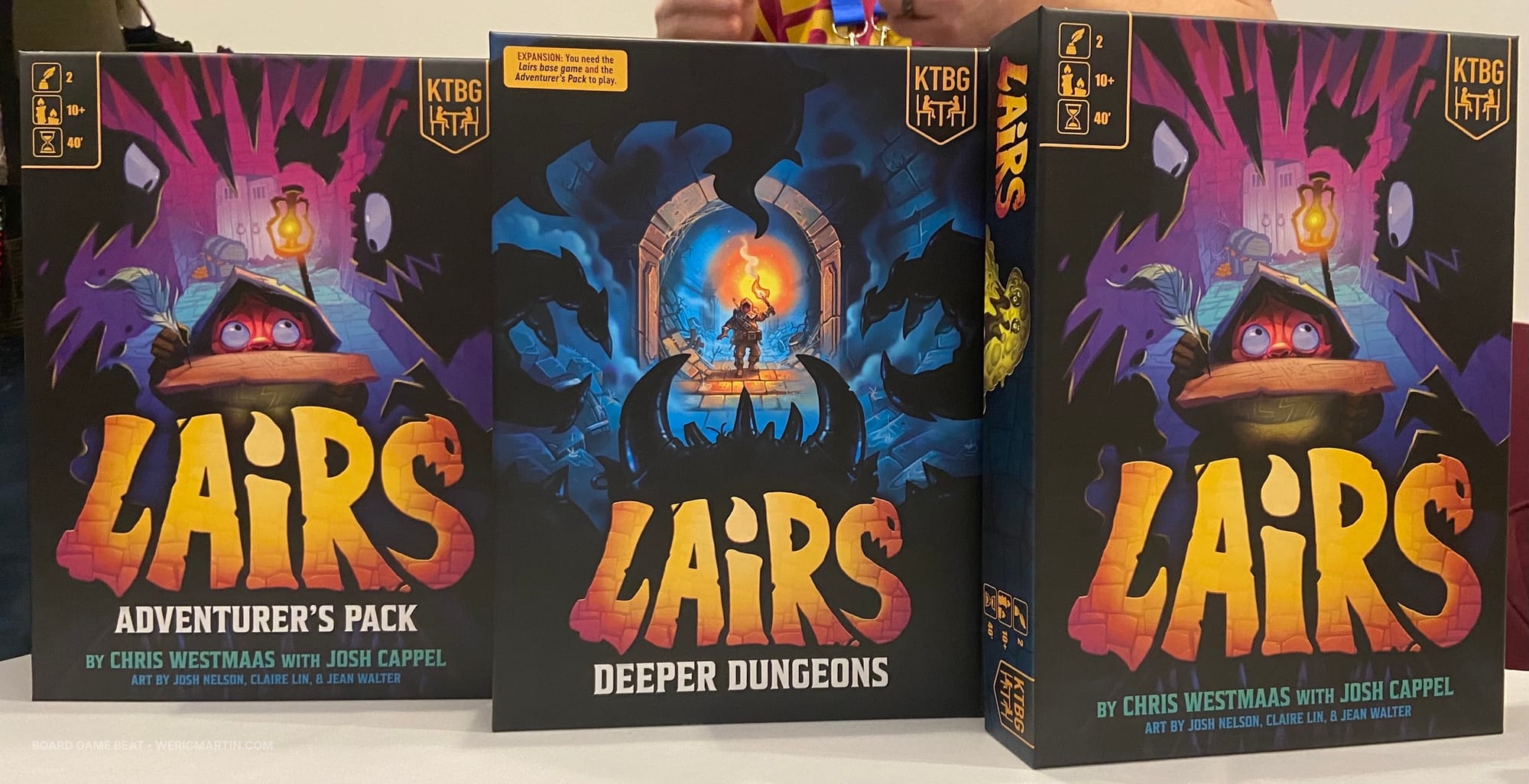
While at GAMA Expo 2026, I got a peek at Lairs by Christopher Westmaas and KTBG, a game for two in which each player creates a dungeon from which the other player will attempt to escape.
During the late 2024 crowdfunding campaign, KTBG had pitched a Lairs base game that would include multiple boxes and envelopes to explore so that you could introduce new game material bit by bit, as well as a separate Deeper Dungeons expansion.
The price to back Lairs was CA$69 (approx. US$50), with the base game + expansion being CA$115 (approx. US$85), but now KTBG has broken the base game into Lairs and Lairs: Adventurer's Pack, with the latter containing the boxes and envelopes. By doing this, the Lairs base game will now retail for US$40, while each expansion box will be US$35-40, thus bringing down the entry price for this game line.
Along the same lines, in 2026 KTBG's sister company Burnt Island Games — which has previously released beefy titles that retail for US$50-60 such as Fall of the Mountain King, Endeavor: Deep Sea, and How to Save a World — will launch a new small box game line with Treeline, a 2-4 player game by Christopher Ryan Chan.
Each turn, the active player flips two tiles face up, then marks the empty spaces on one tile with their troops, while the next player places their troops on the remaining tile. Then the next player flips two tiles, and so on. When a row or column has each space filled, you see who has the most troops in that line, with that player claiming the points for that line, but losing troops in the process — which makes it less likely to win the crossing lines.
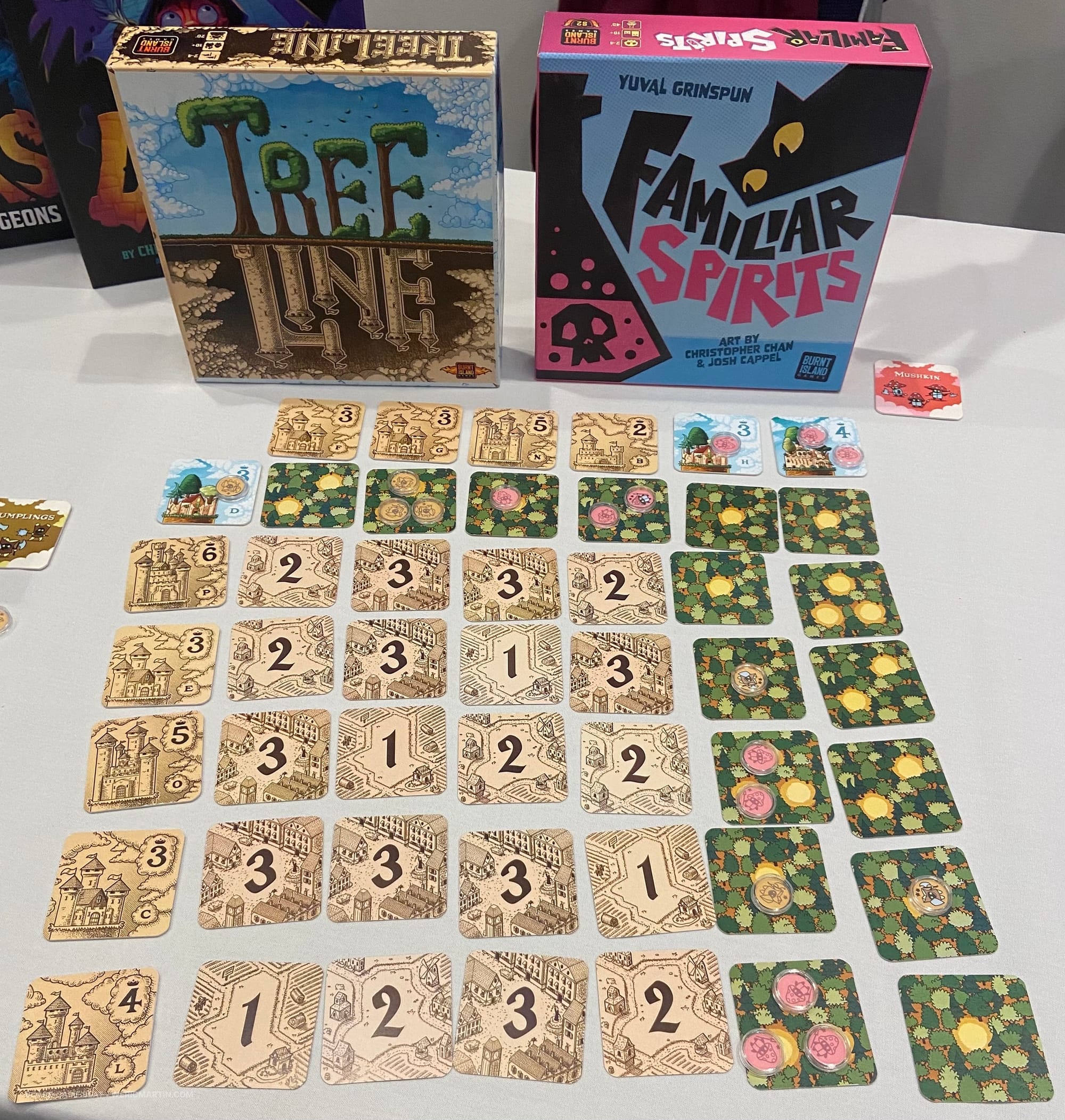
The second title in this Burnt Island small box line will be 2027's Familiar Spirits from Yuval Grinspun, who designed the aforementioned How to Save a World.
In this game, 2-4 players are wizards who have three sizes of familiar, and you'll send these familiars into the wilderness to collect herbs, fungus, and crystals, possibly by bumping a smaller familiar from its spot. Alchemists will distill these ingredients into potions with unique powers that you'll ideally arrange in ways that will please the familiars. To make the cabinets in your office look their best, you can also hire imps and acquire rarities at vendors.

Unlike the titles mentioned so far, Lyle Lowery's article in Around the Table focuses on the increased prevalence of card games in publishers' catalogs, both now and in the years to come, and it highlights tariffs as the primary cause for this switch, but I'd argue that publishers have been moving in this direction for years, thanks in part to the success of 7 Wonders Duel, a two-player-only version of 7 Wonders that debuted in 2015, retailing for US$30, half the price of the original game.
Publishers are already well-versed in line extensions, that is, in releasing products that expand an existing game line — think of CATAN, Carcassonne, and yes, 7 Wonders. Line extensions generally carry less risk than new releases since they have a built-in audience of fans who will automatically look at this new product, but they also require those fans to already own another product since those line extensions are typically expansions.
That was not the case for 7 Wonders Duel, which stood on its own, appealing to fans of the original game, but also drawing in players who might have liked 7 Wonders yet lacked the crowd to play it.
The success of 7 Wonders Duel opened a new angle on line extensions. Sure, we had previously seen titles like Carcassonne: The Castle, Blokus Duo, and Agricola: All Creatures Big and Small, but in the few years after 2015 we saw Kingdomino Duel, Yokohama Duel, Imhotep: The Duel, Zooloretto Duell, Cosmic Encounter Duel, and Carcassonne für 2. Yes, this was a second Carcassonne game for only two players with this one being the original game, but with smaller tiles and fewer of them.
Ticket to Ride followed this latter model — the same, but smaller — with Ticket to Ride: New York in 2018, which plays like the original game but with fewer pieces and a much abbreviated playing time. Five other such city versions of Ticket to Ride have been released since then, and this trend of "the same game but smaller" will only accelerate in the years to come, with publishers wanting to mitigate risk by selling what's already successful, while also having the possibility of upselling buyers in the future to the larger game.