I constantly marvel at the breadth of what’s present in our world, at the ability to discover (again and again) a massive fanbase for an activity or creative endeavor or media topic that I didn’t know about — and your introduction to a new topic often results from someone else's arrival on the scene, with them diving into that hidden ocean and you getting caught up in the ripples of their splash.
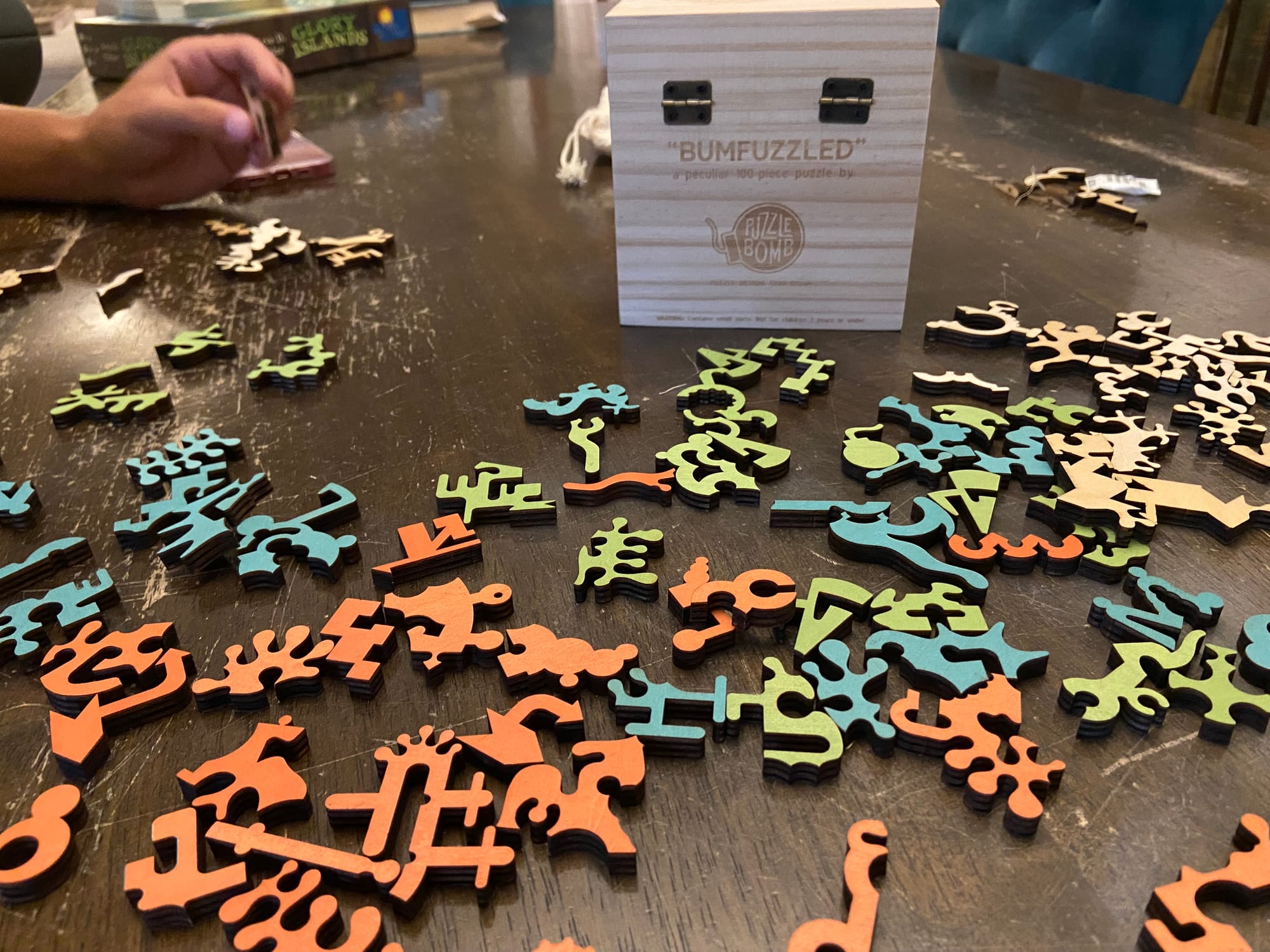
This happened (again) in 2021 when my friend and former co-worker Chad Krizan, BoardGameGeek’s advertising manager, launched a Kickstarter campaign for “Bumfuzzled”, a 100-piece wooden jigsaw puzzle that was available to backers at a discounted price of US$42.
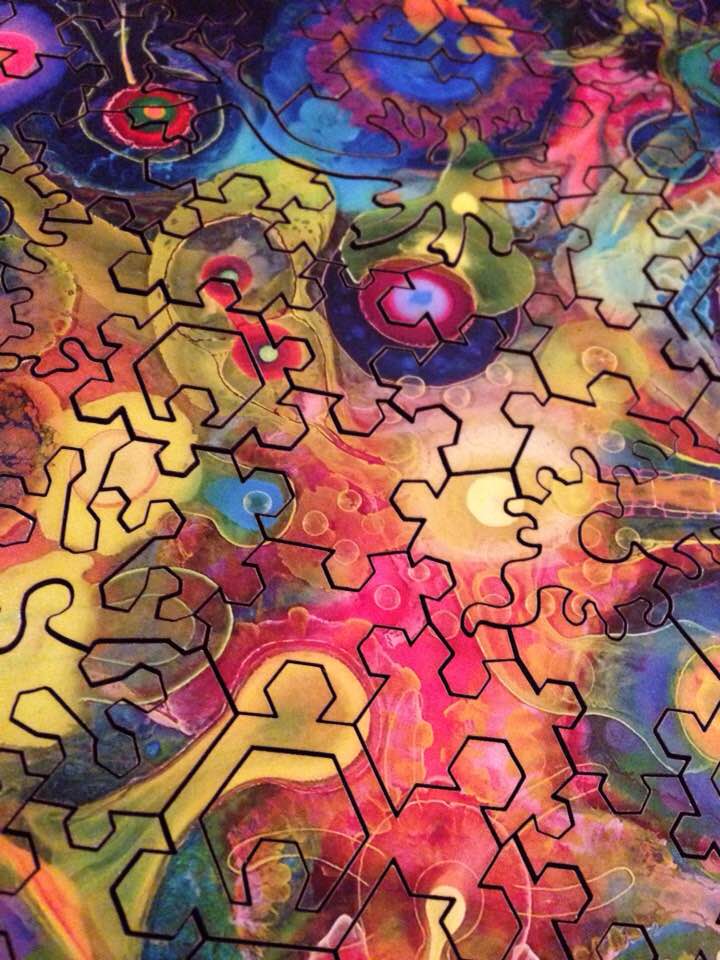
That price seemed somewhat pricey, even with the discount, but I backed it to support Chad and received a challenging abstract jigsaw puzzle that my son and I had a ball putting together. The experience of handling that puzzle differed from what I was used to: the shapes were more intricate — seemingly limited only by the desire of its creator — and we worked without a supporting image, which made the puzzle aspect more puzzling. Where’s the bolt for this wrench? Where will these arrows end up? And what’s with all the toe separator sponges?!
Turns out Chad had caught the wooden jigsaw puzzle bug in 2017 and been diving deeper into that hobby ever since. “I don't remember exactly how I came across them, but I remember seeing pictures of intricately cut wooden puzzles, and I just thought they looked so fun and challenging”, he told me. “However, as is the case for many folks who first enjoy cardboard puzzles, I had a bit of sticker shock when I saw the high price of wooden puzzles. I stuck one on my Christmas list as a ‘I don't want to pay for this, but would be happy to receive it’ item.”
Someone did gift him that puzzle, which turned out to be gifting him an obsession at the same time: “I absolutely loved it and immediately ordered more now that I realized they were totally worth the sticker price.”
Chad had (and still has) a full-time position at BoardGameGeek, but he says, “In late 2019, my wife Caylyn and I were praying for some direction, and the idea of starting a jigsaw company emerged. By 2020, we had the company formed, releasing the first puzzle later that year.” And that first puzzle was...a metal and enamel design. Wait, where’s the wood? How did this come about? Chad answered in depth:
Funnily enough, the original concept was to create cardboard puzzles with the more intricate piece shapes of wooden puzzles. However, to stand out as a new company, I wanted to make something a bit wild and ridiculous to grab folks' attention, so I had the idea of creating a puzzle of metal/enamel pins, but without the pin back, with over-the-top jewelry box packaging. The result was incredibly unique, and I still get emails today from customers wondering when we'll reprint it.
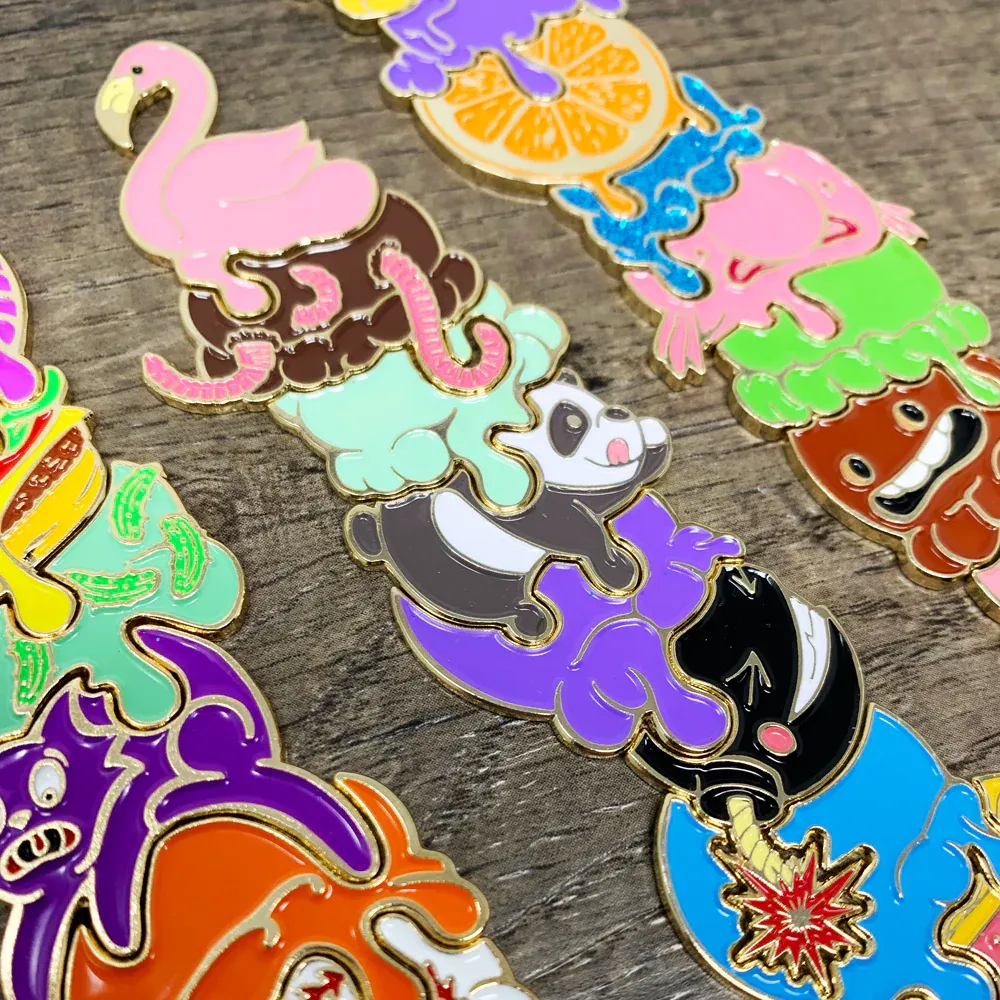
However, enamel pins aren't a precision production, and even a minor variance from pin to pin can result in pieces that don't fit together well, which meant we had to test fit every single puzzle. It was a 30-piece puzzle, and we made 300 units, which meant hand-testing 9,000 pieces. Out of those 300 units, we ended up with something around 250 functional puzzles and a slew of ill-fitting extras. One of the goals of the business is freeing up our time, so a product that requires this much time and labor just isn't a good fit, but it did successfully serve the purpose of getting initial attention for Puzzle Bomb!
If you look at our site, you'll notice we don't offer cardboard puzzles as was the original plan. The die-making process for the original idea was taking a long time, so out of boredom, I sketched out Bumfuzzled #1 over a few days, had a sample in-hand within two weeks, and threw together the Kickstarter campaign something like one month later. It sold 646 units, which seemed quite good considering I hadn't done much marketing, which changed the entire direction into the abstract wooden puzzles we're now known for.
I don't recommend this business approach, but I tend to act on ideas without much planning as I see so many folks plan and plan and plan but never get anything done, and you really don't know what works until you do something. This approach has served me well at BoardGameGeek as well as it's how the whole GeekUp line of bits started, as well as the Artist Series art prints and silicone bowls and card holders. I tend to prefer the shortest route between having an idea and having something to show for it!
The Puzzle Bomb name originated in much the same spirit, with Chad telling me, “The attached picture pretty much sums it up...”
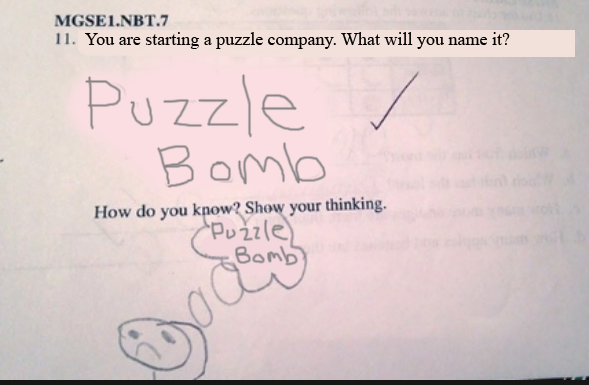
He adds, “The main thing I cared about is that the name be easy to spell and easy to remember. I feel like too many businesses out-clever themselves with their business name, and leave customers or potential customers scratching their heads trying to remember the company name or ruining their company name with silly spelling. I also couldn't believe www.puzzlebomb.com was available; I wouldn't have chosen a business name where I couldn't get the .com address.”
The “Puzzle Bomb” name also lends itself to a straightforward, “obvious” logo, and the Krizans thought about branding and marketing consistency from the get-go. “I've been at BGG for a long time, including during the rebranding to the current ‘game flame’ logo. The BGG community reaction to that change was decidedly negative, which taught me you really want to start your company with strong branding rather than trying to pivot later. Basically, start your business as if it's going to succeed, making the necessary investments at the outset, rather than hoping you succeed and having to ‘fix’ things later.”
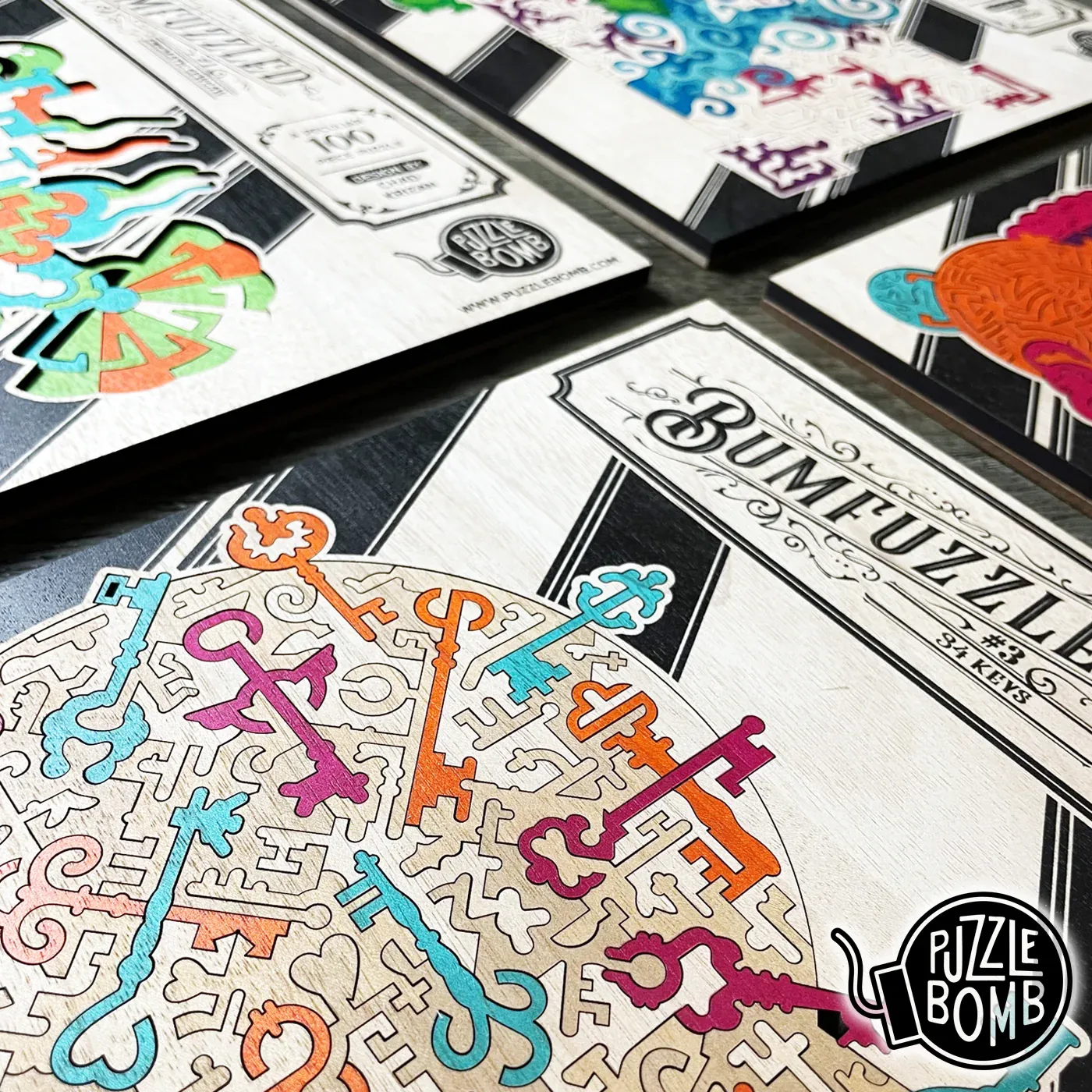
What’s more, says Chad, “Your branding is also in every decision you make. The colors you use. Your packaging. Your product titles and naming conventions. For example, this is why Bumfuzzled uses a very specific pallet of colors. I can design a wild variety of puzzles, and yet when you see a Bumfuzzled puzzle, you know it's a Bumfuzzled puzzle. Even if my logo wasn't on it, you’d just know.”
“Bumfuzzled”, by the way, means “confused, perplexed, or in a state of bewilderment”and dates to the 1870s, according to the Oxford English Dictionary. “Wooden jigsaw puzzles are an old-timey activity”, says Chad, “and I liked the idea of combining this vintage feel with my modern pop-art style.”
The OED also mentions that “bumfuzzled” has “[f]ewer than 0.01 occurrences per million words in modern written English”, which has to be great for search engine results, and Chad has plenty more to say about marketing, both for Puzzle Bomb in particular and more generally:
This is another place where twenty years at BGG has paid off. As I help board game companies market their games, a common question is how they can leverage the BGG forums. However, they're usually asking this question a week before launch, whereas they needed to insert themselves into the BGG community way earlier. If you just show up saying "Look at me!", you come across as a shill rather than a member of the community.
Even before we'd actually formed the company, I had started participating in puzzle groups. I started shooting time-lapse footage of solving other companies' puzzles. No mention of Puzzle Bomb or my intent to start a company, and it was truly authentic as I really enjoy puzzles to begin with. By the time we released something, those groups were happy to support me and were key to the early success.
Now, as any company should, I work on SEO and other organic methods of attracting potential customers, and I have all kinds of sophisticated ways to capture folks' email addresses and market to them via email. I also run thousands of dollars in Meta ads per month (going up to five figures in November and December), whereas it seems most board game companies see marketing as an expense rather than an investment that should produce a return. In my experience, that investment earns a return of at least $2.50 per $1 spent, and usually more.
The key is that while the front end was a lot of personal time investment since we didn't yet have revenue, I've now pivoted to outsourcing these things to experts in these fields. I like designing puzzles, not managing Meta ads. I don't have the time or expertise to focus on these things, and there's major value in having trustworthy partners who are experts in email marketing, Meta/TikTok/AI marketing, and SEO. I wouldn't have the time to do it myself, and I imagine a lot of board game companies are in that same boat, not thinking nearly big enough when it comes to their paid advertising.
While past marketing has focused on crowdfunding campaigns — five at Kickstarter and four at Gamefound — Puzzle Bomb is moving to a subscription service as of February 2026. “We've always released three puzzles per quarter, launching a crowdfunding campaign each quarter,” says Chad. “However, outside of the board game space, crowdfunding is confusing to a lot of folks and complicates the process of simply buying puzzles. While crowdfunding is beneficial exposure-wise, it's a high friction process that requires customers to jump through a bunch of hurdles and pay way more attention to a long process than most people want to.”
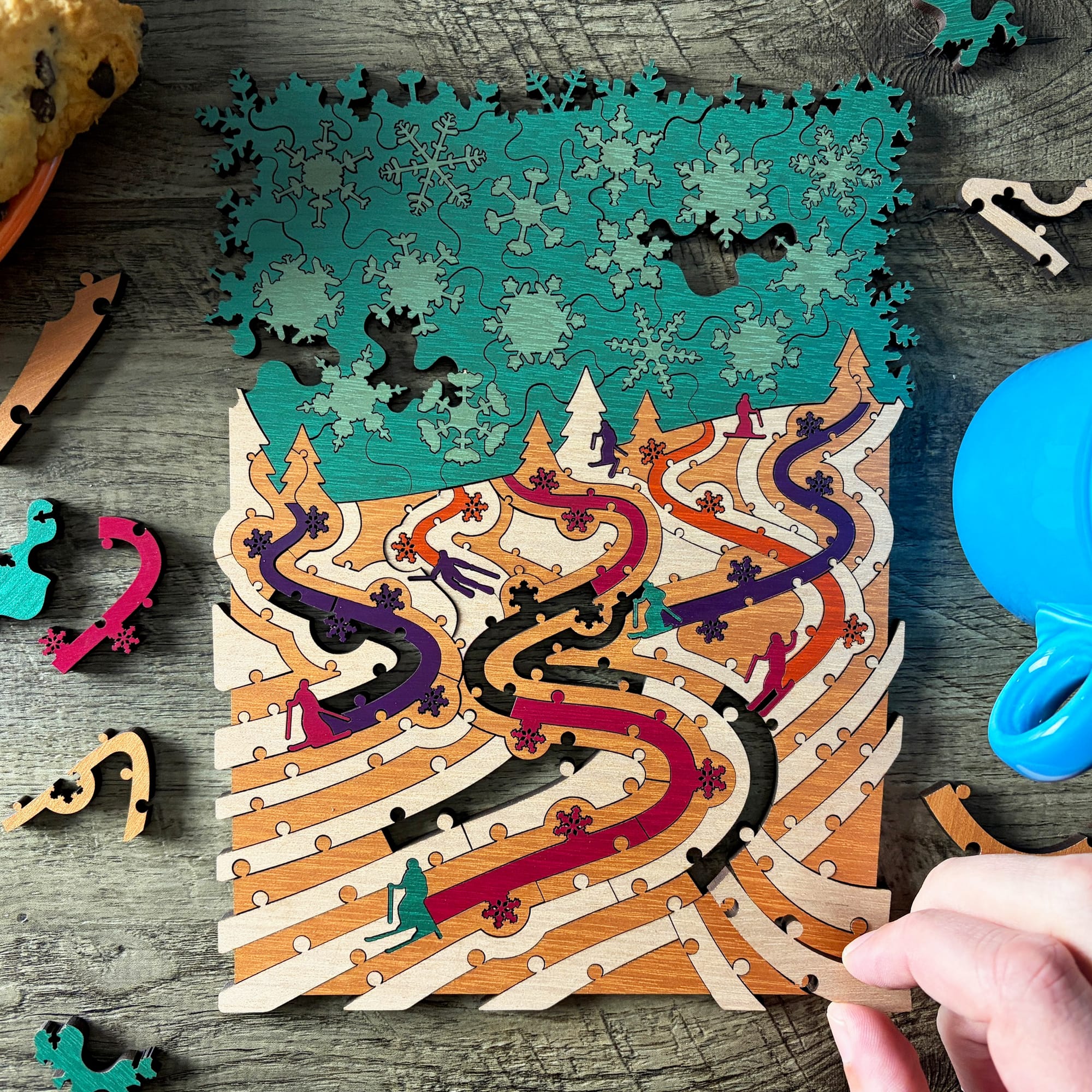
“Subscriptions will allow our customers an easy, predictable flow of puzzles, giving them an effortless monthly peaceful and relaxing appointment with our puzzles”, he adds. “We also love going above and beyond, so a subscription also comes with a free yearly puzzle gift that allows me to design some wacky/unique puzzles I'd like to do, but that don't fit into our established puzzle lines.”
For an example of what “wacky/unique” might mean, you can check out Puzzle Bomb’s “Party in the Back” series https://puzzlebomb.com/collections/browse-all-puzzles, which features not mullets, but multi-layered puzzles that provide a radically different solving experience. As Chad relayed in an October 2025 post, “Party in the Back” developed because some solvers wanted a meatier challenge than the 100-150 piece creations Puzzle Bomb had been delivering, but the Krizans wanted to stick to “a maximum package dimension” in order not to blow up their shipping expenses. Writes Chad, “So if I wanted more pieces, a small footprint, and flat-packing, my only option was to go up rather than out! Layers was the way to go.”
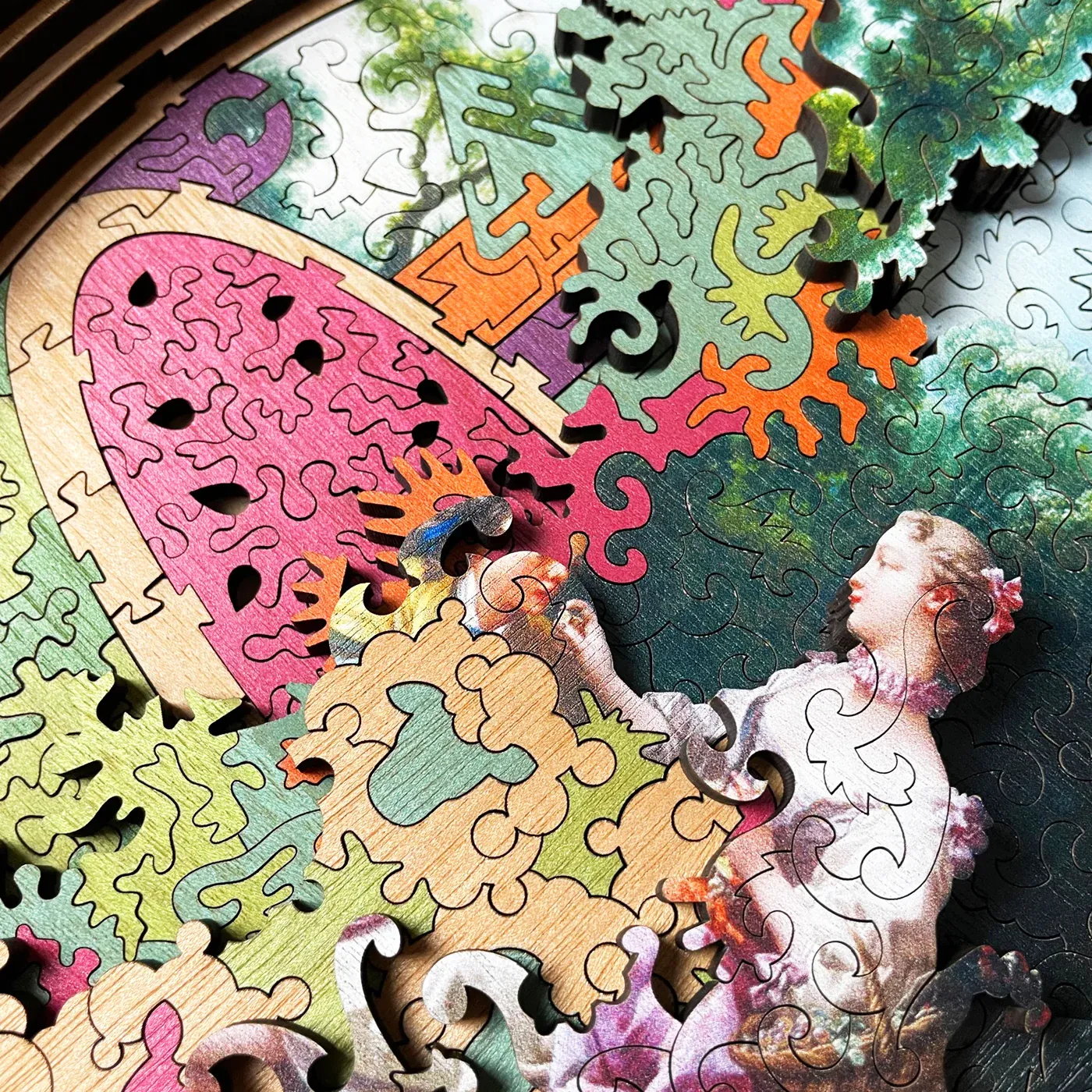
More generally, says Chad, “When designing a series like ‘Bumfuzzled’, my satisfaction comes from creating different solve experiences. If you think of traditional puzzles, 90-some percent of folks just agree you have to start with the outer border. It's not even a decision people make; it's just accepted that this is the way to begin a puzzle. With my puzzles, you have to evaluate each one, deciding on how to tackle each puzzle. My favorite part of the production process is receiving the first production sample, seeing how it ‘feels’ to assemble and seeing whether it matches what I was after.”
He continues, “Sometimes, I explain to folks that our puzzles are what happens when a board gamer decides to design jigsaw puzzles. In a board game, you have to assess the rules the designer created and how to best exploit those rules. My puzzles are similar in that you have to assess each puzzle for the optimal solve strategy.”
Want a deeper dive? Here's Chad's diary of the creation of Bumfuzzled #19.
Designer Diary - Bumfuzzled #19 - Cartographic Divide
Originally published 17 March 2025
The Spark!
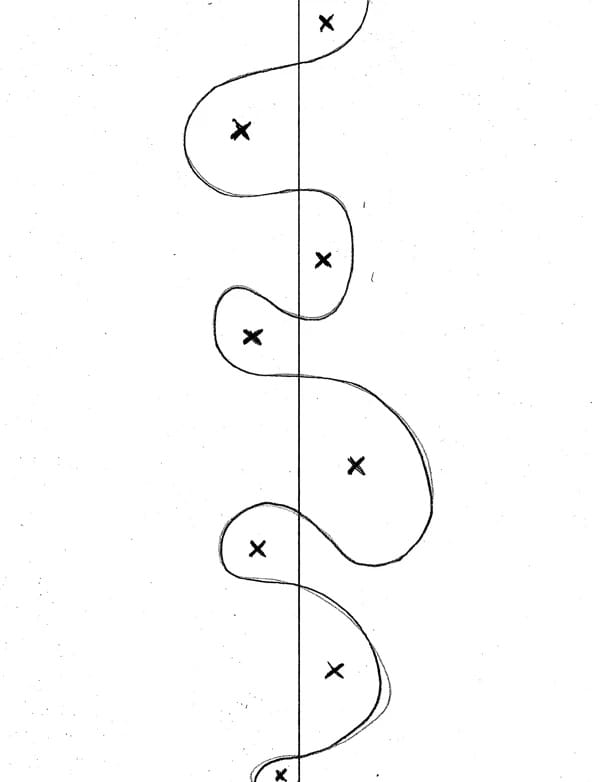
The initial idea for "Cartographic Divide" was a rather simple one. I had the thought of a canvas split in two, with a wavy line that undulated across the split, forming voids on either side of the split. Now that I wrote that out, it sounds surprisingly confusing, so here's the initial sketch:
Where to Go From Here?
Of course, having an initial concept is great, but as you can see, that initial sketch is quite boring! As I was pondering what direction to take with it, the idea of a topographic map came to mind. My college degree is in landscape architecture, and for two years in my early 20s, I was an urban planner. Urban planners look at and manipulate lots of topographic maps, so with this blast from the past resurfacing in my mind, I set out to find a topographic map I could use for inspiration.
I found one that I liked the look of and used it as the rough basis:
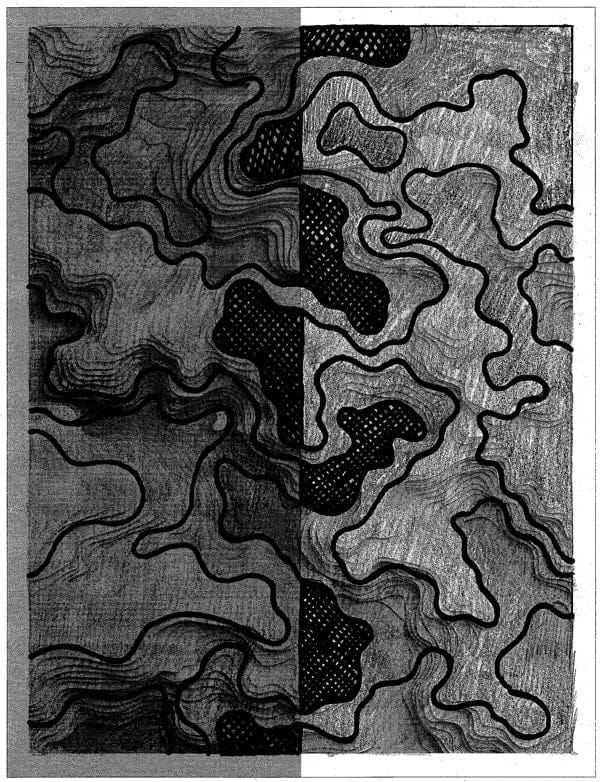
It's really hard to see without the final coloring, but using the topographic map theme, the puzzle is broken into three color-coded regions:
1) The undulating "mountain range" that crosses back and forth across the center line. This is the uncolored area of the final puzzle.
2) Midlands. This is the muted/pastel color area of the final puzzle.
3) Lowlands. This is the saturated color area of the final puzzle.
Developing the Linework
I knew the color scheme of this puzzle was going to be very helpful when solving, so I had to make the cut lines rather difficult to balance that out. Fairly detailed, random lines tend to be rather hard to assemble, so I went that route for the entire "mountain range".
To keep the puzzle from feeling too same-y, I then decided to use different styles for the midlands and lowlands. The midlands use a curvy connector type, similar to what I used in the top layer of "Party in the Back #1"!
That left me with the lowlands area. I always like design elements that clash and contrast, so I went with a series of "bulls-eye" concentric ring patterns. I enjoy the look of these quite a lot in the midst of the otherwise chaotic cut patterns in this puzzle!
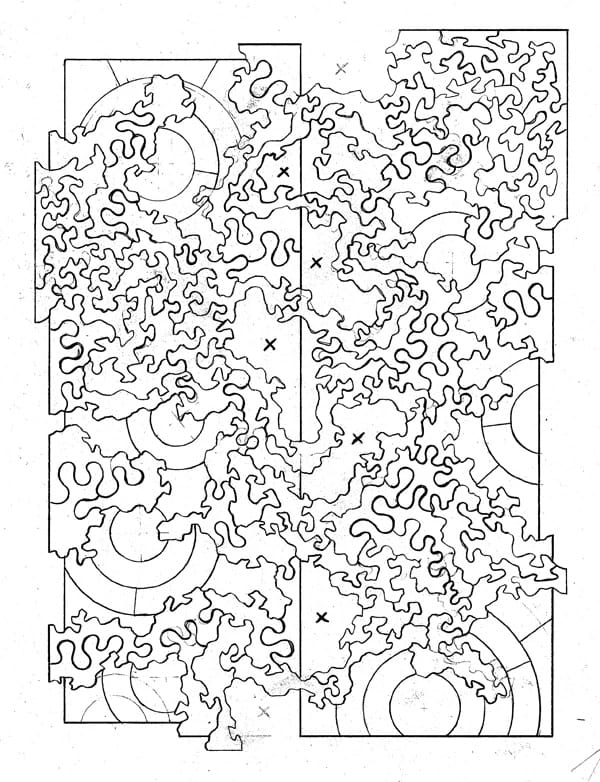
I must say, keeping the regions of the puzzle properly visualized while sketching was tough! This puzzle looks like a complete mess without the color!
Fine Tuning
The linework really needed one more pass at this point as I felt the "squiggly" linework was a bit too jagged and angular in many places. I retraced everything to smooth it out a bit.
The bottom-right in particular also needed more than just a retrace. It needed some real reshaping and massaging since it felt a bit heavy on the lowlands "bulls-eye" pattern.
Speaking of that bottom-right section:
The Details of Puzzle Design: "Bridge Connectors"
Perhaps there's a proper puzzling term out there for this, but I use the term "bridge connector" for any piece that connects two adjacent pieces that aren't otherwise connected. Similar to the first paragraph, that sounds like word salad, so let's go to some pictures!
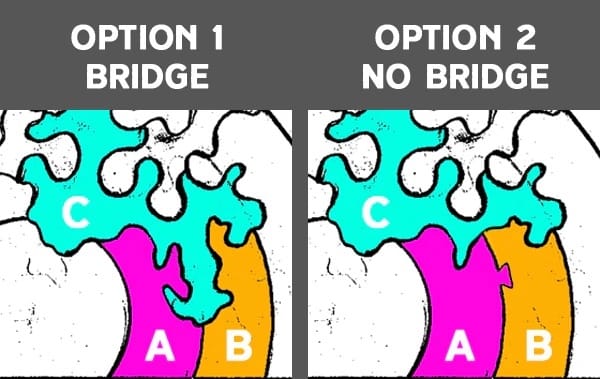
You can see in Option 1, piece C in a "bridge connector" between A and B, where A and B are essentially connected together despite being not connected directly.
Alternatively, I could have designed that small area via Option 2, simply directly connecting A and B, and making piece C smaller and out of the way, but IMO, that would make for a less interesting connection!
I'm certainly not the only puzzle designer that uses "bridge connectors", but I just thought this would be a fun detail to point out to show how a puzzle designer has to have a keen eye for details and puzzle connectivity. The design decisions are constant!
The Grand Finale
Unlike many of my designs, I'd already decided on the color scheme from the outset as designs with this sort of hard split in the middle lend themselves well to a "fire and ice" design scheme. While it's not super original, it's impactful! So I simply went with blue on the left and orange on the right. I think the result is quite stunning!
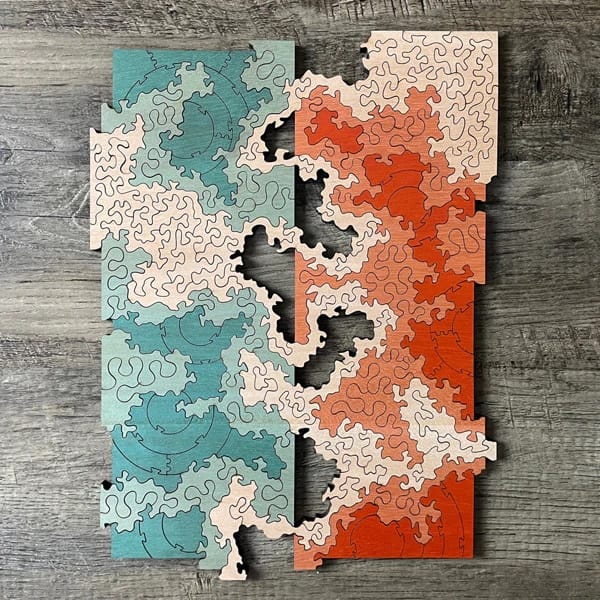
Applying the color is extra fun in these more abstract puzzles with a busy connection pattern as the overall design is rather indecipherable until the color is applied! It's a relief to find I hadn't confused anything in the design process! Phew!
Hope you enjoyed the peek inside my brain! Enjoy the puzzle!
Love and blessings,
Chad