

I constantly send myself links to game-related stories, sometimes getting to them quickly and sometimes discovering them in my inbox long after publication. Here's a sampling of what I sent myself that you might also find of interest:
▪️ Has everyone forgotten about SPIEL Essen 26 by this point? If not, you can check out the final Fairplay game rankings from that event, with the URL unfortunately not being configured for a year, so this link will probably auto-convert to rankings of 2027 games at some point.
Interesting to see Yusuke Matsumoto's ten-year-old game Nokosu Dice topping the list of "Connoisseur's/Expert" games, but that type of thing will happen when it takes ten years for a German edition to hit the SPIEL market. Two other Japanese designs also showed up: Keisei's Gibberers and Hiroken's Eternal Decks.
Antonin Boccara's Vroom topped the list of "Children's/Family" games, and by chance KOSMOS had announced its forthcoming German edition of the game ten days prior on Instagram. Apparently KOSMOS' scouts have a good read on the German audience...
▪️"These Games Are Not for Sale" is a panel scheduled during PAX Unplugged 2026 in which organizers Tony Tran and Gene Koo will discuss "why games can have personal, artistic, and expressive goals beyond commercial ones", with examples of such games — including Matt Leacock's unpublished sequel to 2019's Era: Medieval Age — on display for exploration or play.
On BoardGameWire, Mike Didymus-True talks with Tran and Koo about this project. An excerpt:
The pair said they had encountered designers at playtesting events such as Break My Game and Unpub who were less interested in securing publishing deals than simply finding people willing to experience their creations.
That spurred them to attempt to create something closer to an art exhibition or live music venue, where designers can present their work without needing to demonstrate its commercial potential.
I recall a designer pressing his creation on me and a friend at a BGG.CON event years ago, with the game consisting of a few dozen 3D-printed pieces that would be phenomenally expensive to produce. We mentioned that "problem" in passing, but the game also didn't yet feel finished, so other concerns took up much more of the conversation.
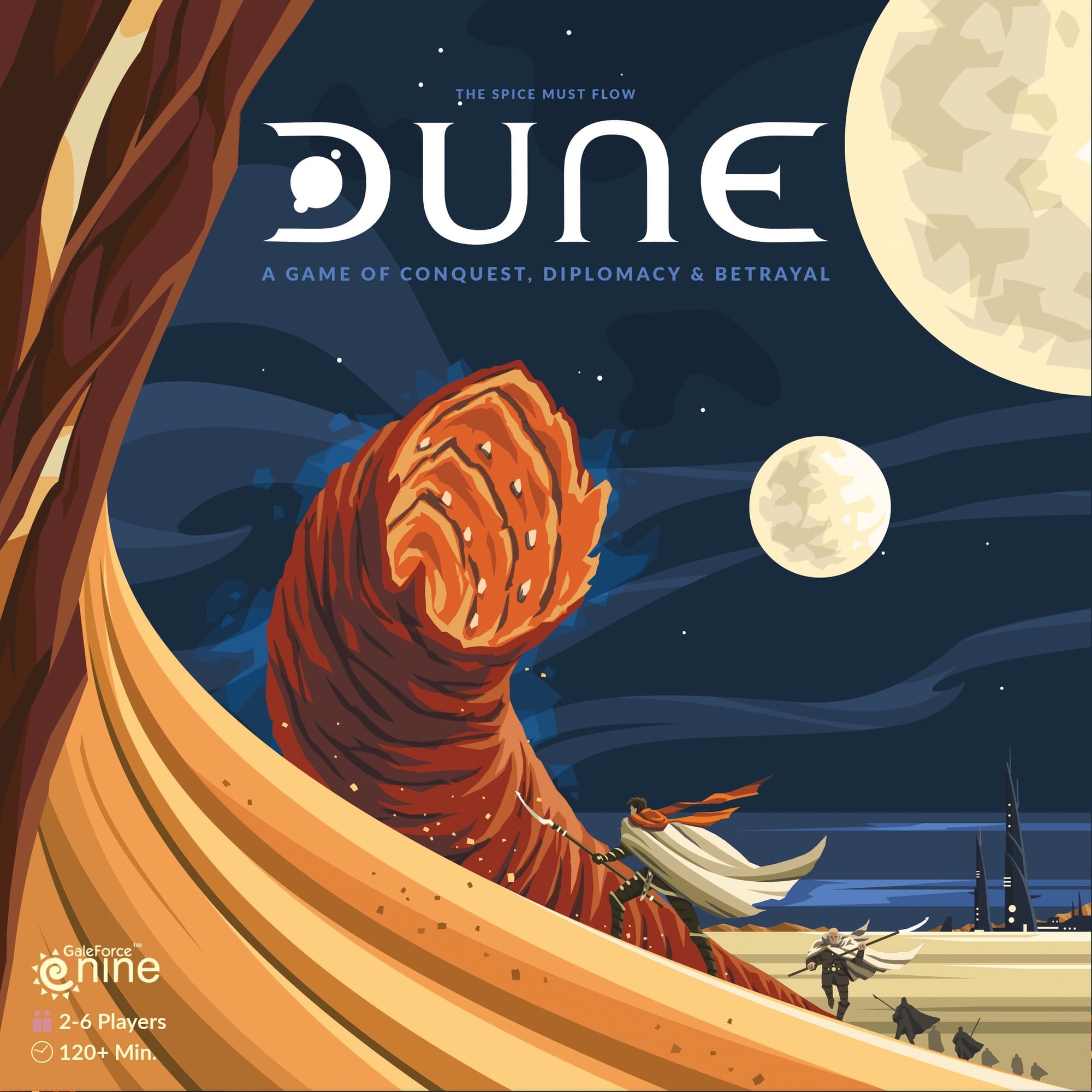
▪️ On Future Pastimes, Greg Olotka wrote a memorial of Jack Kittridge, co-designer of (among other games) Cosmic Encounter and Dune with Bill Eberle and Greg's father Peter Olotka. An excerpt:
There are few people today with the fortitude, confidence, and ability to truly live life on their own terms. Bill, my father and Jack have always tried to go their own way, and it wasn't always the easiest path traveled. It's an attribute I respect and wonder at, all these years later. Jack truly defined and lived the life of a pioneer.
▪️ On Rascal, Khee Hoon Chan wrote a memorial of Ken St. Andre, creator of the Tunnels & Trolls RPG that debuted in 1975. An excerpt:
Tunnels & Trolls is widely regarded as the second tabletop RPG ever published, although St. Andre himself begged to differ; in a Facebook post made during his birthday just a few months ago in April, he referred to his game as the first RPG. "You might think that was Dungeons & Dragons, but Dungeons & Dragons was created as a miniatures war game simulation," he wrote. "My game was intended from the beginning to be pure role-playing — no miniatures. You had to use your imagination when playing Tunnels & Trolls."
▪️ In July 2026 on The Bulwark, Christian Ruth wrote "In the Grim Darkness of the Far Future, There Is Only Culture War", an article about Warhammer 40,000, how satire and politics has been embedded in that game universe since its start in the 1980s, why some object to including female characters in the game, and how "[e]lements of far-right politics in both the United States and the United Kingdom have surged in Warhammer communities". An excerpt:
In extreme cases, the fascistic lore of the setting has lost its critically mocking valence entirely. So it is that far-right political ideologues can make fond reference to 40k's obviously dystopian and brutally theocratic human society, framing it as a model to emulate rather than a warning of the sort of future the logic of fascism betokens.
Somewhat related and possibly of interest, in September 2026 the YouTube channel Jonny Talks Science Fiction posted a video titled "Science Fiction and Fascism: A Complicated History" that covers certain thematic tendencies from stories published in the first half of the 20th century.
▪️ In August 2026, Abbey Crank at Phys.org profiled Eric Harshbarger, a senior lecturer in Auburn University's College of Sciences and Mathematics (COSAM) who oversaw a decade-plus-long project to develop five dice that would give each person who rolled one of them an equal chance of going first. An excerpt:
There were breakthroughs along the way, including the discovery that the dice didn't even need to have the same number of sides. Researchers found several five-player solutions, but many required dice so complex they weren't practical to make.
Then came a solution using five identical 120-sided dice. It worked, and a few sets were even made from aluminum. But the group kept looking.
Around 2023, Canadian researcher Paul Meyer contacted Harshbarger with something better: five 60-sided dice.
After roughly 12 years of searching, they finally had a solution that was fair, used identical dice and was possible to make.
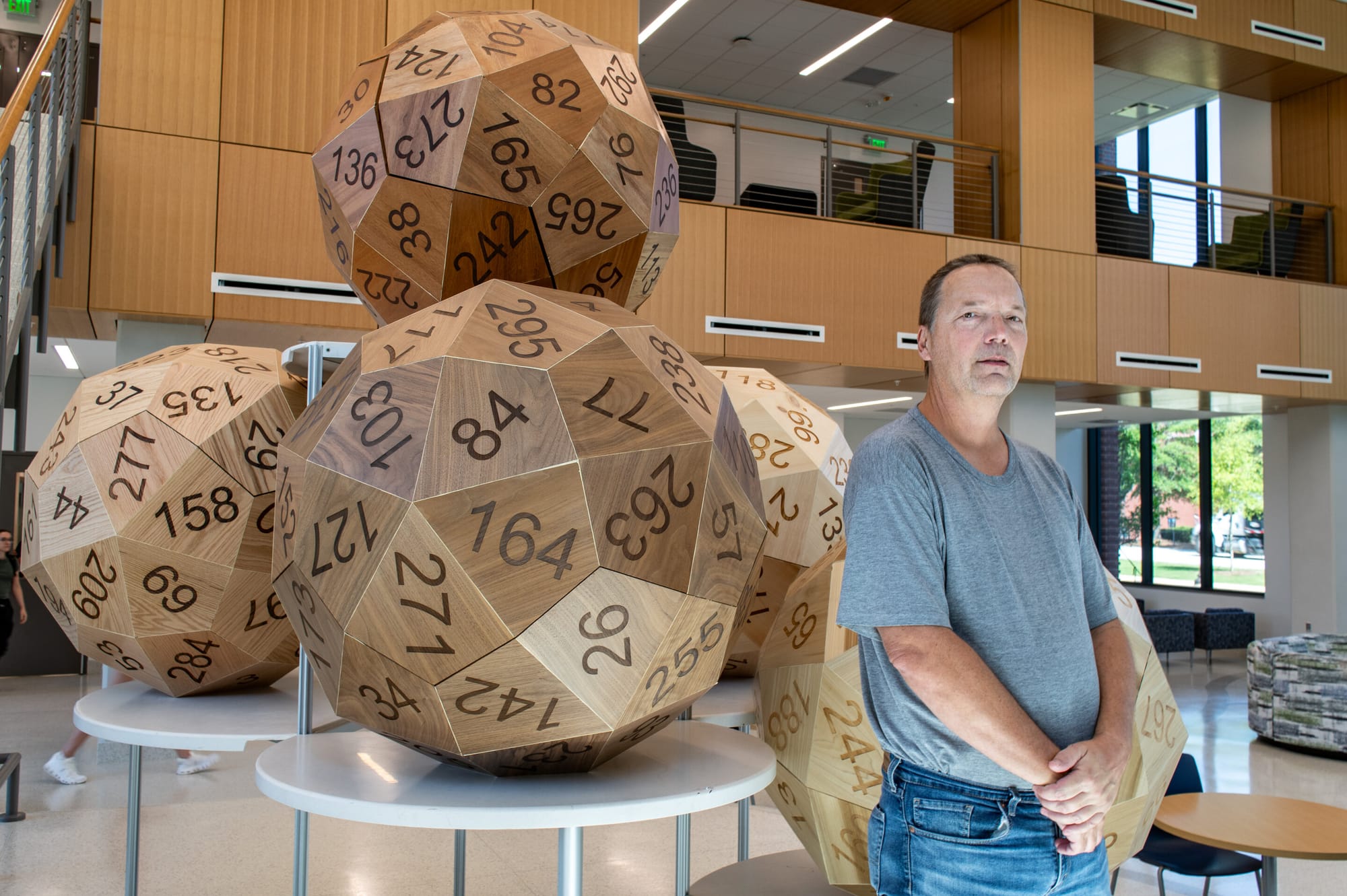
Hunter Schwarz also profiled Harshbarger on this topic for Fast Company, with the article closing as follows: "Having to roll dice only once saves players seconds. Figuring out how to do it fairly took researchers years, and the new sculpture memorializes the work it took to figure it all out." These dice each weigh about a hundred pounds (approx. 45 kg), so I doubt rolling them will save any time at all...
Want more reading material like this?
Get Board Game Beat’s free posts by email — original reporting, game announcements, designer interviews, and industry news, with no tracking and no spam.


