

By David Gordon
I'm a big proponent of co-designing and even triple-co-designing. (Co-co-designing?) Having a design partner comes with many benefits, including ideation through conversation and additional playtesting opportunities — especially with two-player games! Having a partner helps you work through challenges from different perspectives with a wider range of skills and with greater experience.
Plus, it’s fun to collaborate!
I've had the great fortune to co-design with about thirty incredibly talented and professional designers. I have respect and admiration for all of these design partners and feel honored to have had the opportunity to work with them.
I often say that I like to work with different people because I learn from each of them, so I thought it might be interesting and worthwhile to write about what I've learned from each individual.
It should go without saying that these are all super-talented people who are wonderful to work with and from whom I've learned many lessons. It would take too long to give a full character study of each one, so I will focus on just one lesson, one salient takeaway, from each designer. I send a heartfelt thank you to them all!
TAM
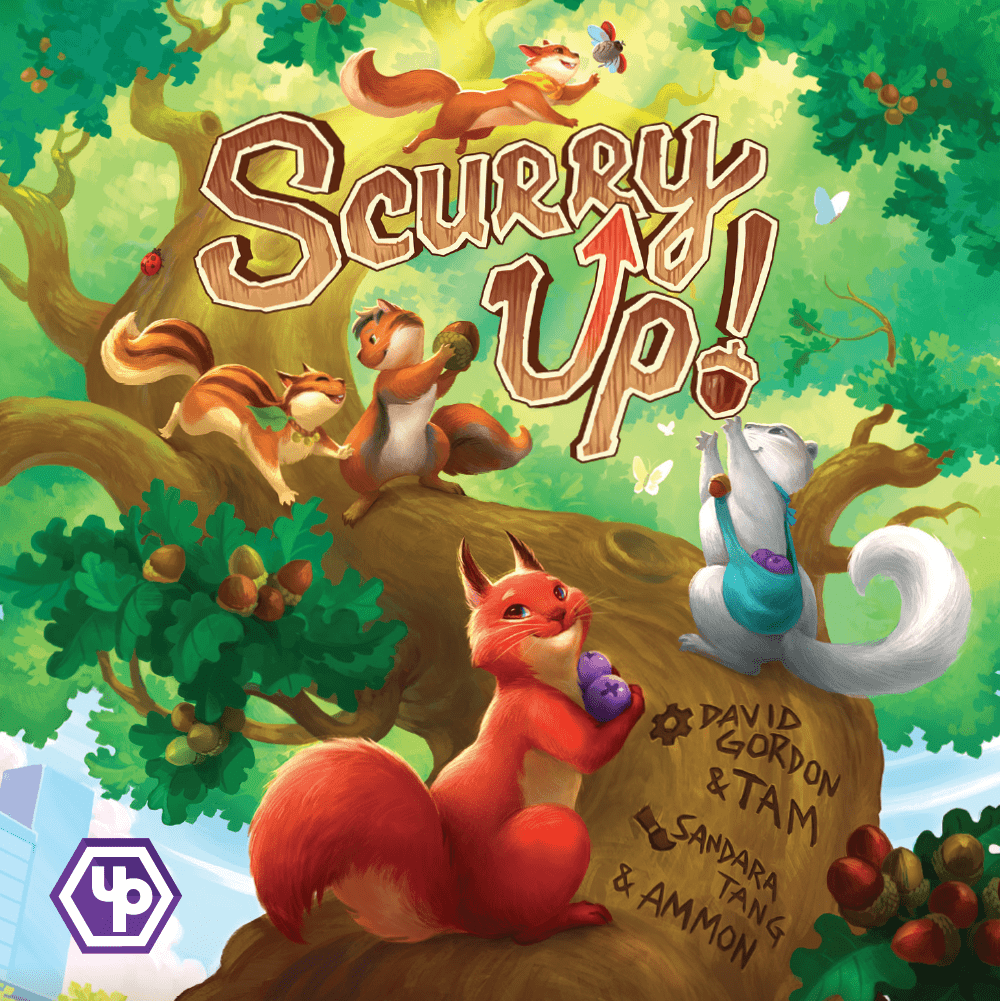
TAM and I have worked on over fifty games together. Eleven of our games have been released (including LEGO Monkey Palace, Crafting The Cosmos, Floristry, and Scurry Up!), and many more will be released soon (including Clash Royale, Pressure, The Shining, and Inle).
TAM is very good at finding multiple ways to use components, which is tremendously helpful for heavy games where you need to limit the number of components to have a viable product. That said, this skill is also useful in lighter, family games. For example, in Scurry Up! each player has a d6 they set to determine their location. They use that same die to roll for draft order. Because of TAM, I always look for a secondary use of each piece in a game.
And I'm already going to break the "one lesson" rule I mentioned above and discuss another lesson I learned from TAM, which in itself is a lesson: Don't be afraid to break rules. I like to say "never say never...except sometimes".
One more lesson I'd like to mention has to do with co-designing. TAM and I have given several panels at conventions on co-designing, and there's a lot to cover, but a really important point is to not be afraid to argue. It's important to check your ego at the door and remember to be respectful, but there's a lot to be gained from positive friction. Defending ideas in passionate, yet cordial arguments with TAM trained me to articulate my reasoning more clearly and concisely.
Jonathan Gilmour-Long
Jon played an important role as mentor to me when I was starting out. I first approached him during the COVID shutdown for help developing my games, and after one or two sessions, I was honored that he asked me to co-design something with him. We went on to meet several times a week for several years. Probably half the things I learned about game design were from those sessions with him. We have worked on about thirty games, seven of which have been signed and five of which have been released, including Making Monsters, Pinched!, and (soon) FluentSea.
Jon is a veritable encyclopedia of games. When he appeared on a board game trivia podcast, the things he knew blew my mind. Having such a wealth of knowledge is hugely valuable because he knows how other games solve just about any problem we run into. If I want a twist on endgame scoring, Jon will know several games that have interesting systems. One of the bigger lessons I learned from Jon is how to expand, modify, and build on the great catalog of existing games, that is, how to use your experience with all the games you've played to find new, fresh solutions and directions.
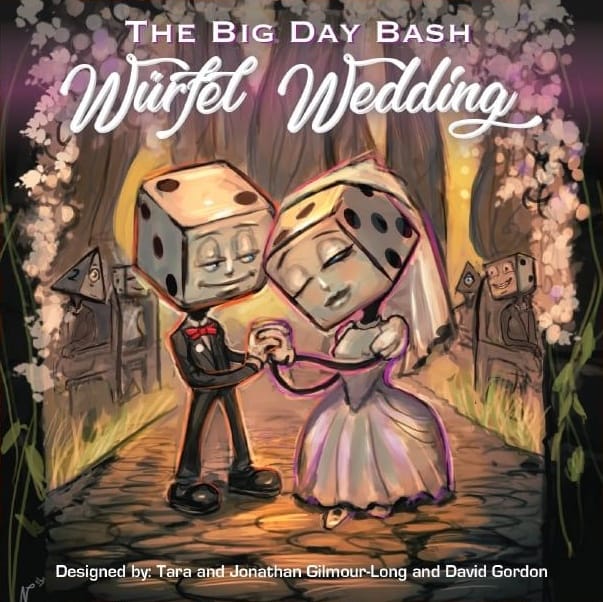
I also had the wonderful opportunity to work with Jon and his wife Tara Gilmour-Long making a game as a wedding favor for all of their guests, which was delightful and memorable. Thank you, Jon and Tara!
Yuval Grinspun
Yuval and I have worked on about a dozen games, including two that have been signed and are expected to release in 2027 (including Top That!). Yuval is always willing to try anything. He's a true pro who doesn't hold onto ideas when we find better ones. He doesn't just let go willy-nilly, which is also important (remember the arguing lesson above), but when there's an issue with a mechanism or when we find a better solution, he's always willing to explore the new direction without attachment to something that worked in the past. I have found this flexibility to be critical in moving designs forward.
Christopher Ryan Chan
Chris and I have worked on nearly ten games together, including Push Push Penguin, which was released in 2025.
Working with Chris is a delight for many reasons, but if I had to take one lesson away it would be his insistence on marrying the things you're doing to the theme/setting you're in. Chris relentlessly asks how this mechanism makes sense in the world we're making. That might sound easy or obvious, but in my experience, it's one of the most difficult — and important — lessons to learn.
Ryan Rodriguez
Ryan and I have worked on nearly ten games together, several of which were adaptations of (Clash Royale) or inspired by (popular poker-based) video games, with both of those games due for release in 2027.
Ryan has a wonderful knack for creating cardboard adaptations of video games. He understands that you can't translate a video game directly, that there must be some abstraction because the tabletop experience is inherently different from the video game experience. The most important part of adapting video to tabletop is capturing the feeling you get playing the video game and translating that into cardboard — and that's not easy!
Danielle Reynolds
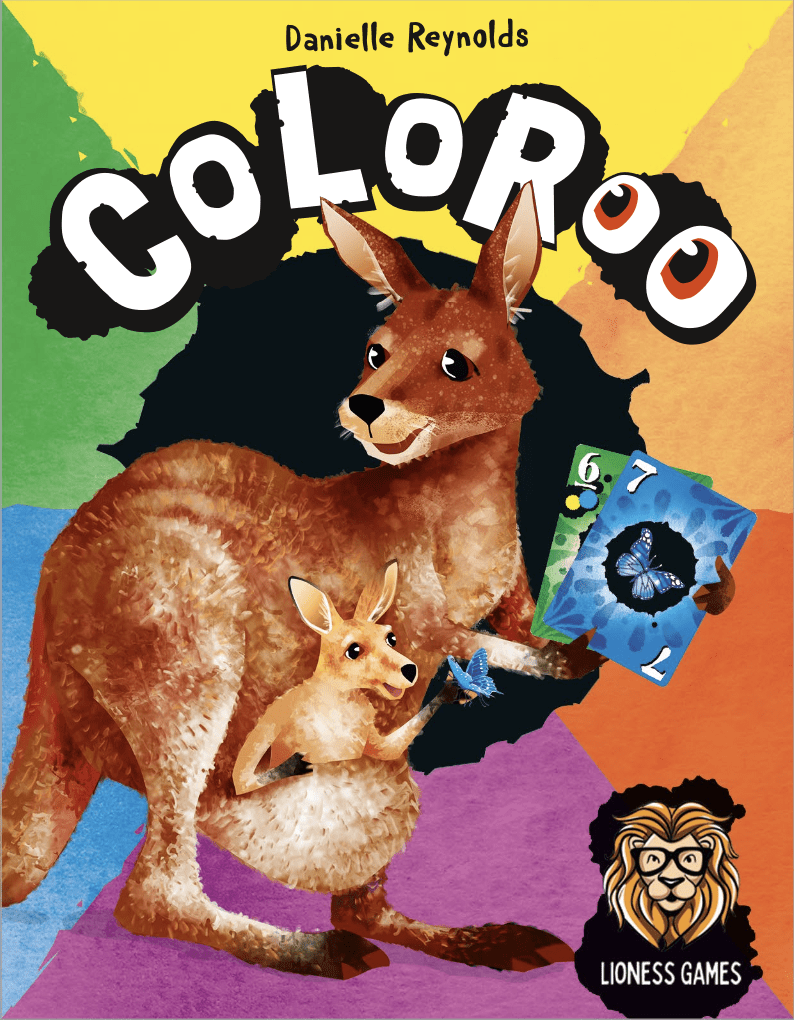
I've had the opportunity to work with Danielle on nearly ten games, including Coloroo which debuted at Gen Con 2026 by Lioness Games, along with two others that were offered contracts but that never ended up getting signed. Danielle is an expert in mass products, but she also has experienced success in hobby, including her hit HerStory, a wonderful game.
Working with Danielle is super-efficient and no nonsense. She and Jamey Stegmaier are the only two people who respond to emails at least as quickly as I do! When you want to knock out content for fifty cards, Danielle is a machine. I've learned so much about quick iteration of content by watching her work. Danielle is a great role model for people who want to get things done — and always reply to your messages!
Serena Fadlun
Serena and I have worked on several games together, including Ghost Party, which is currently scheduled for release in Q4 2027. All the games we've worked on together target a mass audience, which means they have to be focused on a single mechanism, and the rules have to be easy to understand; you essentially need to be able to play after watching a few turns.
Serena has a keen eye for table presence and building a mechanism around a centerpiece. She thinks very out of the box and comes up with wild ideas, and she is super focused on tying everything to a single goal. We've had a lot of fun boiling down gameplay to interact with a tightrope, quicksand, and feathers, among other unusual game components.
Ammon Anderson
Ammon and I have worked on half a dozen games, three of which have been offered contracts or signed, including Pressure, Top That!, and Catnip Chaos.
Ammon has a great knack for finding fun, and he also is a super talented artist and graphic designer, as evidenced by his hit releases Gnome Hollow and Twinkle Twinkle. He doesn't force art onto prototypes prematurely, and he's perfectly happy testing my ugly prototypes, but when we need a bit of flair to communicate our vision, he knows just how much art and color to add. Great prototype graphic design should go unnoticed, but is essential to allowing the core fun of a game to shine through.
Whitney Loraine
I've had the pleasure to work with Whitney on a few designs, including a design that Fireside Games plans to release in 2027 and Banana Split, which we're currently pitching to publishers.
Whitney and I have had a lot of fun exploring various directions for the mechanism she used to great success in her hit game Charcuterie. I've always been fascinated by Reiner Knizia's exploration of auctions, finding all the different iterations you can make around a single mechanism. Whitney and I learned a great deal about "I split, you choose" when we went down that rabbit hole. We learned subtle ways to integrate arc, fairness, turn order, and incentives. My takeaway from Whitney is to not be afraid to see what happens when you use the same mechanism in subtly different ways across several games.
Jonas Resting-Jeppesen
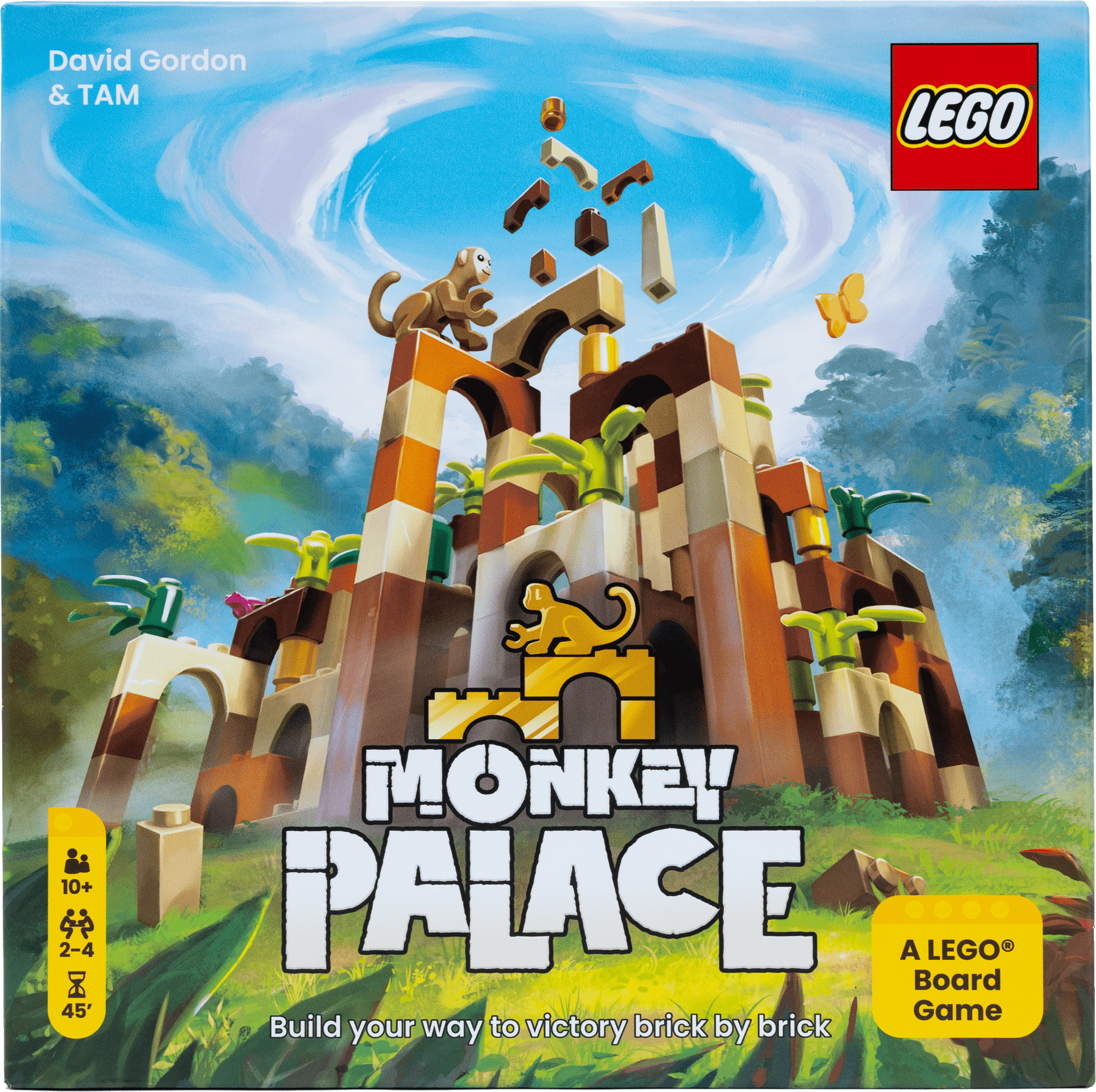
I worked with Jonas with him as a developer on LEGO Monkey Palace and as a designer on an unannounced game to be released in 2027.
Jonas knows and understands each game's audience really well and relentlessly considers them in every design choice, especially to streamline. What will the average player think when they face this decision or try to use that component? Can we consolidate their choice and focus it, while keeping it interesting? I've learned so much about designing for an audience from Jonas and think about it as much as I can with every new design. Who will be playing your game, and how will they perceive it?
Michael O'Connor
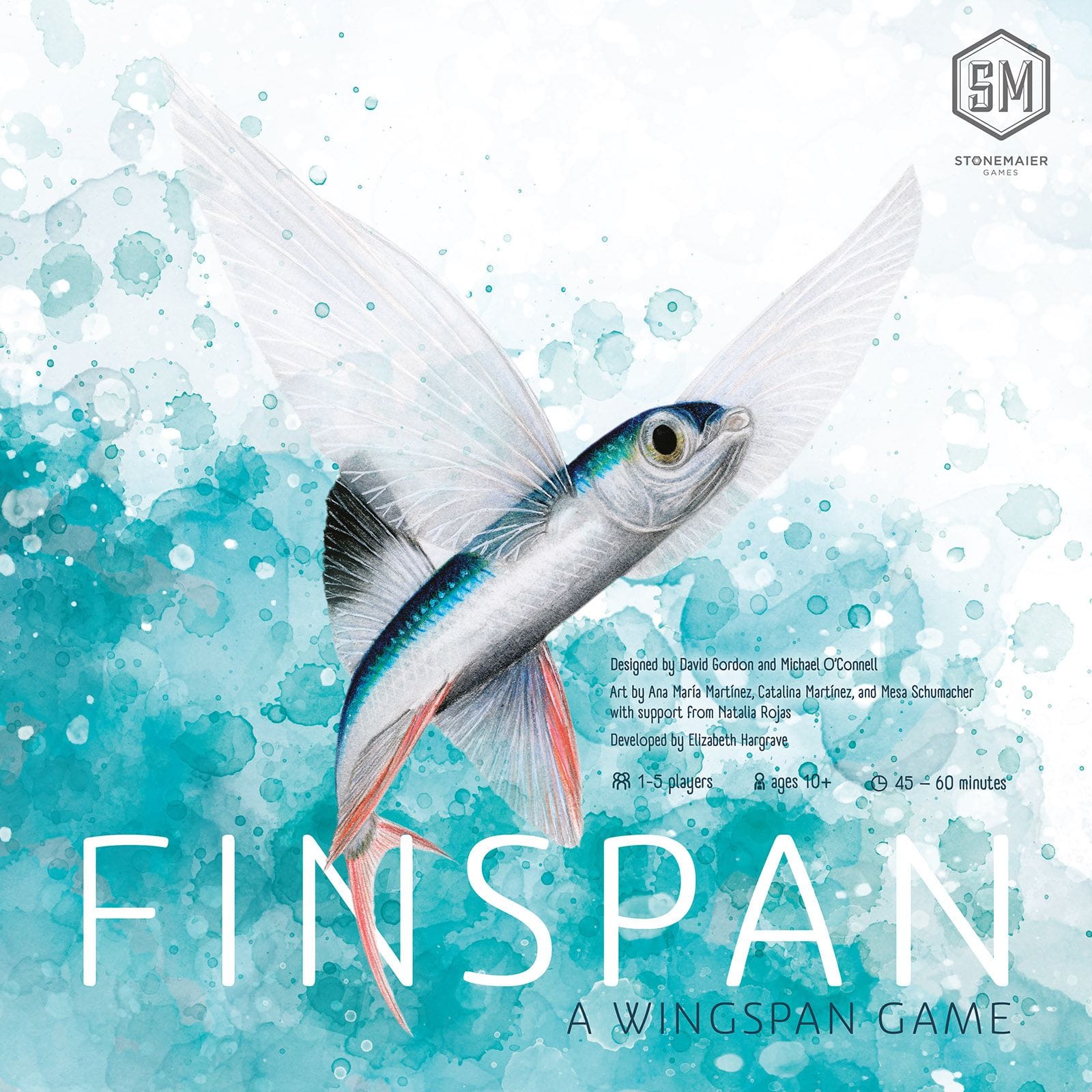
Michael and I co-designed Finspan for Stonemaier Games.
Finspan is a spinoff of the massive hit Wingspan, and Michael knows Wingspan incredibly well. His knowledge of the game and its fanbase was critical in our work on Finspan. We needed to both extend and expand from the original design, while also keeping everything in context and knowing what might be too far for a fan of the original. I now try to remember Michael whenever I'm working on an extension to an existing title; the more you know and understand the original, the better your sequel will be.
Daryl Andrews
Daryl and I have worked on several games together, all tied to large IPs. It's been wonderful to learn so much about how these IPs function and what a board game needs to do to fit them.
I had already worked on a few big IPs myself (LEGO, Clash Royale, Wingspan, etc.), but my experience with Daryl has taught me how to go one step further — or from the other direction, if you will, starting with the IP and finding a publisher. I didn't even know this was possible. This is super difficult to do, but if you are passionate about the IP and know which publishers might be open to the idea, it can be done. Because you're looking for a publisher after you form the relationship with the IP and sketch game ideas, you need to keep those ideas and designs flexible and in their early stages. Each publisher might pull the game in a different direction, so you have to know where to pause before you pitch and be able to pitch more of the concept than the completed game, which is the norm.
Jen, Ben, and Ari Gordon
My design career started with a co-design with my family, when we spent a family vacation making maps, spreadsheets, and prototypes. My son Ben really got into it, and we had a lot of fun doing this.
Over the next few months, my daughter and I worked on a game called Unicorns & Puppies and tested it with her elementary school friends. On a long drive back from a convention, Jen and I came up with the idea for a sequel to Don't Swallow Me that we called Don't Swallow Me Too. Both of these games ended up getting signed, so Jen will have her first byline soon!
I couldn’t ask for better partners and playtesters than Jen, Ben, and Ari. They are always honest and on point with their feedback, and it's always actionable. Yes, be polite and cognizant that the designer is a human being, but the more clear you are about how you felt during your test, the better the designer will be able to address it in their next iteration. I also learned how not to burn out your family — they are happy to test games, so don't make them sick of it!
All the Rest
I've had the privilege to work on one game with each of the following designers, but have learned something from each of them regardless. I won't write as much about them because we've had limited experience, but I value my time with each of them.
- Bobby West — I learned a lot about tying mechanisms to a theme as we honed the 1-5 player co-operative game You're The Ocean.
- Rocco Privitera — My work with Rocco on our hobby party game Kingmaker reminded me that no matter how simple you think something is, it can be simpler.
- Byron M. Huang — Byron and I have had a lot of fun working on our thinky party game One Rule. I learned a great deal about iterating on a theme in my work with Byron.
- Gil Hova — I feel like I've co-designed with Gil for years and years because his mentorship and feedback has been so meaningful and influential to me, but he and I have had only a few meetings working together on a sports game, and it was super fun. Gil is so great at seeing the vision of a game and making sure everything in it points toward that vision.
- Muzzy — Muzzy and I briefly worked on a concept as we thought it would be funny if we were a bunch of bad weather forecasters. I learned from Muzzy both on that design and on his development of "Spelloo", a game from TAM and me that we're now pitching again, just how important lightning quick iteration and testing is. No matter how much you think/talk through something, it will never show you as much as it will in its next playtest.
- Dávid Turczi — I'm currently learning to assimilate a highly active and knowledgeable fanbase's comments into our work on a module for the great game and system Nature from NorthStar Game Studio.
- Marni Abramowitz — Working with Marni taught me about co-ordinating long-distance testing with a prototype that doesn't work online, and Marni is especially good at this. She has some great games coming to market soon!
- Lincoln Hoppe — I've had the joy to work with Lincoln on his quirky fun game Flavor Burst and learned a great deal about delving into a bright idea and following the fun.
- Travis Magrum — I worked with Travis briefly on FluentSea, which is going to Kickstarter in Q4 2026. It was great to work with Travis and learn more about bringing a game over the finish line.
- Elene Fengometidis — Elene, TAM, and I made a game called 3-2-1-Goby! on a car ride to Origins a few years ago, with me learning from this just how hard it is to make a super simple game. It's so easy to add something to solve a problem, but you have to resist doing that and try to find a way to remove something instead.
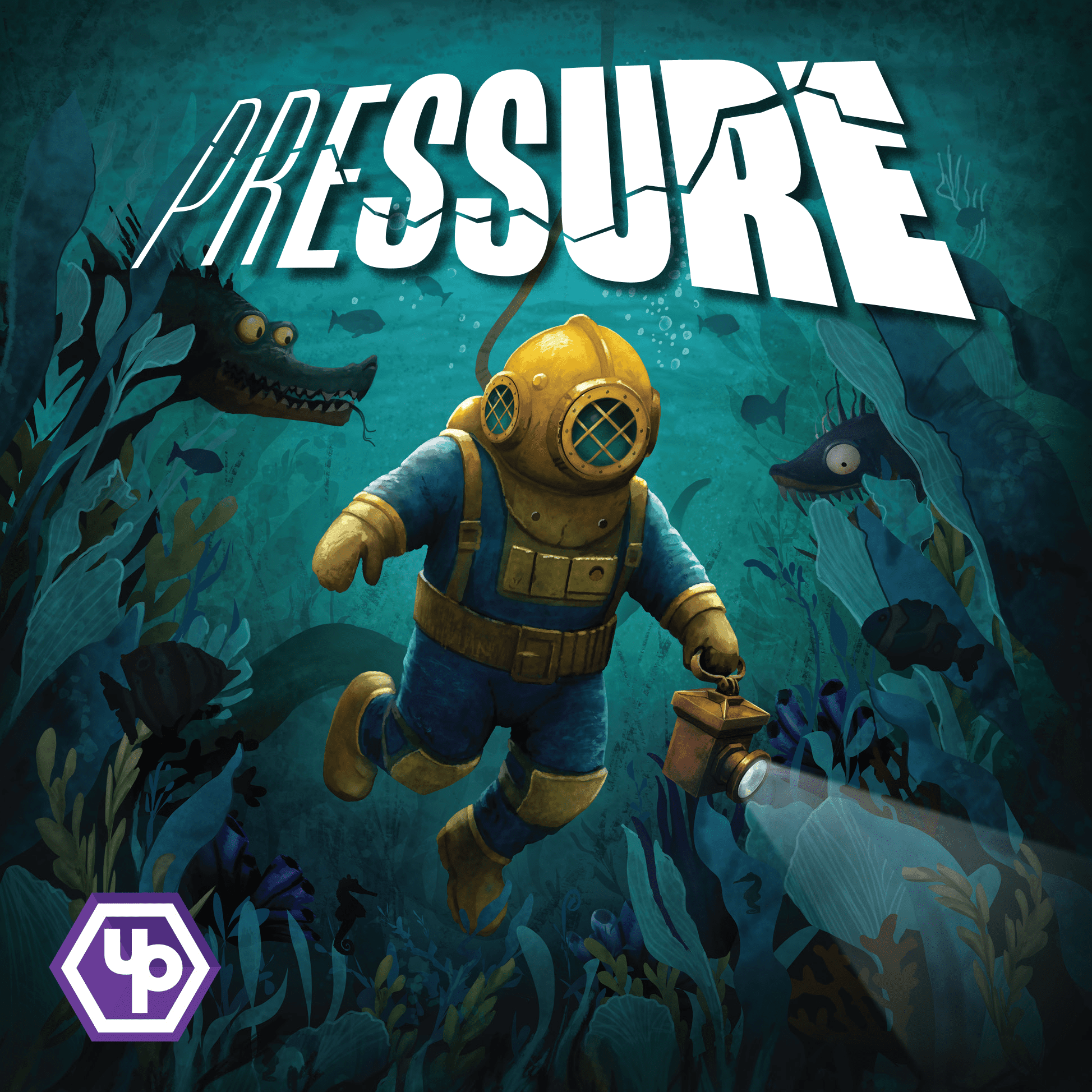
- Greg May — Greg is one of my partners in UP Games, so we've worked on the product side of games quite a bit. As a board game café proprietor, Greg has a keen eye for what makes a product a product, and he brought that consideration to Pressure, which he, TAM, Ammon, and I co-designed for UP. Pressure will be available in stores near you, including Barnes & Noble, in Q2 2027!
- Caitlyn Brynn Greene — Caitlyn was one of the first publishers I worked with while she helped develop The Last Tide over several years. Caitlyn and I did so much work together that even though she never conceded it, I always considered her a co-designer.
- I've also briefly worked on a game with Scott Brady, Lucas Kohn, and Cici Ogden.
I enjoy working with these different minds, and I look forward to getting to work with more talented designers in the future. I've just started projects with Ben Ng, Ellie Dix, and potentially Rikki Tahta — co-designer of one of my favorite games, Senators, and of course the massive hit Coup — and I'm looking forward to learning from them, too!
I hope this provides some inspiration to my fellow designers. Please don't hesitate to come up to me at a convention and share your co-designing experiences.
Want to read more articles like this?
Get Board Game Beat's free posts by email — original reporting, designer interviews, and industry news, with no tracking, no ads, and no spam.


