▪️ The 2025 Swiss Gamers Awards have been announced, with Take Time from Alexi Piovesan, Julien Prothière, and Libellud taking the top prize. Eric Olsen's Flip 7 came in second, with Grégory Grard and Mathieu Roussel's Zenith claiming third. (By chance I've reviewed all three of these games and they're linked here: Take Time, Flip 7, and Zenith.)
Participating Swiss clubs, associations, and game and toy libraries each hold their own annual vote, with the top three games receiving 3, 2, and 1 points. They forward these results to the SGA, which announces the winners; prizes are awarded at the Lunesco game festival, which takes place on March 27-29 in 2026.
Results in the family category were flipped, with Flip 7 in first, Paolo Mori and Alessandro Zucchini's Toy Battle in second, and Take Time in third. In the expert category, Yeom.C.W's Wondrous Creatures took first place, with second going to Carl de Visser and Jarratt Gray's Endeavor: Deep Sea and third going to Hiroken's Eternal Decks.
▪️ In early March 2026, I wrote about the Rules Ratio, a statistic that I made up to suggest how much trouble you'll have with the rules of a game. The gist is that you look at the forums on the BGG game page for a title, then divide the number of rules threads for that game by the total number of forum threads, giving you a percentage from 0-100%, with higher numbers suggesting a rulebook that will be more troublesome during play.
My article included the subtitle "A New Stat to Geek Out About", and Markus Shepherd has taken that suggestion to heart, applying a more scientific approach to the concept on his Analysis Paralysis blog with a "Rules Ratio" article that uses additive smoothing to account for games with few forum posts and introduces a far more sophisticated way to account for a game's weight when thinking about whether the "right amount" of rule questions are being asked about a particular design.
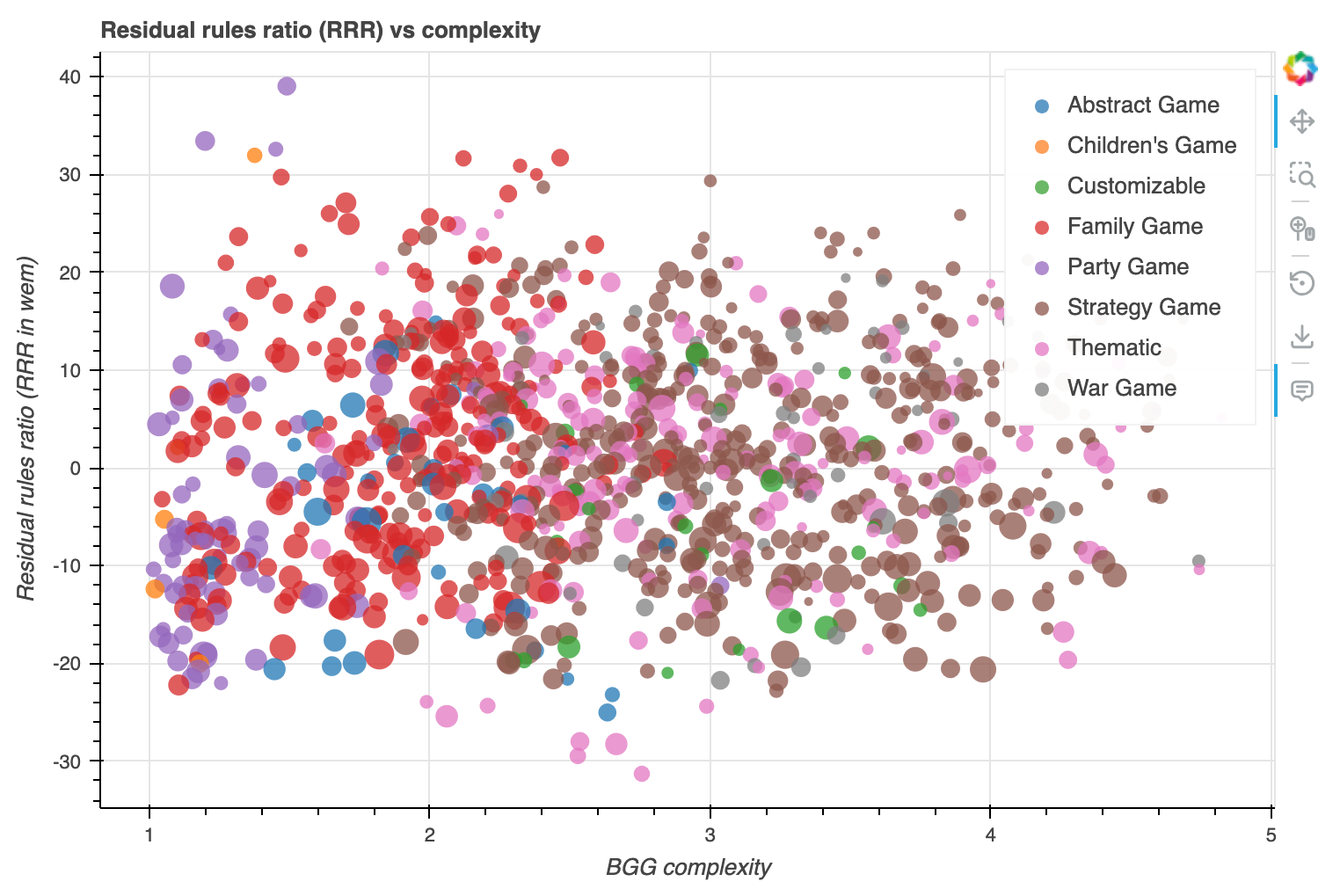
You'd expect party games to have relatively low rule complexity given that they're aimed at mainstream audiences and tend to have straightforward gameplay, yet Unstable Unicorns (represented by that purple dot near 40 RRR) stands far above most other games in terms of having more rule questions than statistics would suggest, with Taboo being another outlier in this regard. (Terra Mystica, on the other hand, performed far better than expected.)
Thanks to Shepherd for naming a unit of measurement after me! I never contemplated my name being used along these lines, but "wem" feels akin to "ohm" and "farad", so I'll take the compliment and carry on.
UPDATE, March 27, 2026: I've been alerted that Chris Wray wrote a similar article on Opinionated Gamers in 2018 about what he called the "Rule Quality Index" (RQI), which involved dividing the number of game ratings on a BGG page by the number of threads in the rules sub-forum, with a higher number therefore being better than a lower one.
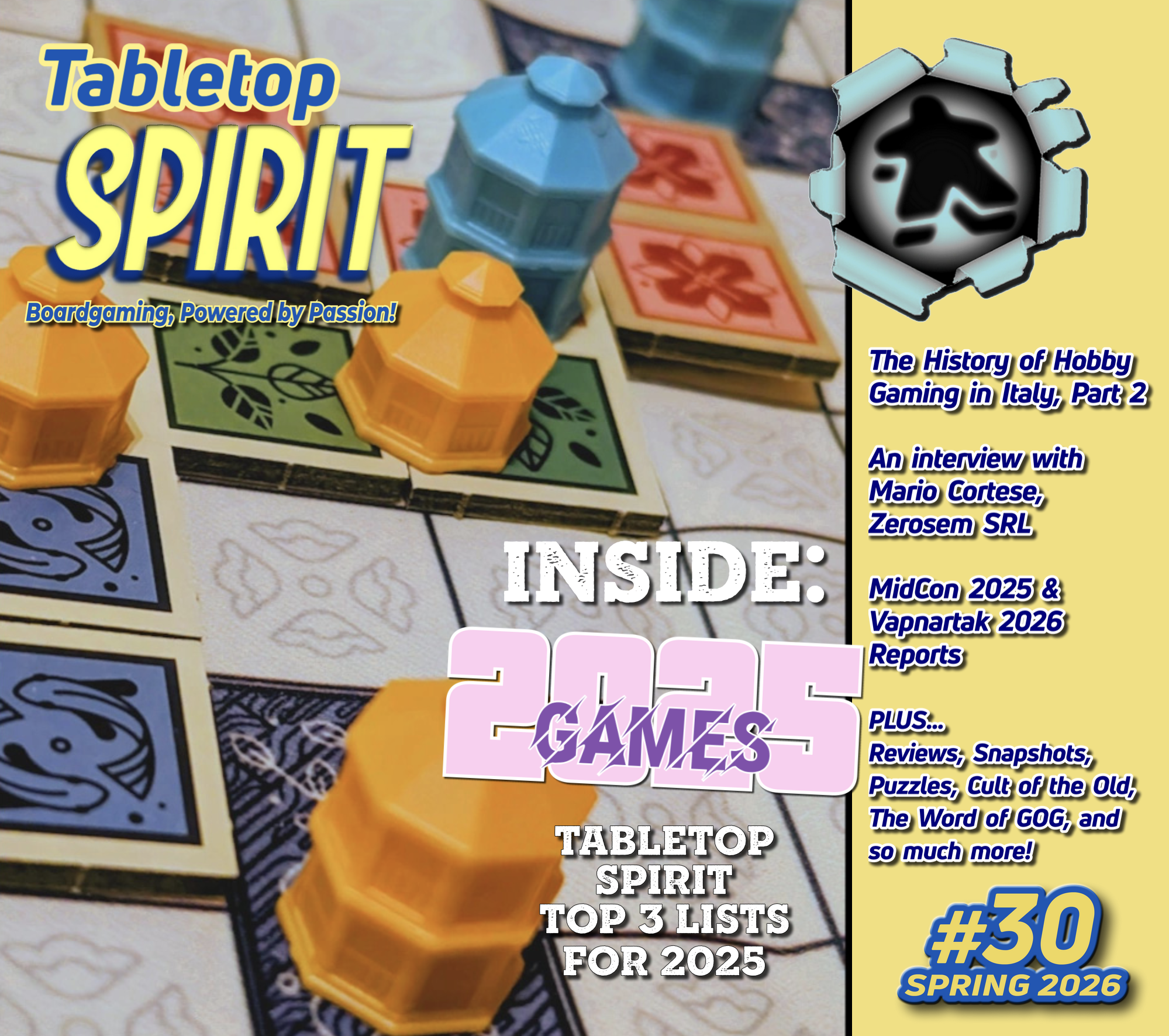
▪️ Issue #30 of Tabletop SPIRIT Magazine has been published and is available online for reading or downloading. The issue includes a "Cult of the Old" column by Tony Boydell, who runs The Museum of Board Games in Newent, UK; the second part of a history of hobby gaming in Italy; multiple "top 3 games of 2025" lists from contributors; an article about enshittification that references my alternative promotional path for the Beat; and a challenging, game-related cryptic crossword.

▪️ On April 23-24, 2026, Ravensburger will host its seventh "Game Inventor Days" event during which game creators can pitch ideas to editors, with this event focusing exclusively on children's games. Creators can pitch up to two ideas in a scheduled half-hour slot. For more details and registration, which is required, go here.
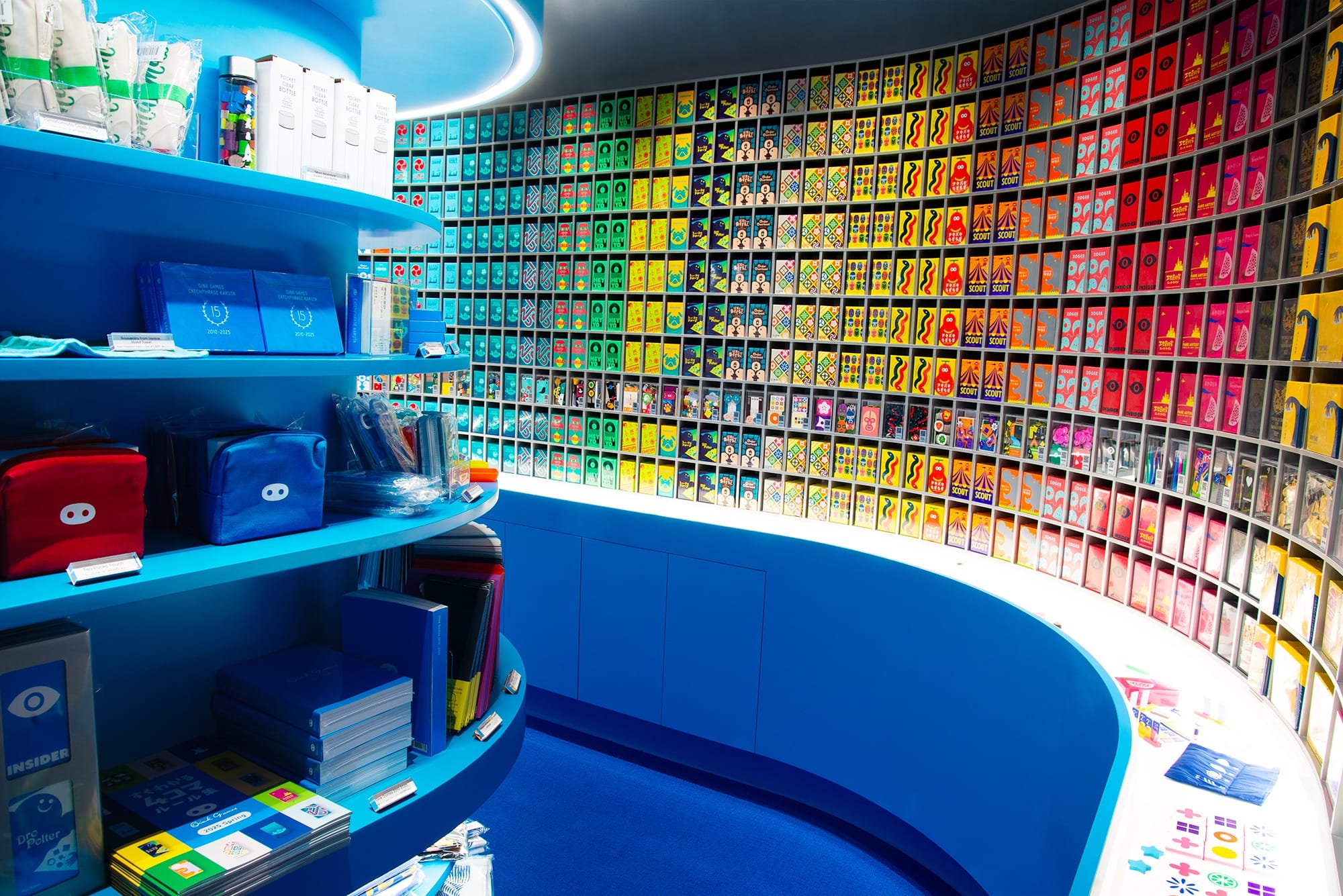
▪️ On March 20, 2026, Oink Games opened a retail store in Tokyo's Shibuya district, and this has to be one of the most pleasingly aesthetic displays I've seen in years. [Disclosure: Oink Games is an advertiser on Board Game Beat]
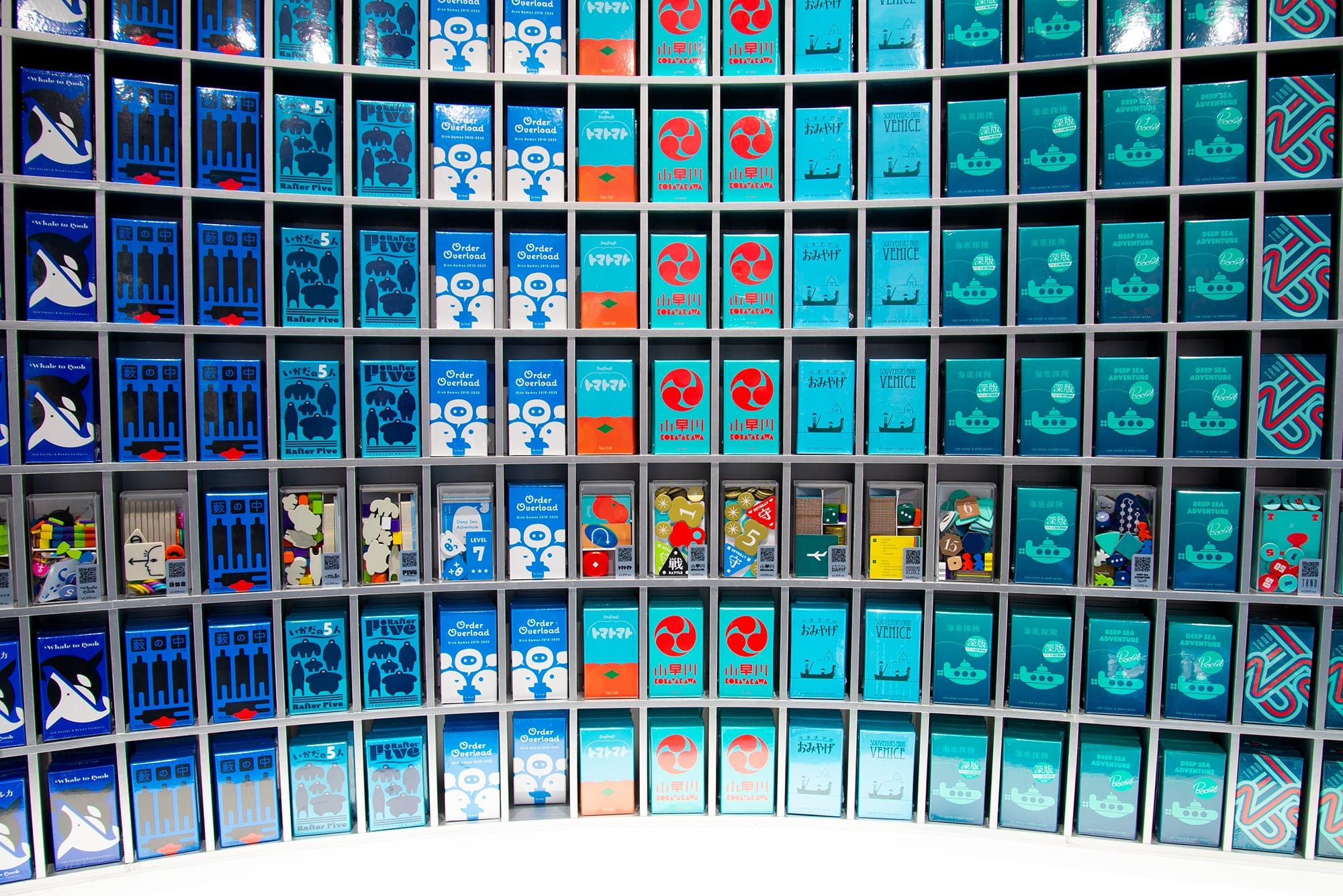
This image highlights the component displays on the third shelf up from the white display shelf, with the components of a game visible in a plastic case. In the top image, you can see the components for Nine Tiles spread out on the white display shelf on the right, and I imagine the plastic cases are present so that store visitors can spread out a game to see what's inside and employees can use these components and this space to demo the game.
I worked in a game store in the early 1990s, and I think this is a great set-up as store visitors often wanted to see what's inside a box. We had a shrinkwrap machine on site, so we would tear open a game to people read the rules or paw through the bits, then we'd rewrap the game. Having an open sample on hand for each title is a much better option!