Seven Prophecies
In October 2026, Capstone Games will release a new edition of Hinata Origuchi's Seven Prophecies, which debuted in 2017 from the designer's own Blüte Spiele brand and which had a limited English-language release in 2024 from New Mill Industries, as well as a new Japanese edition in 2025 from SUNNY BIRD.
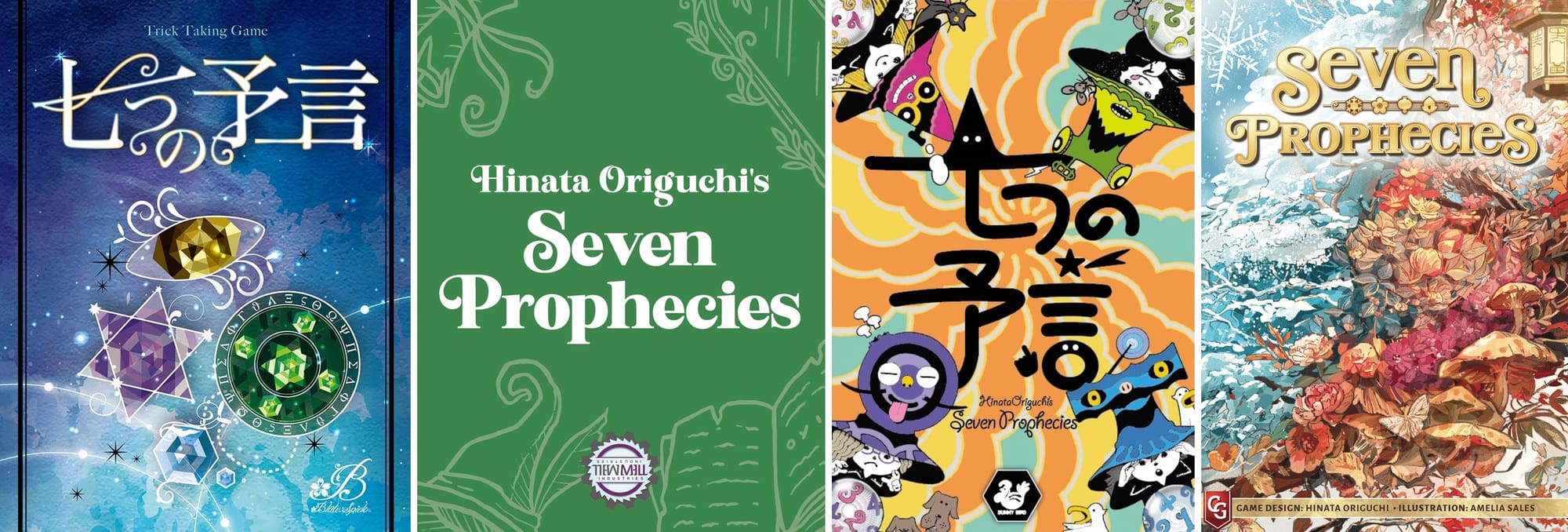
The deck features cards in four suits, and players receive ten cards in hand, with ten suit cards placed in a row at random to indicate the forced lead suit of each trick. Players then use seven tokens to predict in how many tricks they'll place first, second, third, and fourth (depending on whether you have three or four players in the game). Those are the seven prophecies of the title.
You then play through the hand, playing the lead suit, if possible, and throwing off otherwise. Cards in a trick are ranked from high to low in the lead suit, then high to low in all of the off-suits — and if your played card lands in a position that you prophesized, then you remove the appropriate token from your prediction card and place it on your played card. (All played cards are placed in a grid so that you can track successful prophecies and what's still unplayed.)
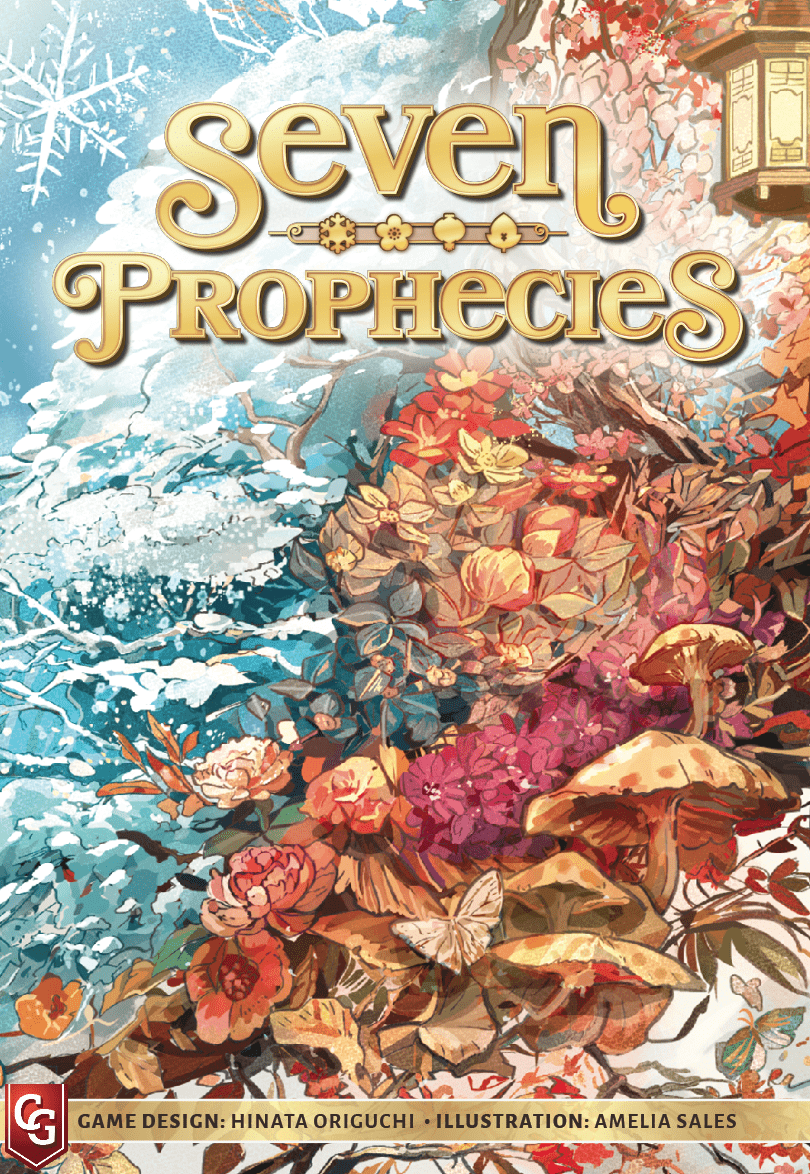
As soon as someone places their seventh token, the round ends, with them scoring points based on how quickly they did this: seven tricks out of ten? ten out of ten? Whoever has placed the secondmost tokens scores 1 point. If no one prophesizes correctly, no one scores. First to 7 points wins, or whoever has the most points after three or four rounds.
Woo
Fifty copies of Woo — a game by Taylor Reiner, Bert Trobaugh, and Dan Vieu — were given out to attendees of The Trick-Taking Extravaganza, an event allplay hosted during Gen Con 2026, and now the game is heading to retailers, specifically brick-and-mortar retailers as allplay is marketing this game to retailers as "a local game store exclusive, available only on your shelves and not online on our website or at other distributors".
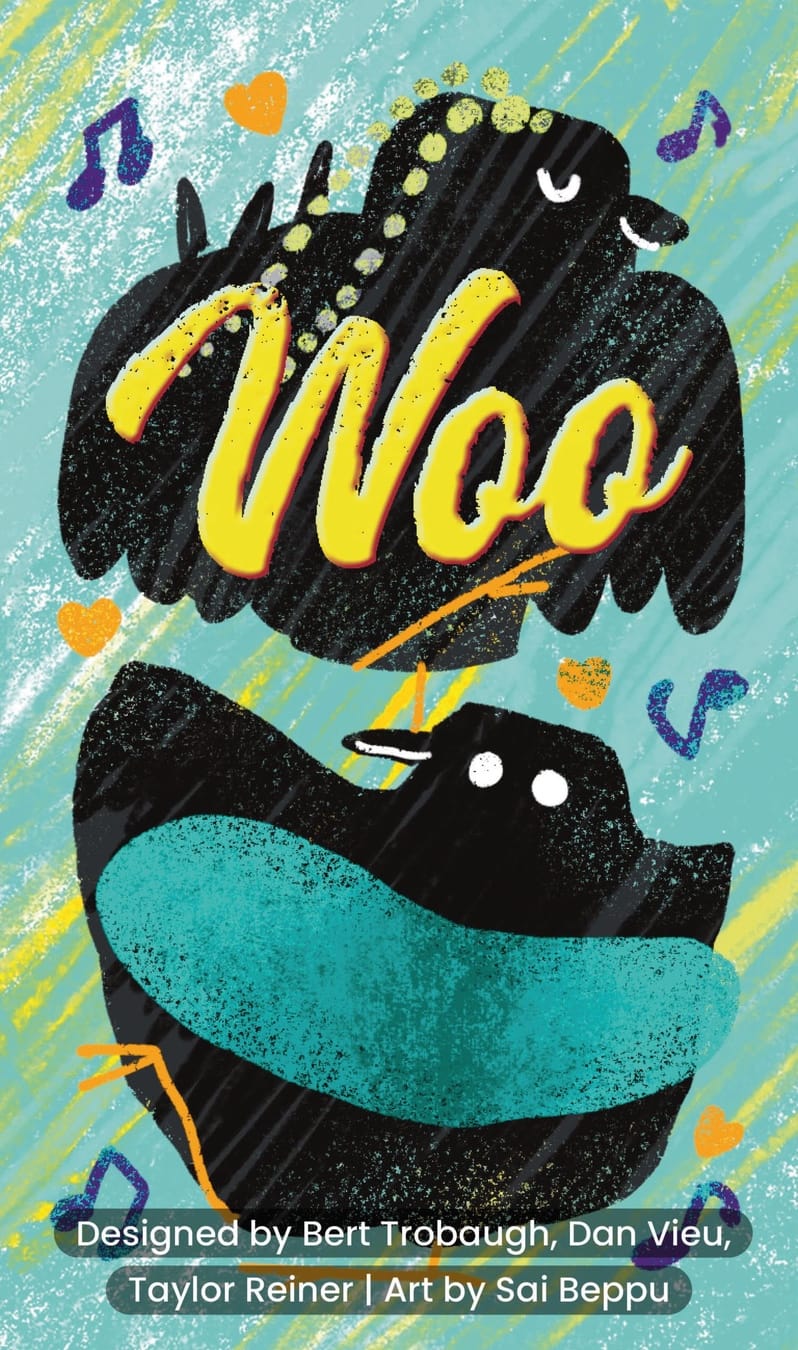
Woo is pitched as a two- or four-player game, but you really want four players, who compete in teams. The gist of the game is that one teammate will start a valid meld, then the other teammate will finish that meld, after which the other team can try to beat that meld. Played melds are discarded, and when one player sheds all of their cards, their team scores 1 point, with the first team to score 2 points winning.
In more detail, the deck contains six copies of cards numbered 1-9, and each player receives a hand of thirteen or fourteen cards. Valid melds are sets of 2-3 cards, runs of 2-4 cards, consecutive pairs, and four-of-a-kind.
One teammate leads 1-3 cards that could be part of a valid meld, e.g., 3-3 or 6-7-9, then the other teammate must complete the meld with 1-3 cards, perhaps playing 3 or 4-4 to go with the pair of 3s, whereas only an 8 would go with a 6-7-9 lead. If the teammate cannot complete the meld, the teammates return played cards to their hands one by one, thereby giving them info for future plays. The other team must then collaboratively play a higher-valued meld of the same type and size.
Council of Serpents
German publisher Wulfhorn Games crowdfunded Council of Serpents, a card game from Joeri Hessels and Wouter Moons, in July 2026 and plans to have the game available at SPIEL Essen 26.
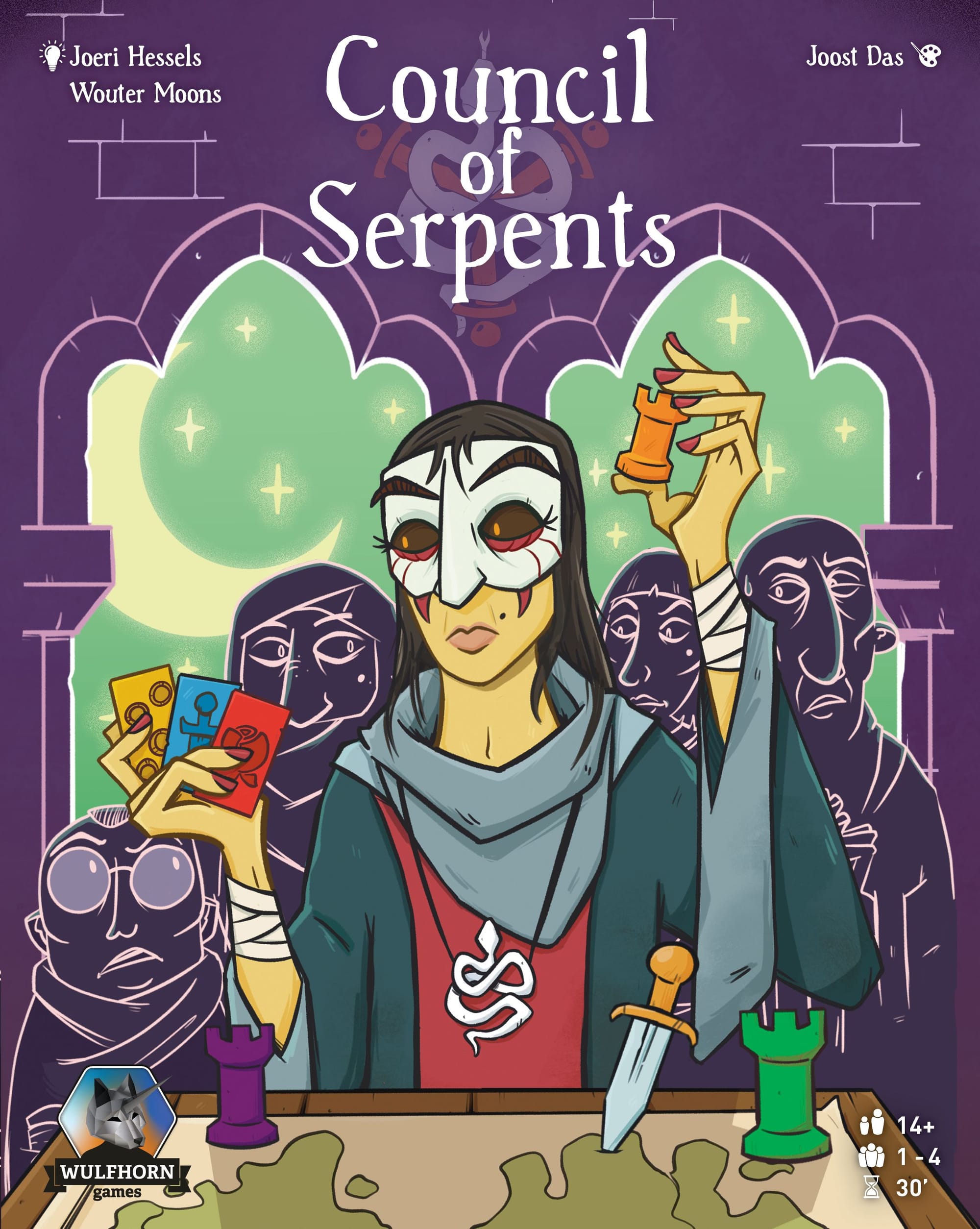
Council of Serpents is for 1-4 players, with the four-player game being played in teams. During the game, players manipulate the strength, popularity, and treasury of three houses, attempting to make one house triumph — or collapse! — based on their hidden ambition cards.
Each player has a hand of three influence cards, and on a turn you draft an influence card from the four-card "court", then play one, perhaps placing it between two houses to create conflict between them or escalate conflict to war — or placing it between them to quell a conflict and adjust both their stats. You can place an intrigue card face down by a house, with its effect being revealed only when the house goes to war with either of its neighbors. A guild card affects a house's stats as long as it's present, but you can play a matching one at another house to banish the first.
Planning cards allow you to affect the "time track", removing a card there and replacing it with another or adding special effects to it. After each player's turn, the top card on the time track resolves. When the time track empties, each player secretly contributes a new card to the time track pool, with the first two cards in the court and a random card also being added; shuffle these cards, then lay them out to create the new track.
The game ends immediately when one house collapses or triumphs, with war making it possible for both to happen at the same time.
Want more game announcements like this one?
Get Board Game Beat’s free posts by email — original reporting, designer interviews, and industry news, with no tracking, no ads, and no spam.