

Some day I will perhaps stop being surprised by how much support some crowdfunding projects receive, but today is not that day.
Why? Dire Wolf's Kickstarter for a new Clank! expansion (The Forgotten Vault) and a tenth anniversary "Cube of Holding" closed on 1 October 2027 with more than US$2.4 million in backing, which includes 2,884 backers at the US$435 level for the "Dragon's Hoard" lot consisting of the new Master Thief edition base game, five expansions, two promo packs, 600 card sleeves, a neoprene map pack, an acrylic token upgrade kit, and the aforementioned Cube of Holding.
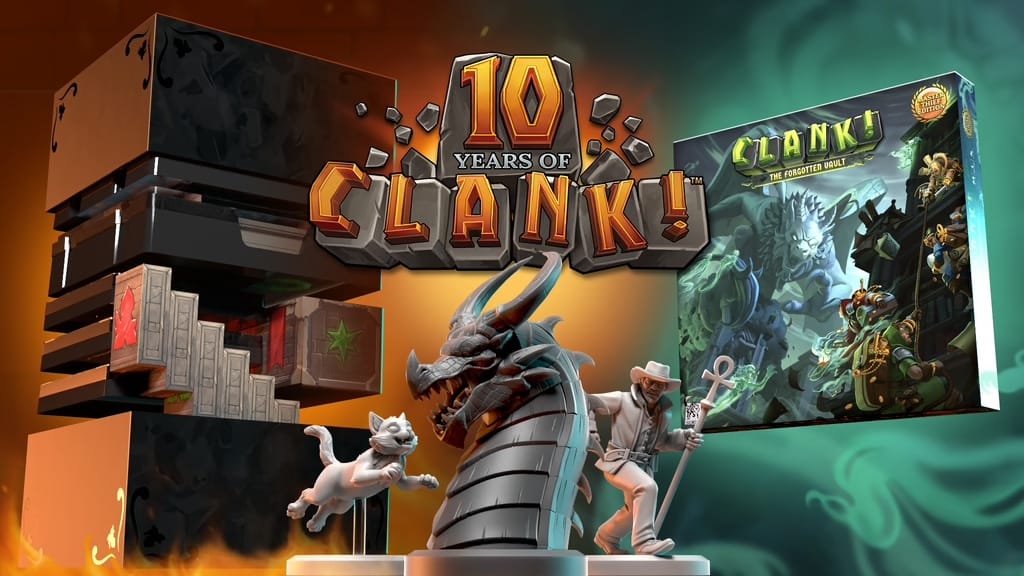
Amazingly, that's not even everything you could purchase. For an additional US$135, you could add on a set of metal cubes, a separate set of metal cubes, metal coins, a Kickstarter promo pack, and a Steam key in order to play the game digitally...which might be easier to handle than messing around with a cubic foot of physical components.
In total, the campaign had 8,726 backers, which averages out to US$276 per backer. I'm not saying Clank! is a bad game or folks shouldn't be spending their money as they like; it's more like I'm looking at these numbers and thinking: "In this economy?"
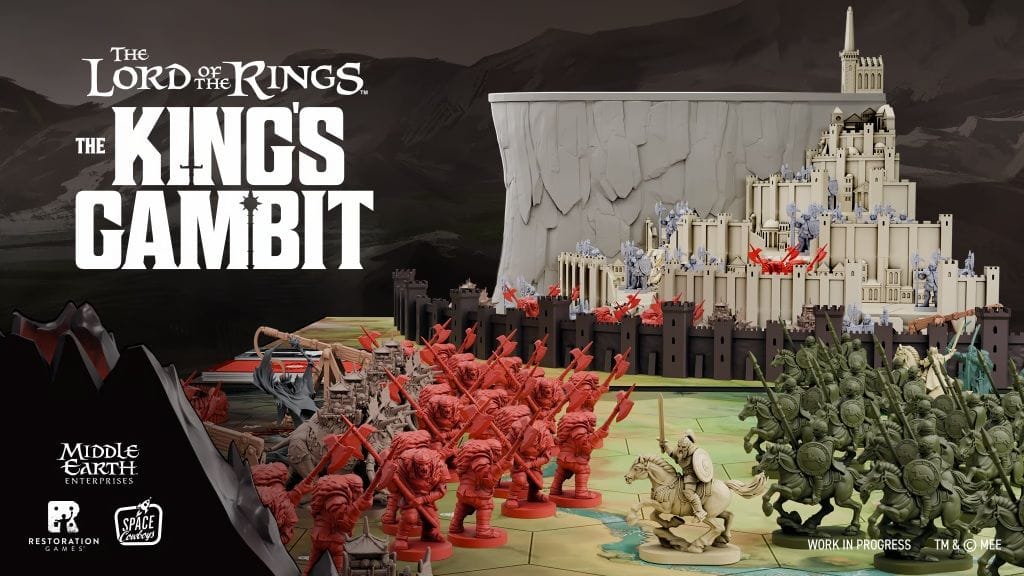
Similarly, Restoration Games launched a Kickstarter campaign on 29 September 2026 for The Lord of the Rings: The King's Gambit, a co-production with Space Cowboys, and within two days that project has received more than US$1.4 million in backing, with the average amount spent per backer being US$336. [Disclosure: Restoration Games has advertised on Board Game Beat.]
Of course it doesn't hurt that the least expensive pledge is for the US$199 "Limited Edition" version of the game, aside from the US$5 "pledge manage access" level that has more than four hundred backers. If we set those backers aside, the average backer is spending US$373, which makes sense given that 40% of the backers have opted for the US$449 "Mithril Edition with playmat" option. Again, in this economy?
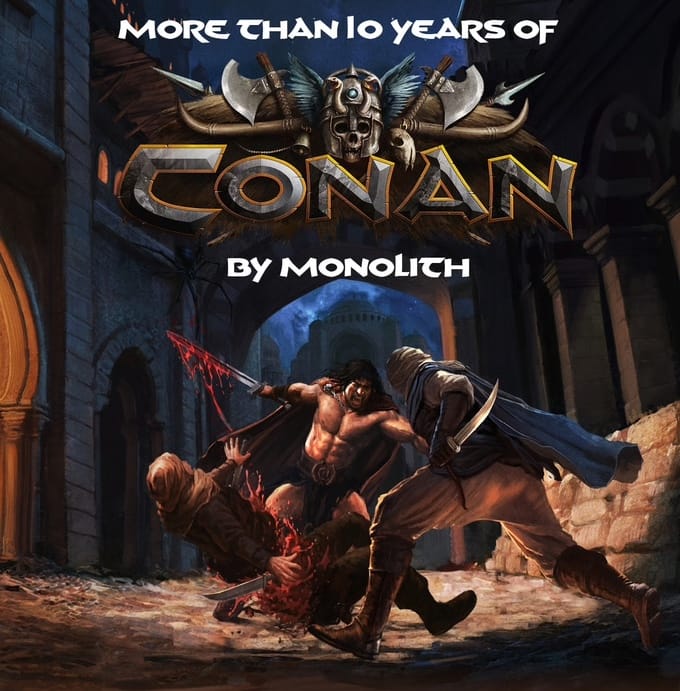
I've even been surprised by Monolith's Kickstarter campaign for its two Conan gaming lines, one of which is board games and one of which is RPGs. As with Clank!, Frédéric Henry's Conan board game is celebrating its tenth anniversary, and 93 backers have chosen the "board game all-in pledge" that runs for €699.
All this said, I do recognize that (1) the world of gaming is always larger than we think it is, with millions of people quietly playing games and never making a big deal about it online like some of us do and (2) a decent percentage of these people have loads of money on hand for hobbies. In mid-2025, for example, 251 people backed the US$2,200 collector's edition of Ghost Galaxy's The Lord of the Rings: The Confrontation crowdfunding campaign.
Why am I bringing this up? To highlight that the money is (probably) out there if you're a creator who has a special project they'd like to bring to market...at least on a small scale.
A related story: In December 2025, my wife happened to run across someone on LinkedIn who had recently created a huge tabletop game and who had also recently moved to within a fifteen-minute drive of my house. I got in contact with Dan Winger, who had worked at LEGO for eighteen years, seven of those as a master designer. He had recently launched Unplugged Arcade, a company that would sell handcrafted tabletop games, and we met at a coffee shop to talk about his game Baseball Shuffle.
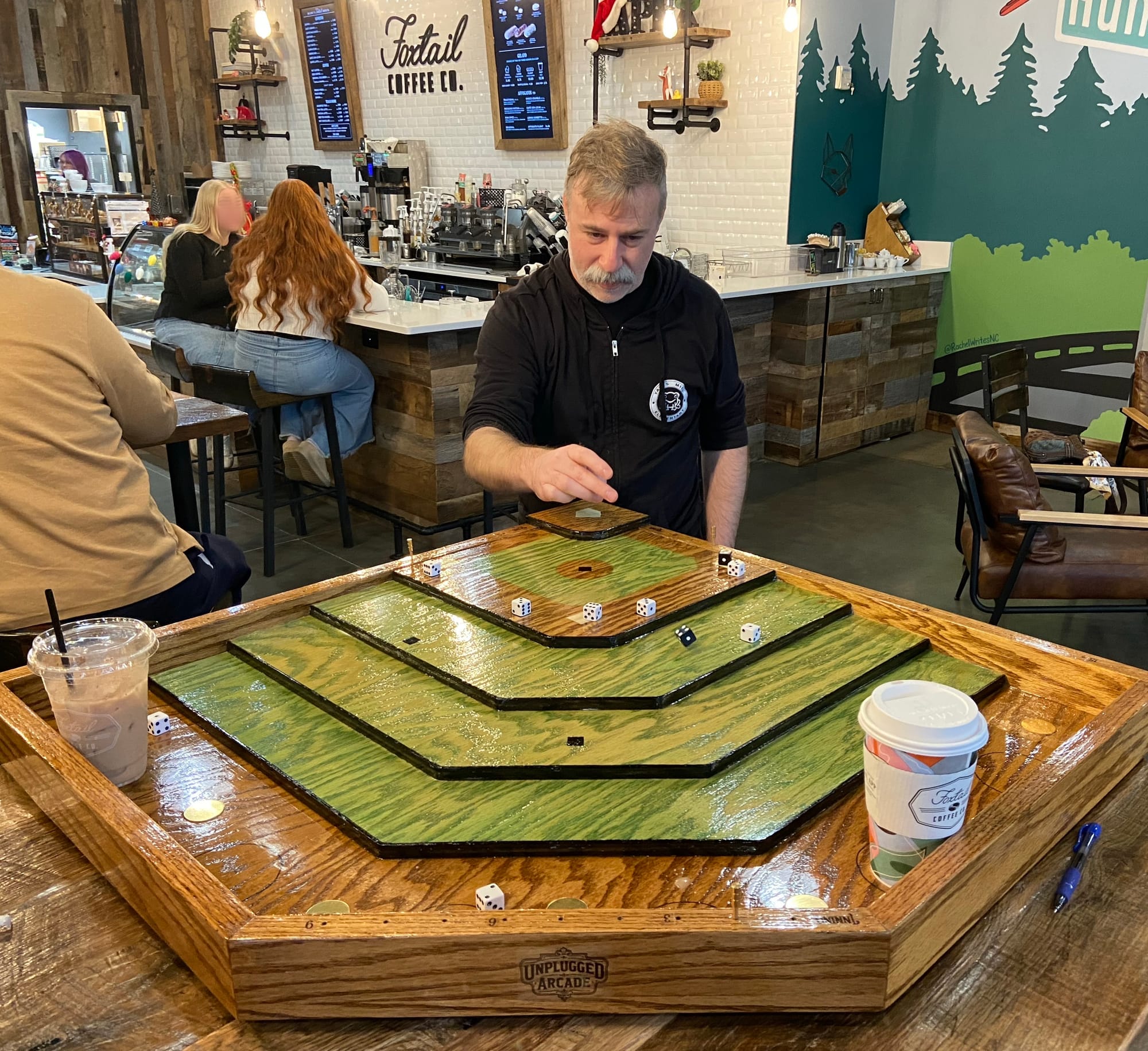
If you're familiar with Tumblin' Dice, a dexterity game from 2004, you'll see that Baseball Shuffle shares the same basic structure: You have a playing area comprised of multiple levels, and you flick dice from the highest level onto lower ones.
Beyond that, the games differ completely, with Winger simulating a baseball game via dice play, with teams alternating between batting and fielding each half inning. After nine innings, whichever team has scored more runs wins.
Fielding is straightforward: Place eight dice on the black spots indicating the starting fielding positions, then wait to see what the batter does.
When batting, you place a die on home plate, then flick it:
- If the die doesn't leave the infield level, you receive a called strike, then take back the die and flick it again. Three strikes equals one out, and three outs ends your batting session in this inning.
- If any portion of the die lands on one of the slightly raised gold tokens on the lowest level, you've hit a home run, and the batter and all runners score....but if you land anywhere else on that level, the batter is out on an easy pop fly.
- If the die lands on the first, second, or third level below the infield, the batter and all runners possibly advance one, two, or three bases. To find out, check the value of the landed die. Does it show a 4 or 5? Then yes, they advance as described above. A 6 counts as a fielding error, and everyone moves one additional base. A 1 is an automatic out with no one advancing, and a 2 or 3 gives the opposing team a chance to stop you. The fielding team flicks any fielder at the batter, and the batter's final resting place (regardless of the die face) determines the outcome of the hit.
I've played Baseball Shuffle a couple of times, once one-on-one and a second time in teams of two, and the game does what it's trying to do. In general, you want to finesse your flicks to land on the green levels since you have a decent chance of advancing on base — but unlike in baseball, you can shoot your die directly into a fielder to knock them into the gutter (the lowest playing area), taking that fielder out of the inning and giving your opponent one fewer defender.
As with Tumblin' Dice, you feel like you can start with a certain die face on top of your batter and ease that die into a scoring area without having it flip over, but that almost never happens...at least not at my level of play.
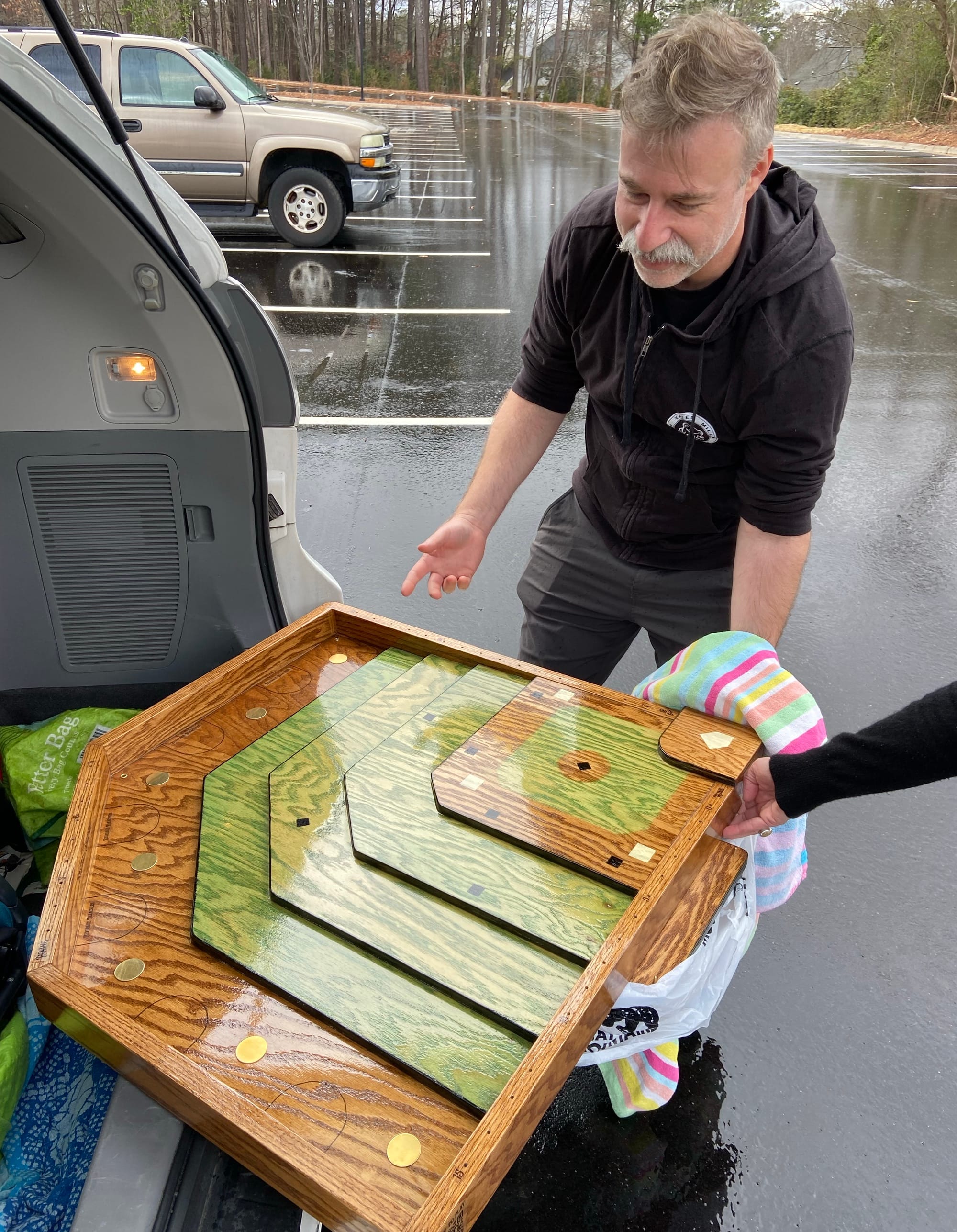
Dan was making these boards in his garage and figuring they'd retail for US$1,500 — which seemed like a completely fair price given the work involved, while also being an outrageous price for a single game...yet look again at The Lord of the Rings: The Confrontation above: 251 backers for a US$2,200 item. Hmm...
I encouraged Dan to look into Kickstarter's "Make 100" program as he would not have to commit to making more than one hundred copies of the game, while giving it exposure on a national market, but he first wanted to see whether he could (1) find partners who could help produce the games and (2) market Baseball Shuffle to pubs, which seemed like an ideal outlet. After all, plenty of bars feature games like darts and billiards, so if Baseball Shuffle would encourage guests to stay longer and drink more, maybe it would be a good investment for those businesses.
(In case you hadn't noticed, the gutter features six highlighted "drink zones" where you can place glasses, as we did with our coffee drinks. The glasses and cups become bumpers in the gutter, perhaps enticing you to shoot more directly for home runs given that less of the "out" area is exposed. Surely you'll land on a gold coin now, right??)
I saw little of Dan over the next six months, with me launching this site and devoting a vast number of hours to it and with him marketing Baseball Shuffle like crazy through placements in pubs and other businesses; featured events at sporting events, such as Durham Bulls baseball games; tables at a beer-related event in downtown Raleigh; and promotion via YouTube, Instagram and Tik Tok, with one video catching more than 900,000 views.
But just the other day, he sent me a link to a Kickstarter page, with him saying, "I should have taken your advice on this months ago." I feel so honored!
While looking at Dan's videos over the past months, I saw many, many comments lamenting the price of the game and wondering whether it could be made more affordably, and smartly he's done just that for the crowdfunding project, creating US$250 and US$500 versions that you assemble prior to each game. They lack the gloss and impact of the one-piece table-sized edition, but they appear to provide the same game experience, so this is a great business decision. Amazing to learn what he's been doing all this time!
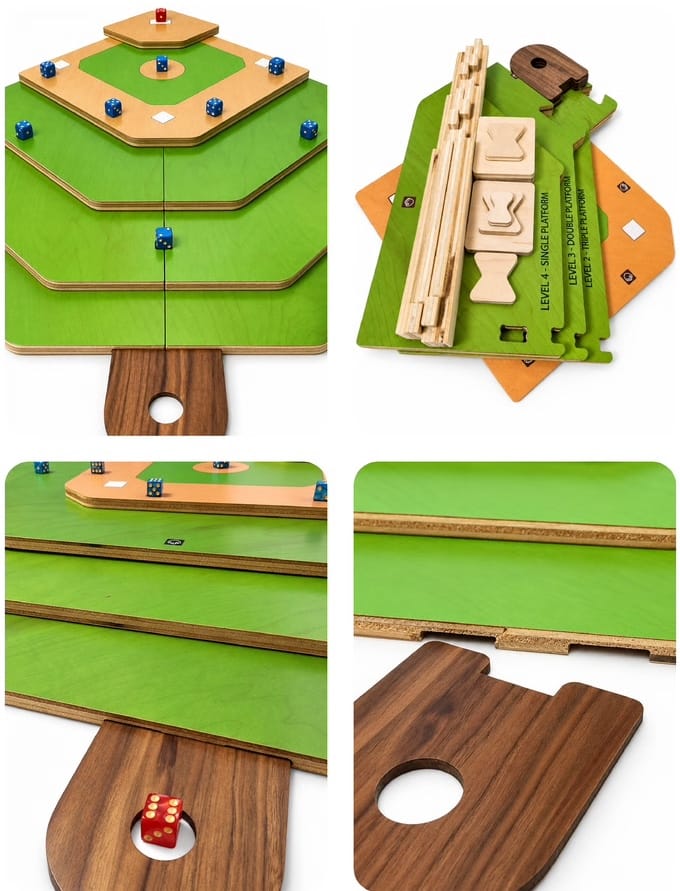
Only three days after launching, Dan's project is already funded, with roughly half of the support coming via these less-expensive versions. I can understand wanting to stick with your ideal vision and not compromising, but if you want to make a living creating games, you probably want to market games that people will buy. Congrats to Dan, and I look forward to seeing what he does next!
[Disclosure: Board Game Beat has run banners a few times for Unplugged Arcade, including the week that this article was published, but these are not paid banners. I had empty slots on the advertising schedule, so I invited Dan to send me banners, something I've done a few times for independent creators.]
Want more articles like this one?
Get Board Game Beat’s free posts by email — original reporting, designer interviews, and industry news, with no tracking, no ads, and no spam.


