

Let me run through another round-up of Japanese games, teasing myself and countless others with games that (at best) we might see on a SOLD OUT sign at SPIEL Essen 26. Who knows?
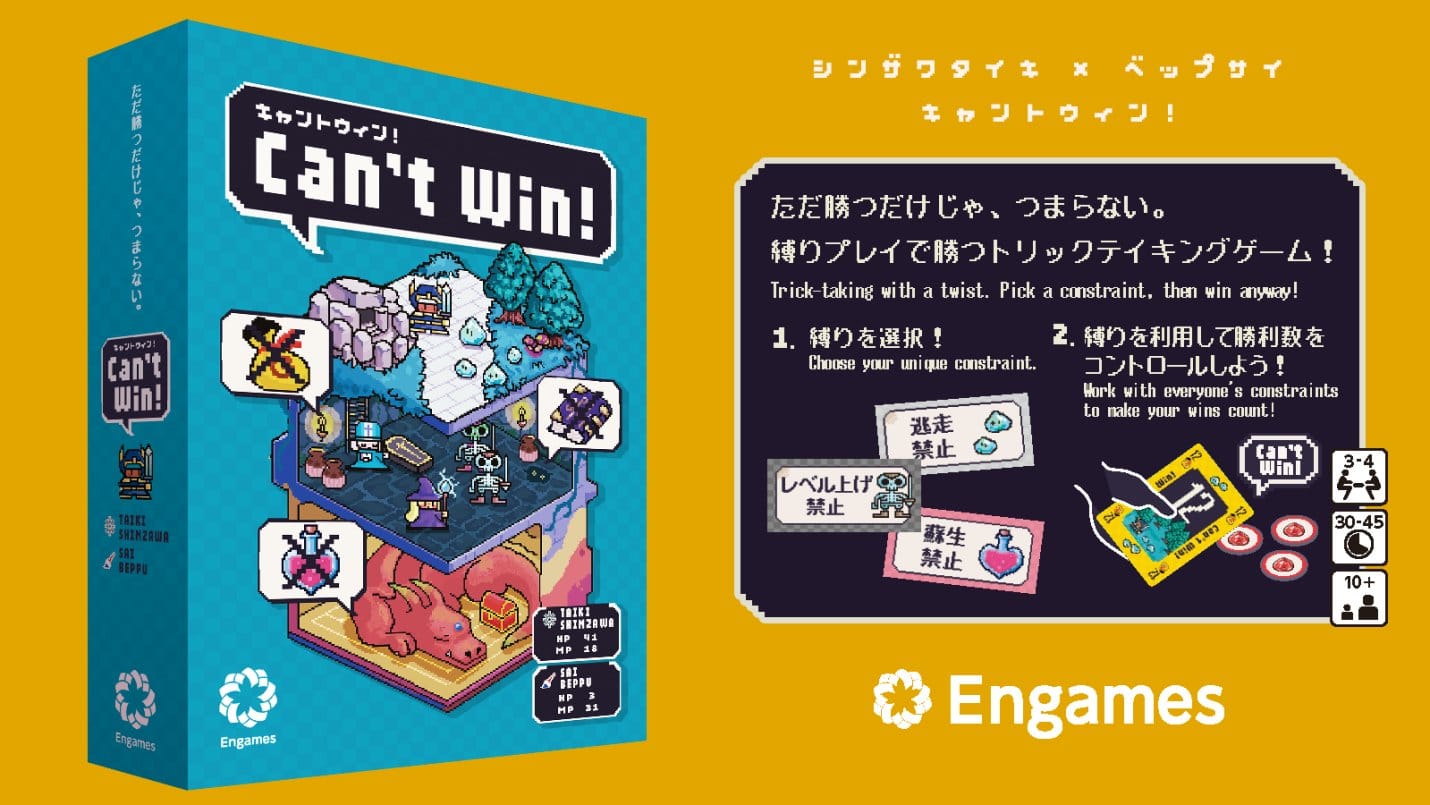
▪️ Engames, which has attracted lots of attention in recent years thanks to Nokosu Dice and (at SPIEL Essen 25) Ghost Lift, has revealed the game it will debut at the Spring 2026 Game Market: Can't Win, a 3-4 player trick-taking game from Taiki Shinzawa.
At the start of each round, you predict exactly how many tricks you'll win, while also choosing a constraint for yourself that limits which cards you can use to win tricks. Keep in mind that constraint might actually help you win more tricks than expected! At round's end, you record points for won tricks and correct bids, with your final score being the sum of these two values.
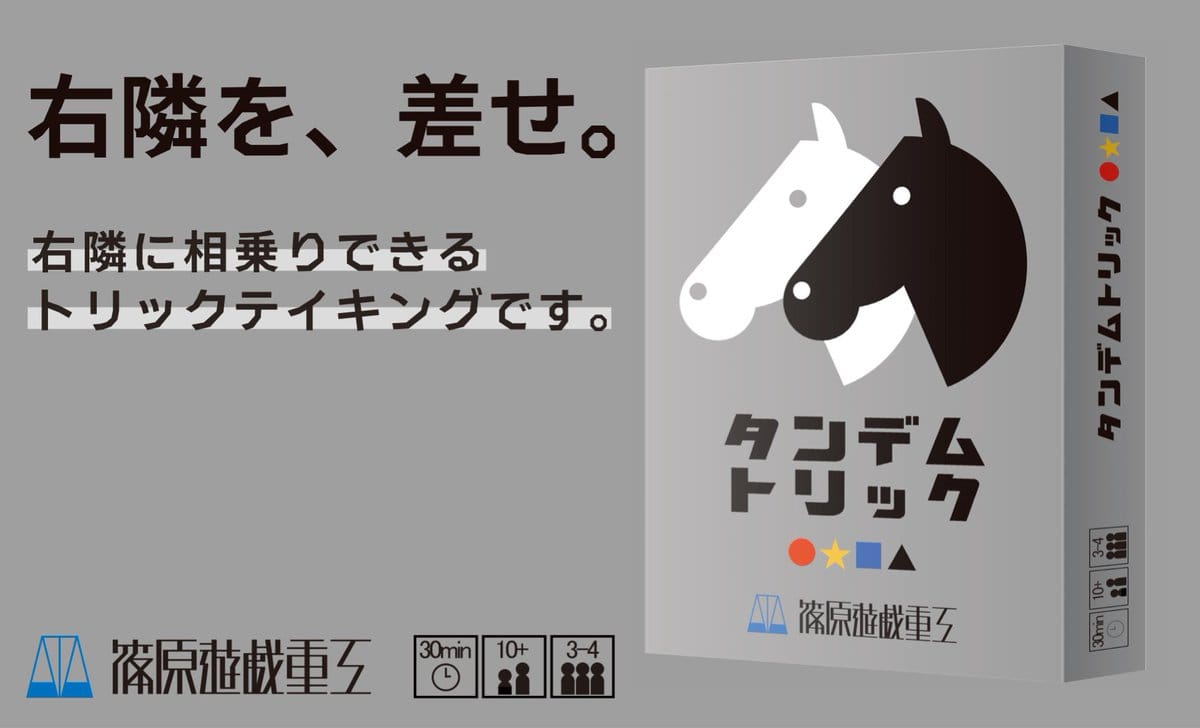
▪️ Designer Yoshiteru Shinohara will also have a new trick-taking game for 3-4 players: タンデムトリック, or Tandem Trick. All I know is that you're essentially "riding" with the player on your right, adding the numbers that you play, with both of you collecting the trick if you win.
I'm sure the game has more to it than that, but now you know a bit about it.
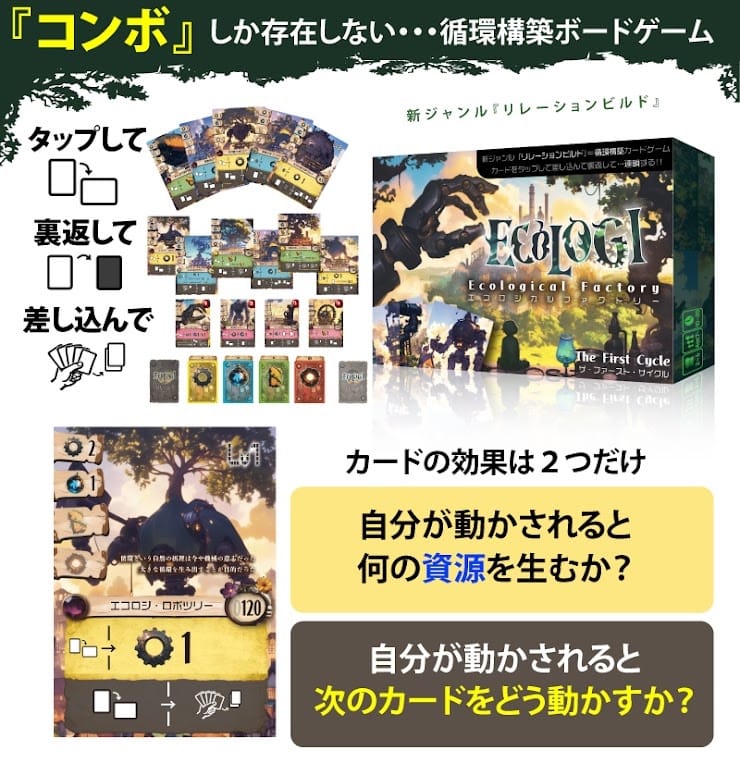
▪️ Here's a hard one to write about: Ecologi (エコロジ) from Rulemaker. The game isn't listed on the publisher's website, but the teaser text ahead of this title's Game Market debut at Spring 2026 promises "not just a game where 'combos are powerful'", but "a game where only combos exist".
The promotional text above states that cards have only two effects: in yellow, what will be generated if this card is moved (i.e., tapped, flipped, tucked, etc.), and in brown, if this card is moved, how will the next card be moved.
In spirit, the designer is trying to create an ecology via gameplay, with cards being useless on their own, but coming together "to weave a world through a chain reaction of connections". Well, I'm sold!
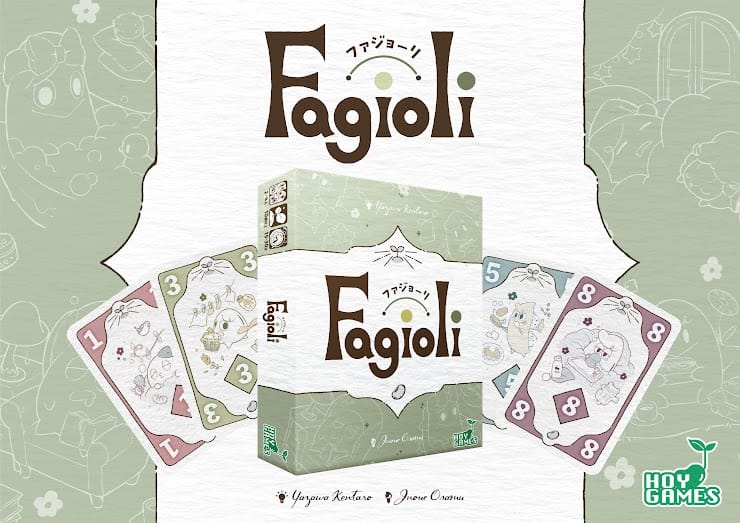
▪️ At Game Market Spring 2026, Kentaro Yazawa of HOY GAMES will feature the card game Fagioli, in which 2-4 players must balance the acquisition and planting of beans.
Cards in the game are numbered 1-3 and 5-9, and each turn, you play a card onto one of the two discard piles. If your played card is higher than the card covered, you draw cards equal to the difference between the two; if it's lower, you play cards from your hand face down into a personal "planted" pile.
This doesn't seem like much of a game until you add the constraints: If you have 6+ cards in hand, must plant more than you have in hand, or end your turn with zero cards in hand, you burst, taking the lowest-valued penalty token and throwing away all of your planted cards. (A burst token is removed from play each time discards are shuffled to form a new deck, so it's not the case that players must burst.)
When the burst tokens run out, players score 1 point per card planted, then subtract points lost via bursts. The winner of the game must legally change their name to "Uwe Rosenberg".
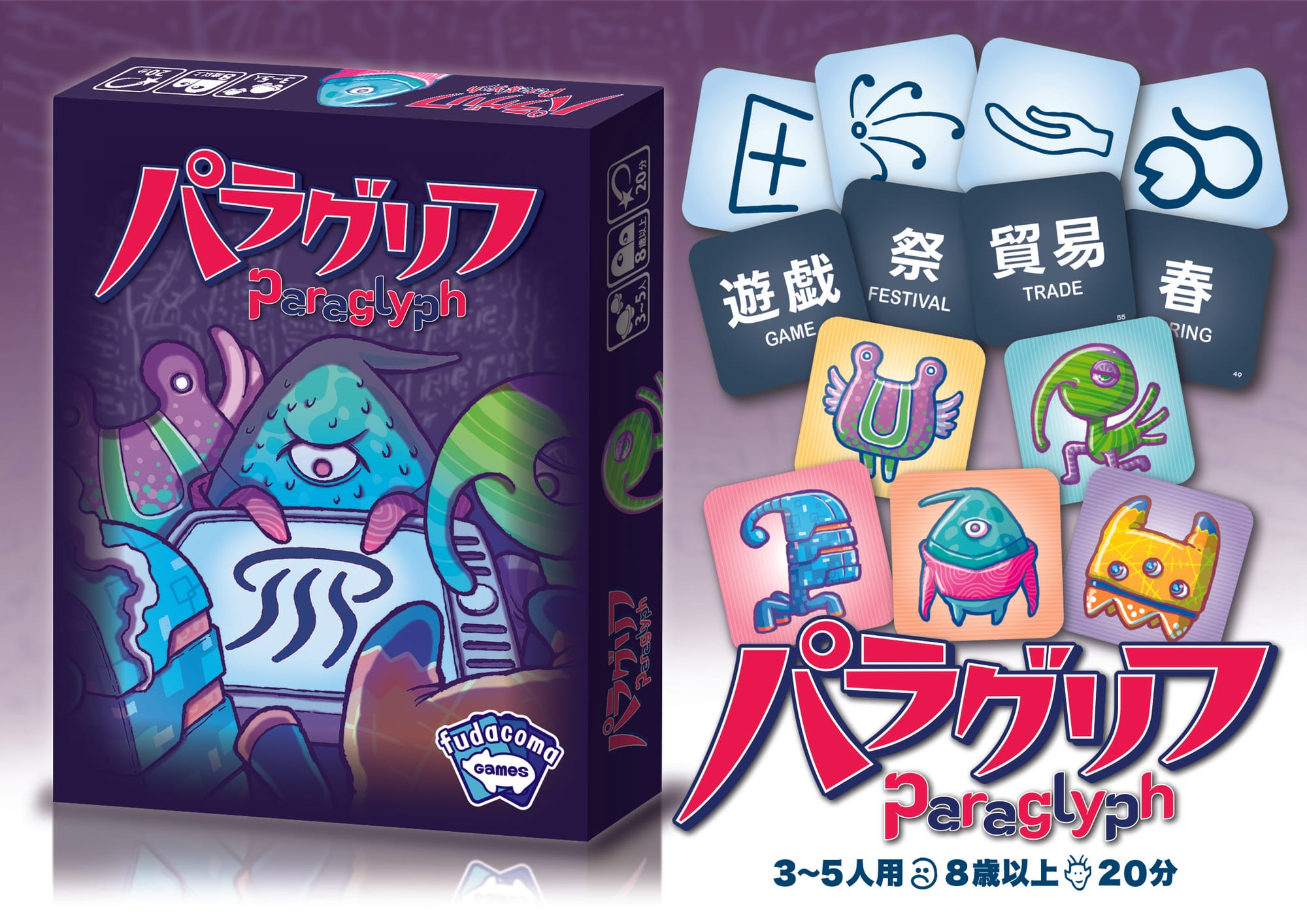
▪️ Fudacoma Games' new title for Q2 2026 is Paraglyph, a party game for 3-5 players that mines familiar territory in party games: An array of words are displayed, with each player being assigned a word in secret. Using glyphs from both history and imagination, communicate your word to other players, who will secretly vote on which word they thought you were trying to convey.
Fudacoma's previous release was late 2025's Roguewrite, a co-operative game for up to six players who build a dungeon together in order to thwart adventurers exploring said dungeon. I feel like I've seen a fair amount of this recently...
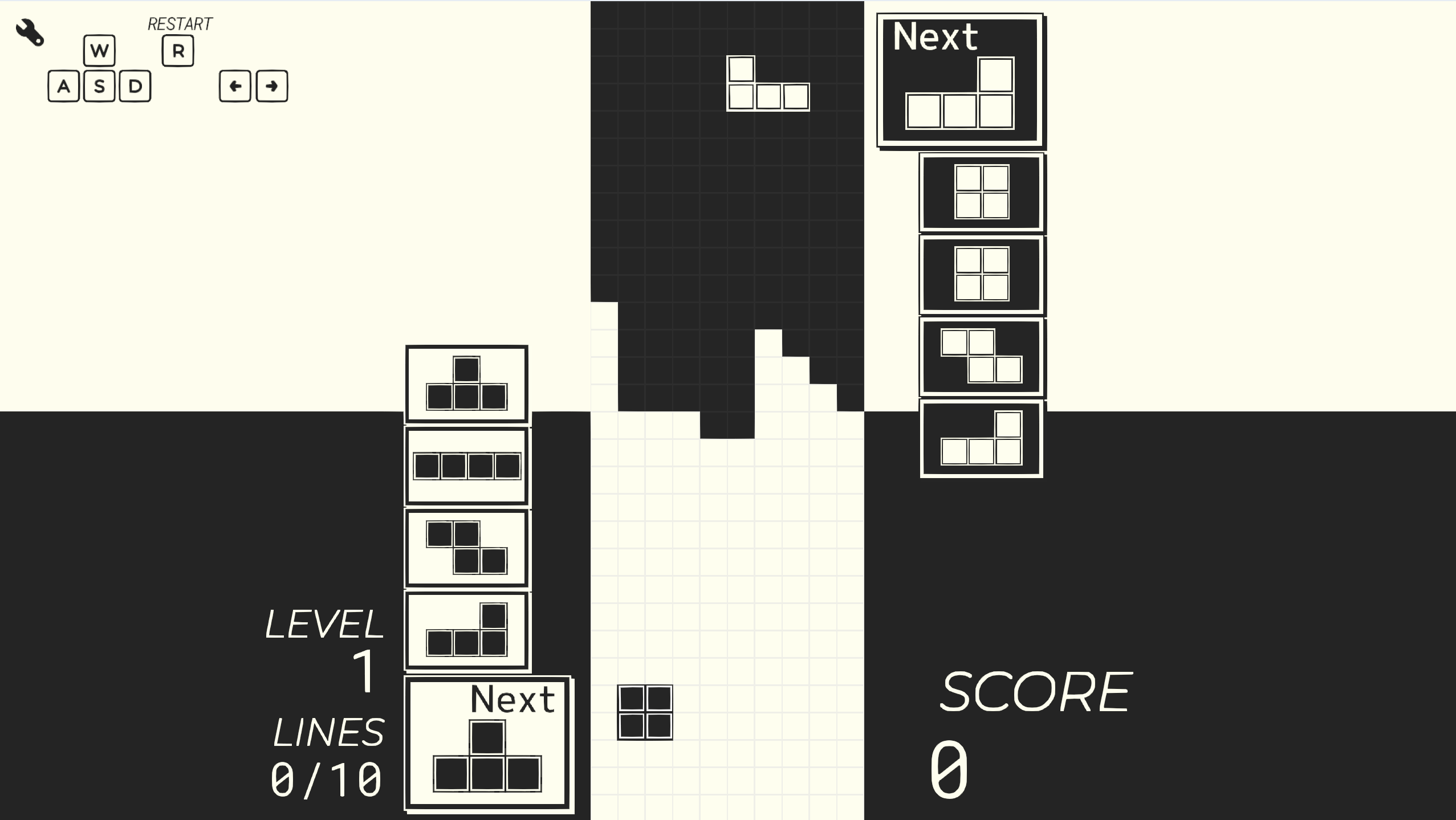
▪️ Should you desire to eradicate your work productivity, turn your attention to the online browser game ウラオモテトリス, which is pronounced "Uraomotetorisu" and which translates to Inside-Out Tetris.
While diving down the JP rabbit hole, I ran across a post from Hiraisun introducing this game and was like, "ARE YOU KIDDING ME?!"
Essentially you're playing two games of Tetris at the same time, with white pieces falling down and black pieces falling up. The left and right arrows rotate both pieces simultaneously, while the A and D keys move both pieces left and right. The W key drops only the white piece, and the S key raises only the black piece, so you can create different rhythms for what falls where, with you trying to complete black rows with the pieces falling up so that you have more room for the white pieces falling down, and vice versa.
I don't normally write about digital games, but I couldn't bypass writing about this head-twister. Give it a try!


