

Designer Reinhold Wittig was born in Göttingen, Germany in 1937, and he passed away in Göttingen on April 11, 2026 at age 89.
I mention the city prominently because Wittig will forever be associated with Göttingen in the game community, having started the Göttinger Spieleautorentreffen — that is, the Göttingen Game Authors Meeting — with his wife Karin in 1983. At that event, game authors met with journalists to show off their creations, and over time the event has evolved into one where a few hundred people — authors, publishers, journalists — show up each June to talk about games, try out new designs, and (perhaps) sign contracts for future releases.
The word "Spieleautor" — "game author" — is prominent in the name of that event, and Wittig is credited with creating and promoting that term for the creators of games.
Aside from the Göttinger Spieleautorentreffen, Wittig's other main contribution to the game industry is the 1988 "Beer Coaster Proclamation". During an evening meeting with fellow game authors on February 4, 1988 during the Spielwarenmesse toy and game fair in Nürnberg, Germany, Wittig took a beer coaster and wrote the following:
Keiner von uns gibt ein Spiel an einen Verlag, wenn nicht sein Name oben auf der Schachtel steht!
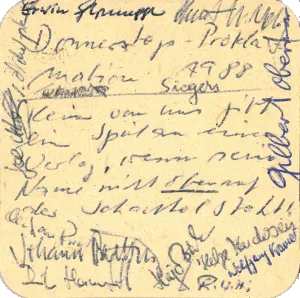
Translated, this says "None of us will give a game to a publisher unless their name is on top of the box!" At that time, publishers rarely credited game authors on publications, and if they did, the author's name might only be somewhere in the rulebook or on the back of the box in the fine print. Thirteen authors signed that coaster, which is now housed in the Deutsches Spielearchiv (German Game Archive) in Nürnberg, and these days it's almost unthinkable that a game author's name would not be present on the front cover of a game box...at least in the hobby game industry. (Mainstream game publishers still typically do not credit creators.)
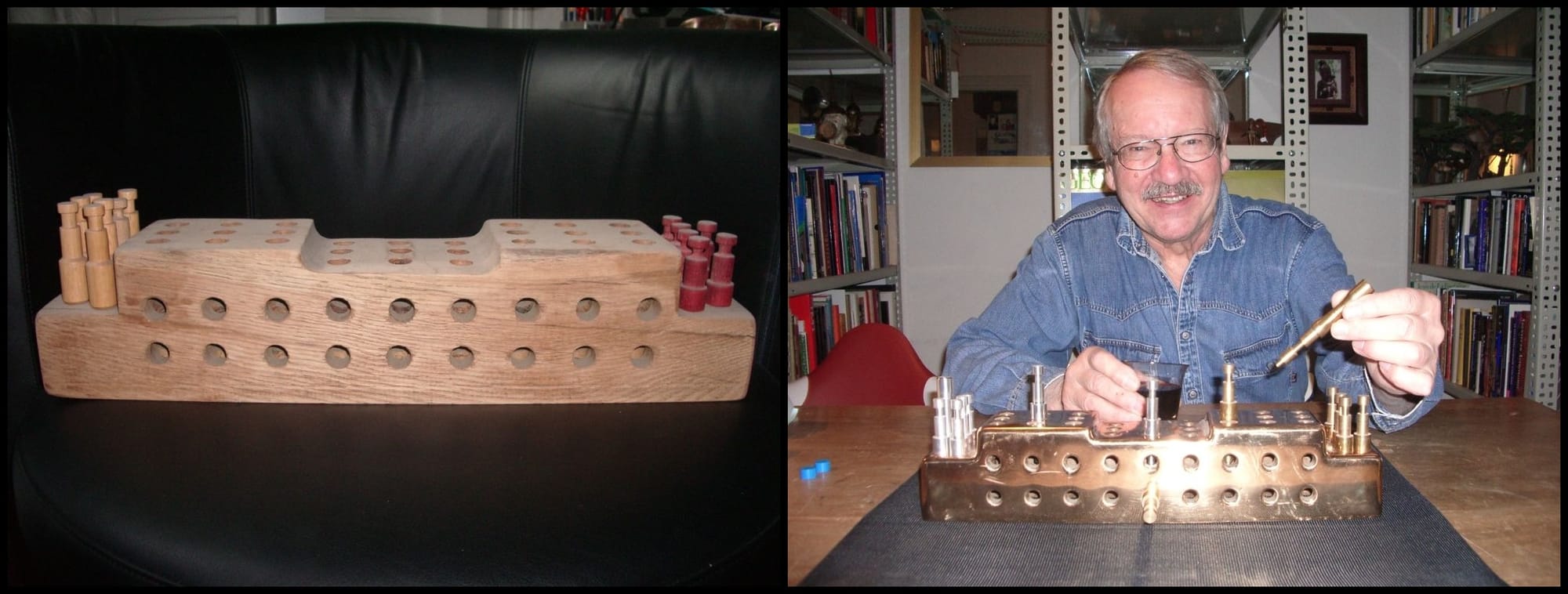
Wittig's educational background was in geology, and he worked in the Geological Institute at the Georg-August-Universität in Göttingen until he retired in 2002 — but he had many other interests as well, with his first game designs dating to the late 1950s. In a memorial, long-time friend Hilko Drude writes that in 1958 Wittig talked his grandfather out of a fence post in that would have been used as firewood and used that post to carve the game Wikinger-Schach ("Viking Chess"). Drude mentions that Piratenbillard also originated around this time, although it wasn't published until decades later.
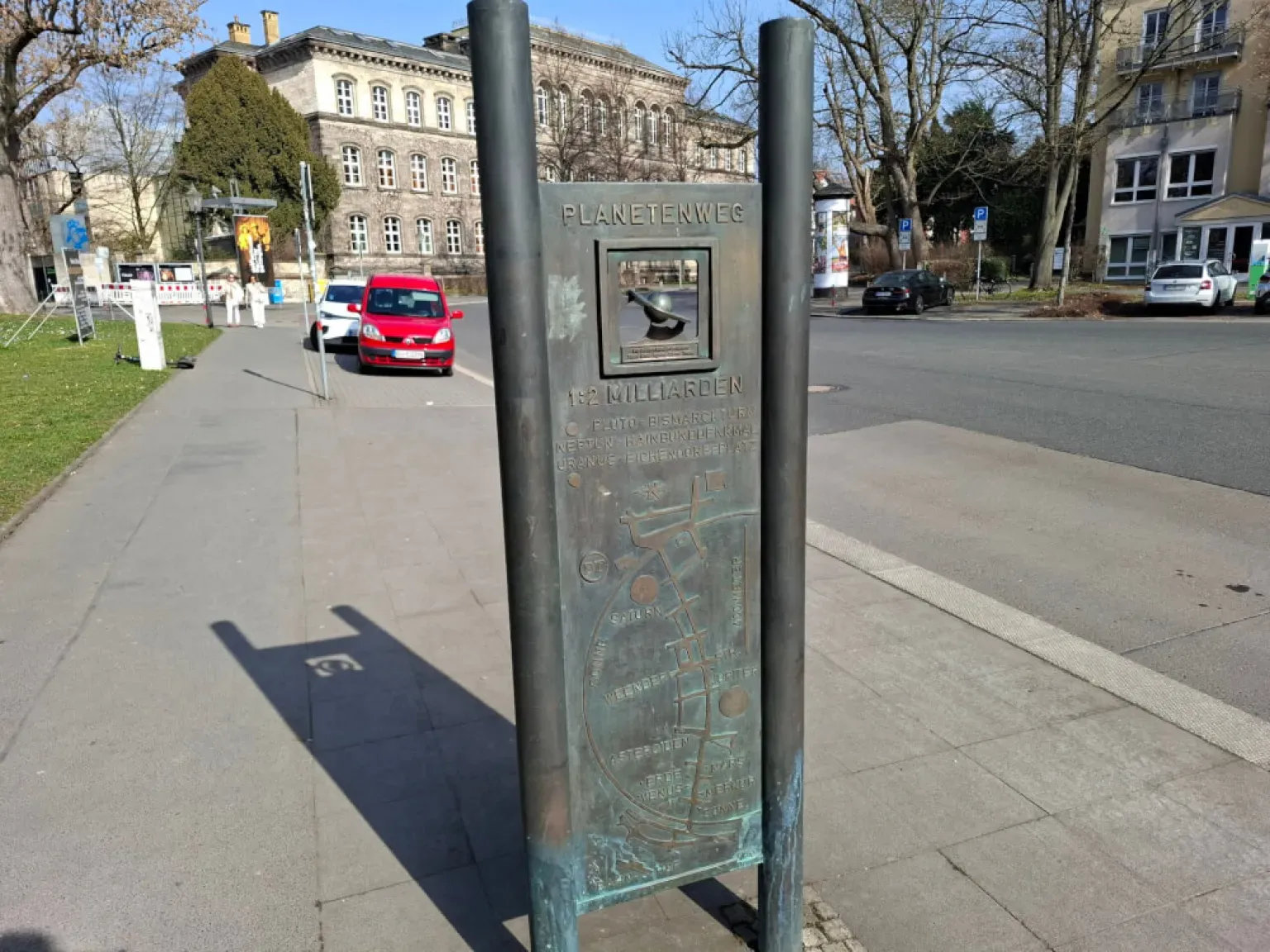
Wittig seems like an endlessly creative person, and Drude mentions that his apartment was filled with handmade puppets, handmade furniture, and artwork and games that he had created. He designed the "planetary path" in the city of Göttingen, a small-scale version of the solar system that starts at the city's train station and ends in the village of Diemarden nine kilometers away.
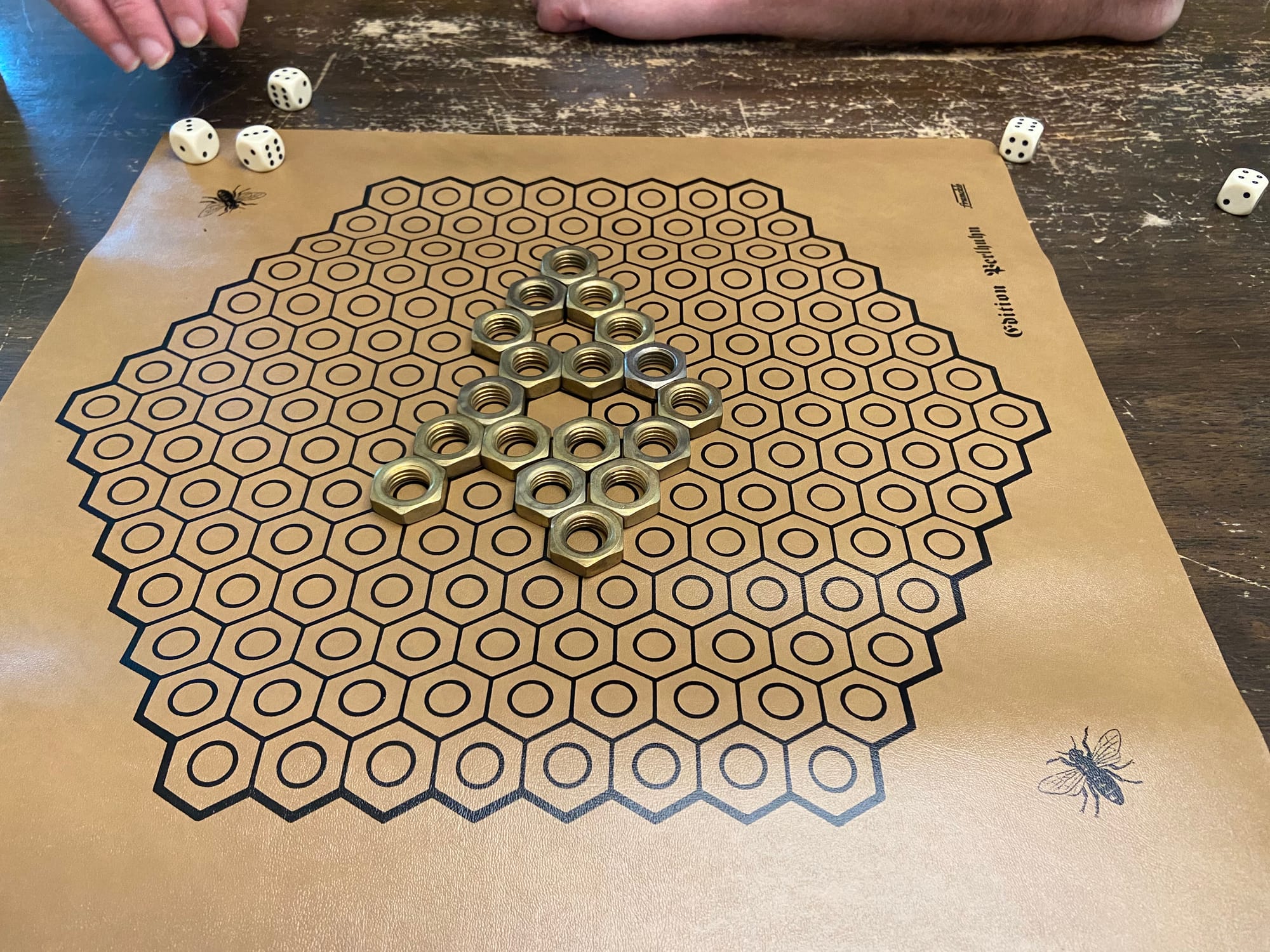
In 1974, the Göttinger Kunstverein (art association) asked Wittig to create a "playable graphic", and Drude says that Wittig did what he often did when creating puppets: turned to everyday materials, using screw nuts as the components in a design named Wabanti. He created 24 copies of the game, and they were received well enough that two years later he started a publishing company — Edition Perlhuhn — with his friend Hubertus Porada. (A giant-sized fiftieth-anniversary edition of Wabanti is shown in the image at top.)
Wittig released other designs via Edition Perlhuhn in the late 1970s, but Drude says that the real breakthrough came in 1980 with the dice pyramid game Spiel. To quote a translated excerpt from Drude's memorial:
This was actually less a game than an invitation to play because in the beginning Spiel contained no rulebook at all. As Reinhold told me, he had stood with some copies on the Göttingen art market and hardly sold any. Somehow, however, people must have been talking about it because a few months later, before Christmas, his phone rang and someone asked him, "Are you the one with the dice?" On the same day, more calls came, and by Christmas, the first 100 copies were sold. Soon people started to send in their own rules for games with Spiel, and many of them ended up in later editions in a rule booklet. Franckh-Kosmos then opened an Edition Perlhuhn series, which attracted attention through opulent equipment and was one of the company's bestsellers for a long time.
Spiel was the first of five games that the Spiel des Jahres jury awarded a special "beautiful game" prize, with the other winners being Wir füttern die kleinen Nilpferde (1983), Müller & Sohn (1986), Kula Kula (1993), and Doctor Faust (1994). Five of Wittig's designs were also placed on the Spiel des Jahres shortlists, and in 2020 he was inducted into the Academy of Adventure Gaming Arts & Design's Hall of Fame.
To close, let me quote an inspirational part of Drude's memorial, which seems (at least to me) to capture the essence of Wittig's spirit:
When I met Reinhold [in 2007], he was 70 and still full of ideas, but now largely moved to making games only by hand and in small series. This was related to another passion of his, namely "art from scrap". Almost every weekend he drove to a friend's junkyard and browsed for interesting objects, mostly made of metal. From these parts he built his puppets, his impressive animal sculptures, and occasionally also games. I remember him coming back from the junkyard in 2009 with 31 equal aluminum parts. Seemingly arbitrary parts — but Reinhold drilled them, put a metal lance in it, and had thus created the knight for Matthias Schmitt’s Don Q. und der Dreh mit den Windmühlen. The edition of the game was correspondingly 31 copies (today wanted collectibles). He built other games out of wood, used residual material from previous Perlhuhn games or created individual pieces, often for games already published elsewhere. I’ve seen him use car floor mats, irregularly shaped blocks of clay, roasting pans, scales, cattle troughs — and who knows what else.
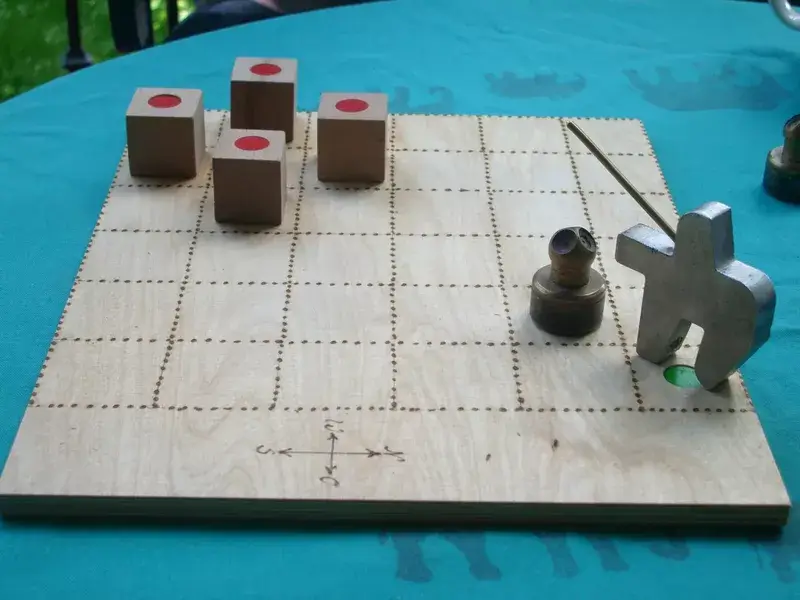
Many authors get their game ideas from themes, others from mechanisms. Reinhold very often came to play via the material or an object.
Even though this had nothing to do with the glossy editions of modern games, I was able to learn a lot from his way of working and his visions. We developed some games together and publish them partly via Edition Perlhuhn, partly elsewhere. Our joint game Topfrosch, for example, was created in this typical way — we sat at his table and played around with metal ice cream bowls and marbles until it suddenly clicked, and we realized that we had invented a game.


