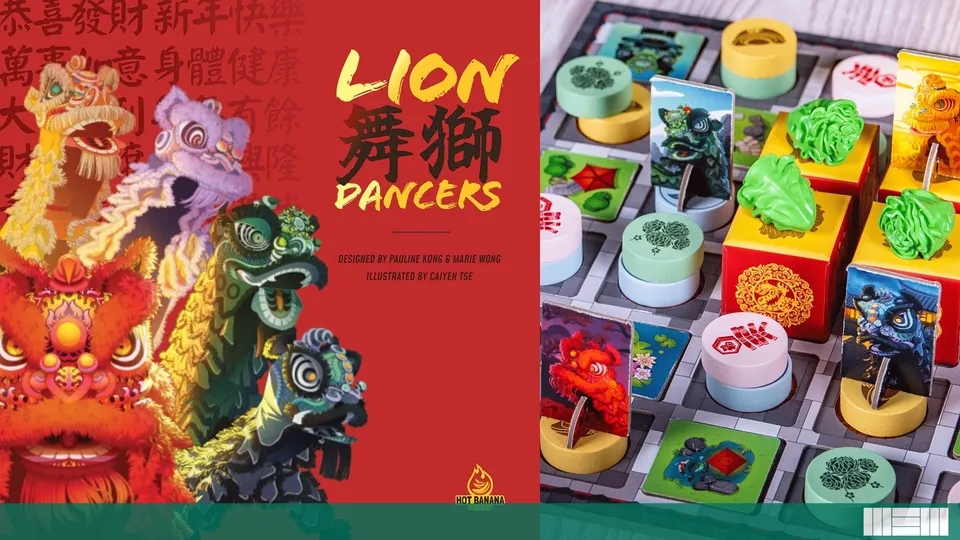
In January 2026, Phalgun Polepalli of Mozaic Games released Furry Pawlitics, in which 2-4 players become vets who must care for animals (and their owners), while trying to satisfy personal goals that they will likely keep hidden from those owners so that they don't come across as weirdos.
The game lasts thirteen rounds, which represents your lengthy shift at the vet hospital from 9:00 to 22:00. You each start with two animals and two goal cards in hand, with four of each in a public display. Five cubicles in a line can hold an animal on each side, and on a turn you're going to add an animal to an empty cubicle, place your vet with an unattended animal, move or swap animals, reserve an animal, play a goal card (which requires certain animals to be adjacent and which has you claim those animals), or take one of a few other actions.
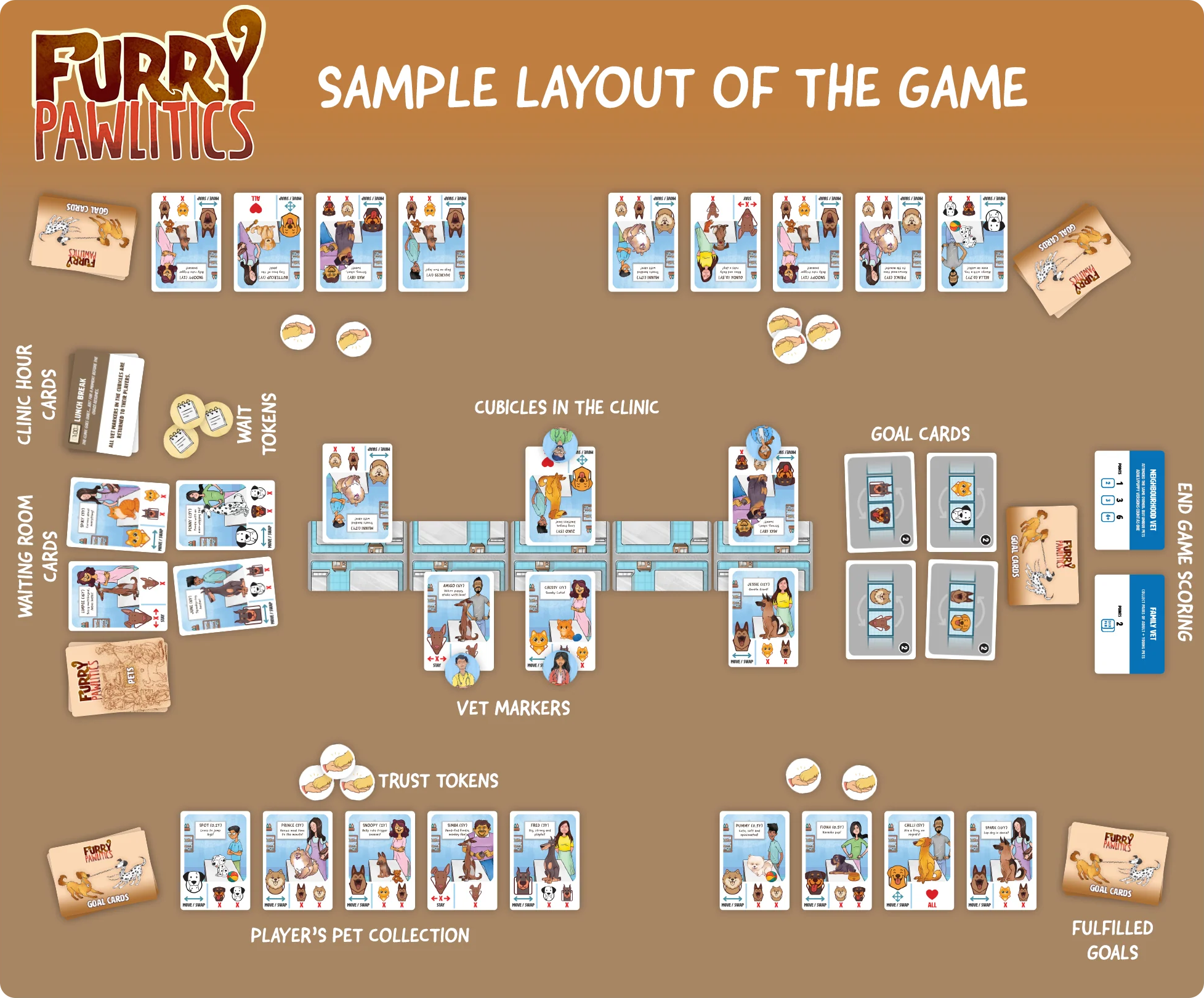
Points come from fulfilling goal cards and maximizing points from endgame scoring cards, which are random each game and grant points based on the animals that end up in your collection. Leave no animals in hand as those untreated animals will be a hit on your reputation.
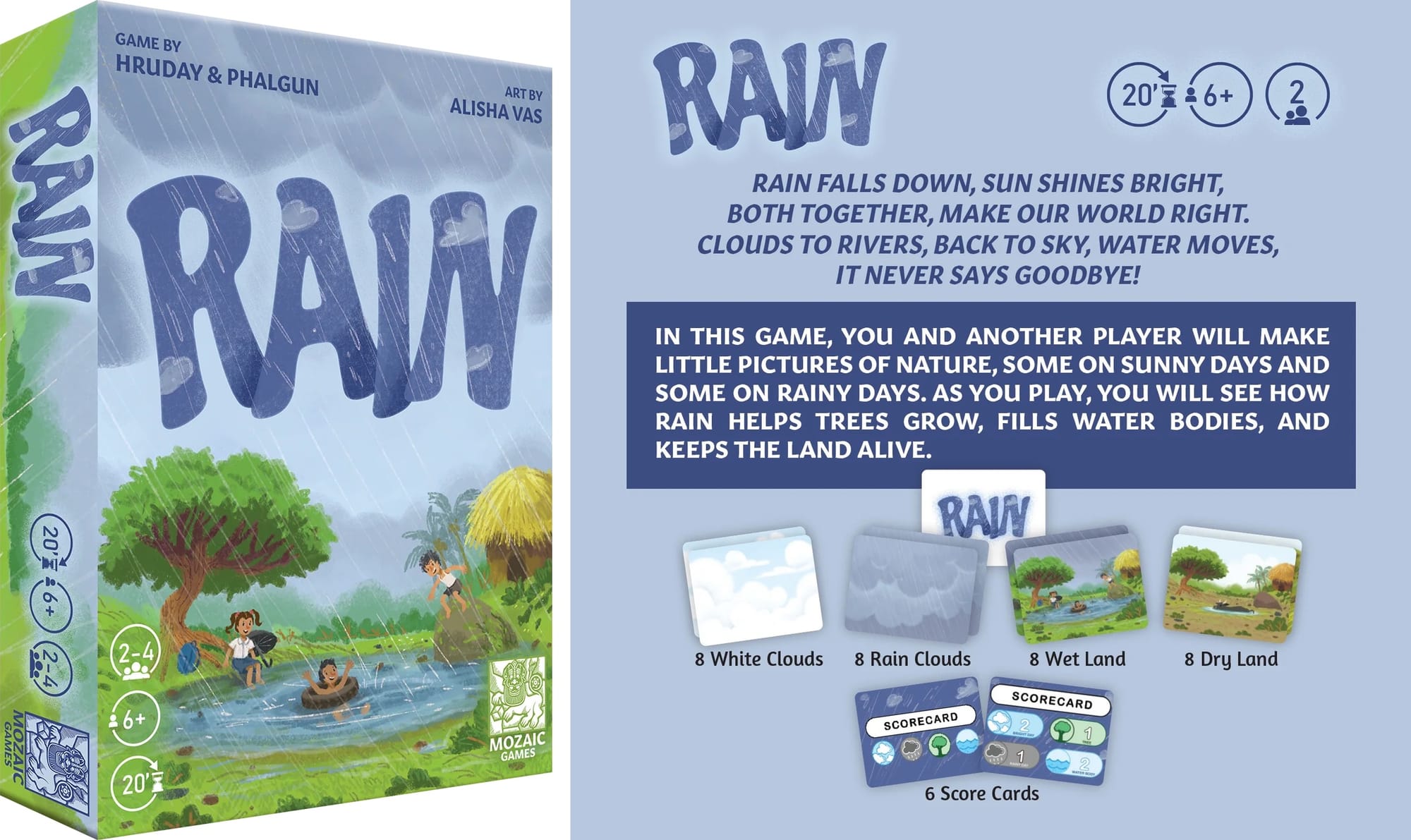
Polepalli's son Hruday has a new game on the market as well — RAIN — with the idea coming to him at age 6. In this small card game, Polepalli says, "Players create beautiful little scenes of rain in a village and gently discover how trees, water bodies, and rain come together to complete the water cycle."
Let's look at another pair of games from an Indian studio, with both Hippo Crates and Hoppin' Halos appearing in 2024 from JollyKin Games.
Hippo Crates is a 2-5 player card game from Jakcy Dsouza in which each player's hippo wants to eat only one type of fruit, with you keeping that info a secret. The playing area starts with three rows of only a single fruit card, while each player has three fruit cards in hand.
Each turn, everyone reveals a card simultaneously, then you place them into rows starting with the lowest card played. You can place a card in a row only if it's lower than the lowest card already there or higher than the highest card; if you can't place the card, then you take all the cards in a row and start a new row with your card. As a bonus, take a "mixed fruit" card from the reserve or from another player.
Once players run out of cards in hand, you score points for all the cards in your fruit type. Additionally, for each mixed fruit card you hold, you can score a pair of cards with the same value from the other fruits you collected. All unscored cards go to the "dizzy hippo", which then scores for all unclaimed mixed fruit — and if the dizzy hippo scores more than anyone else, these points go to the lowest scoring player, vaulting them to victory.
Dsouza, who works as a safety officer in Oil&Gas in Saudi Arabia, tells me that the "Hippo Crates" name is meant to highlight "our need to gain the upper hand in every given situation and at times become a hypocrite by trying to benefit from outcomes that were not originally in our interest".
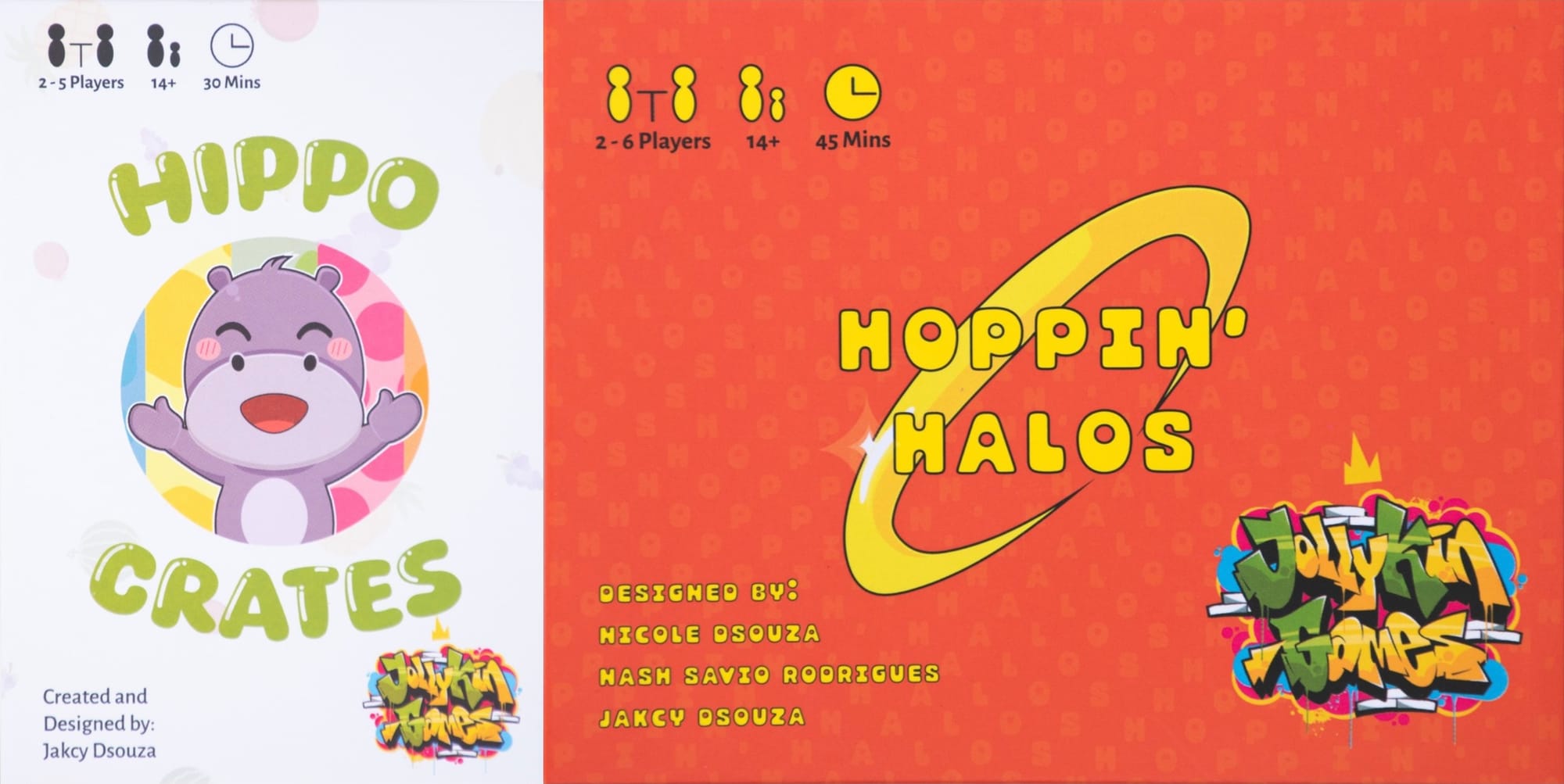
Hoppin' Halos comes from Nicole Dsouza, Jakcy Dsouza, and Nash Rodrigues, with Jakcy Dsouza saying the design is one in which "all players have the same opportunities to move forward and prosper, making sure that we find ways out of sticky situations while players openly charge against you".
The "halos" are rings in six colors, with six copies of each, and they will "hop" from player to player during the game. Each player starts with one card in hand (and, and on a turn you draw a card, then play a card. Cards come in one, two, or all colors; you chose the color on the card (if needed), then take a halo of that color from the reserve or another player.
If you create a scoring pattern with your halos — a rainbow of all six colors, a pair of pairs, and so on — you score 1-5 points depending on the pattern, then you distribute one halo from that pattern to each other player. Whoever scores 10 points first wins.