French publisher Cosmoludo debuted in 2020 with new editions of four abstract strategy games — Hokito, Mana, and Pantareï, all from famed designer Claude Leroy, and Kamon from Bruno Cathala — and has since debuted two more such titles: Yoxii in 2022 and Oxono in 2024.
I've been a big fan of Cosmoludo's catalog, both for its stylish, minimalist graphics and the quality of the game designs it's brought to market. (If you're curious, read or watch my review of Pantareï and watch my review of Oxono.)
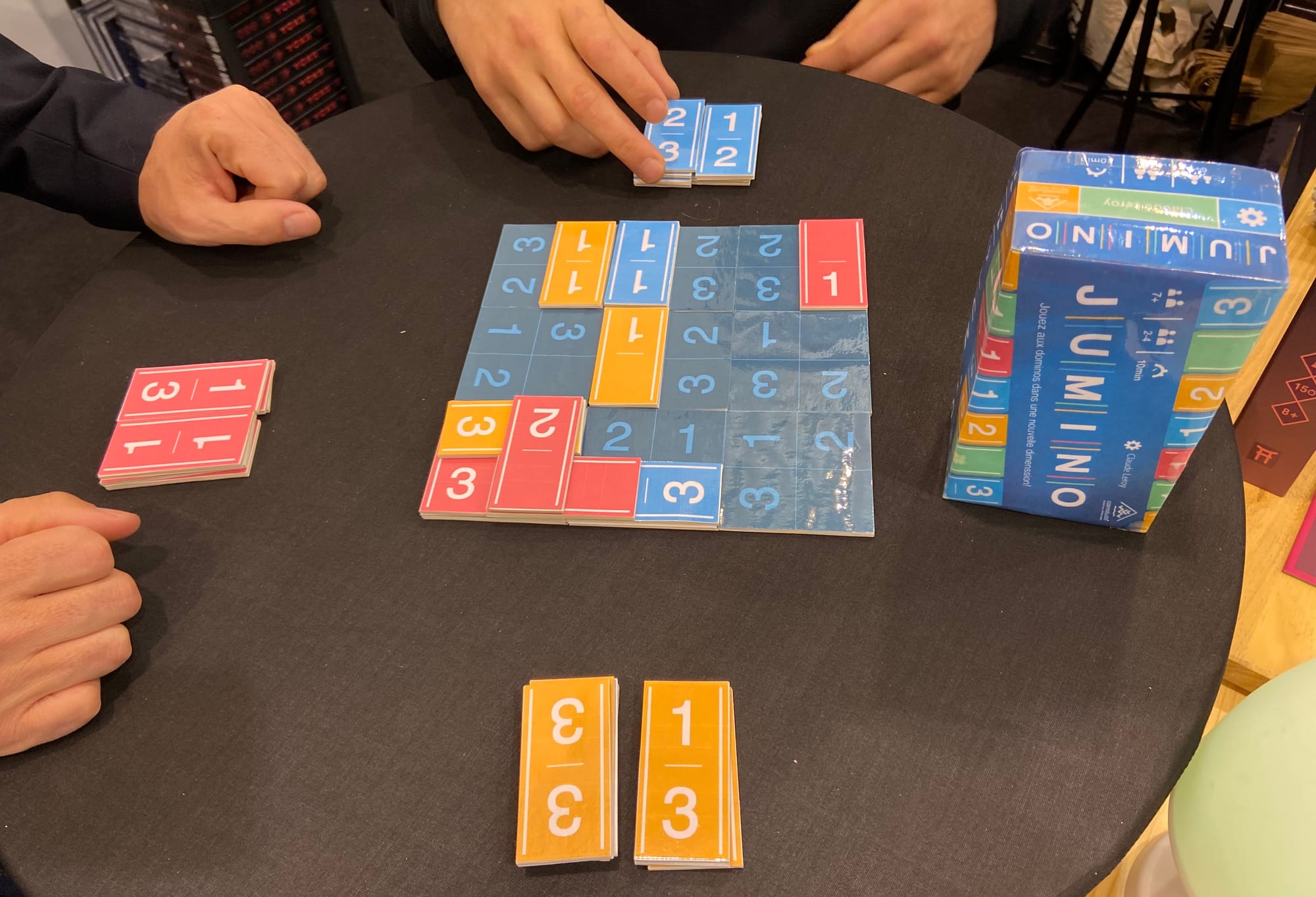
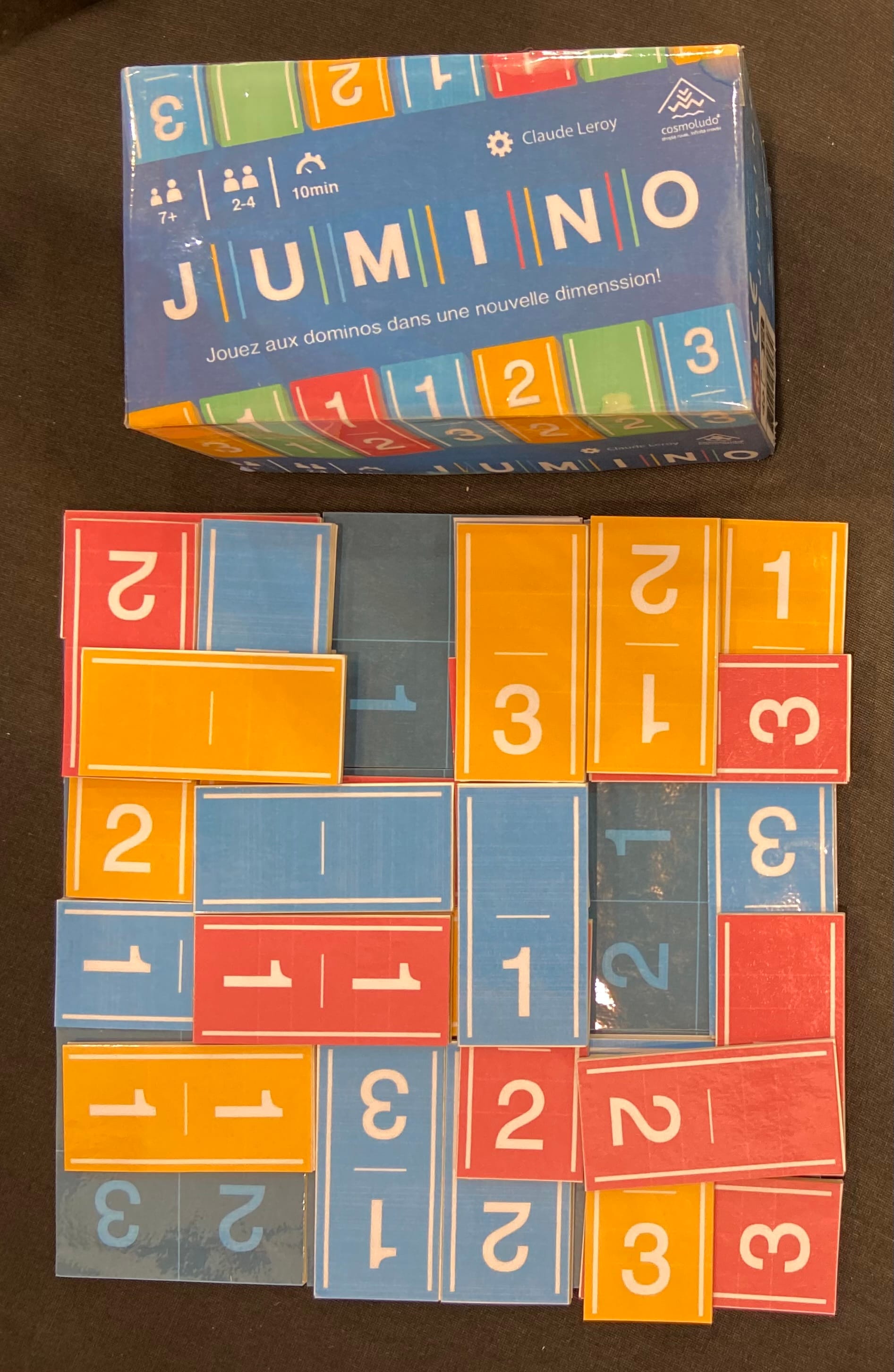
So it was a surprise to visit the Cosmoludo booth at SPIEL Essen 24 and see developers Andréa Farkas and Tom Delahaye playtesting a new Claude Leroy design that differed from everything else I've seen from both him and this publisher:
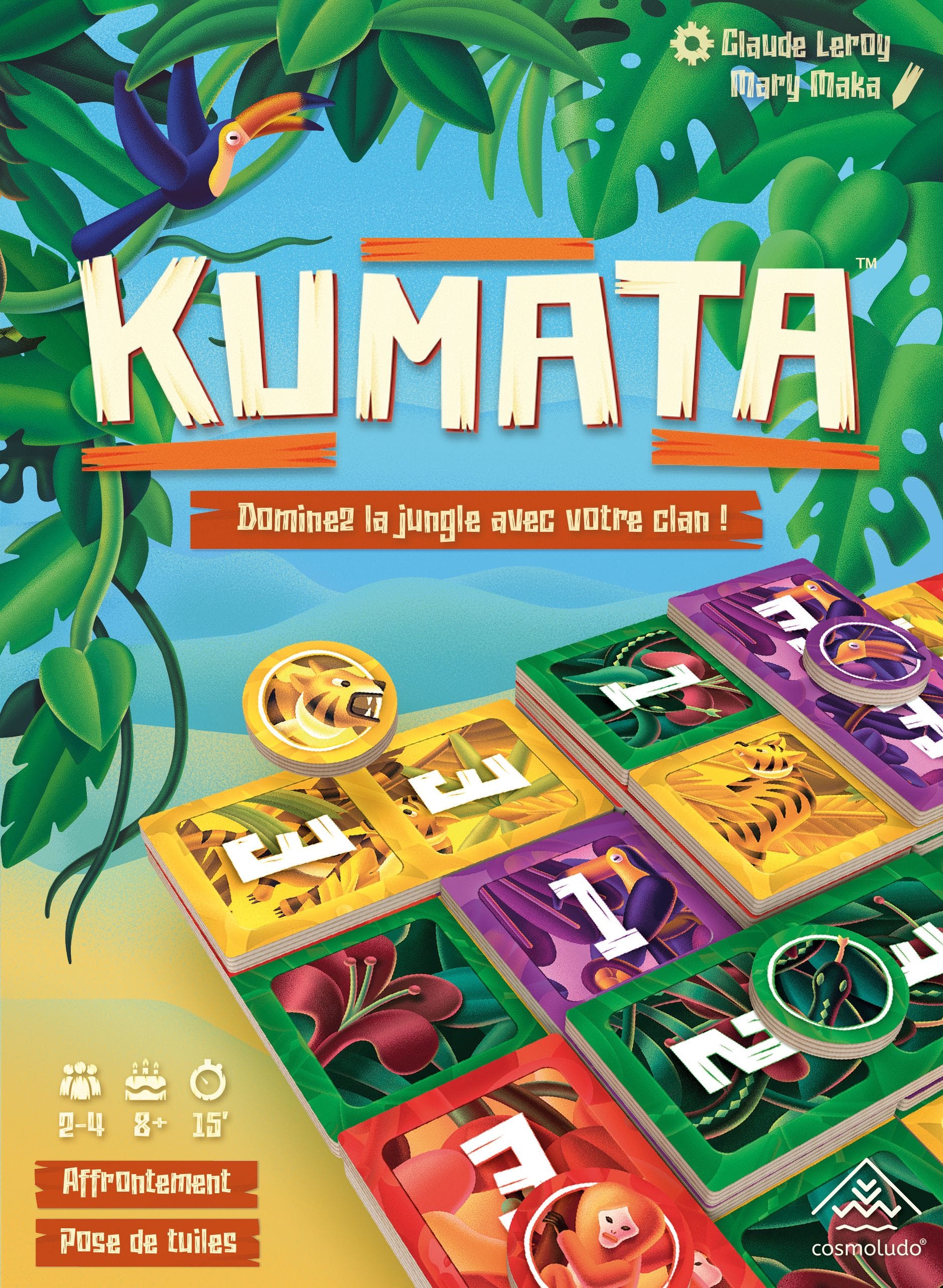
Cosmoludo has since finished developing this design and will sell and demo what is now called Kumata at the 2026 FIJ game fair in Cannes, France, which is taking place Feb. 27 to Mar. 1. Kumata will debut at retail outlets in France on March 13, 2026.
Kumata differs from most Leroy designs in that everyone has the same set of numbered tiles, but they're shuffled into 2-3 piles, so you and other players don't know which tiles will be available when. Uncertainty! Randomness! What's going on here?!
Andréa Farkas says that Cosmoludo's release of Kumata is a result of the current game market: "Pure reflection games, while deeply appreciated by dedicated players, tend to reach a more limited audience overall. As a publisher, we felt it was important to adapt to this reality without compromising our identity, by offering games that invite more people to sit at the table."
Kumata maintains Cosmoludo's desire to publish "games that are simple, clever, and stimulating, games that develop the mind", while simultaneously broadening the potential market by allowing for games with up to four players and by rethinking its approach to graphics. Says Farkas, "We moved toward more family-friendly illustrations, with a jungle theme that feels warm, inviting, and engaging rather than intimidating. This visual universe allows the game to speak to a wider audience and makes it easier for families and younger players to step in, without sacrificing depth or strategic interest."
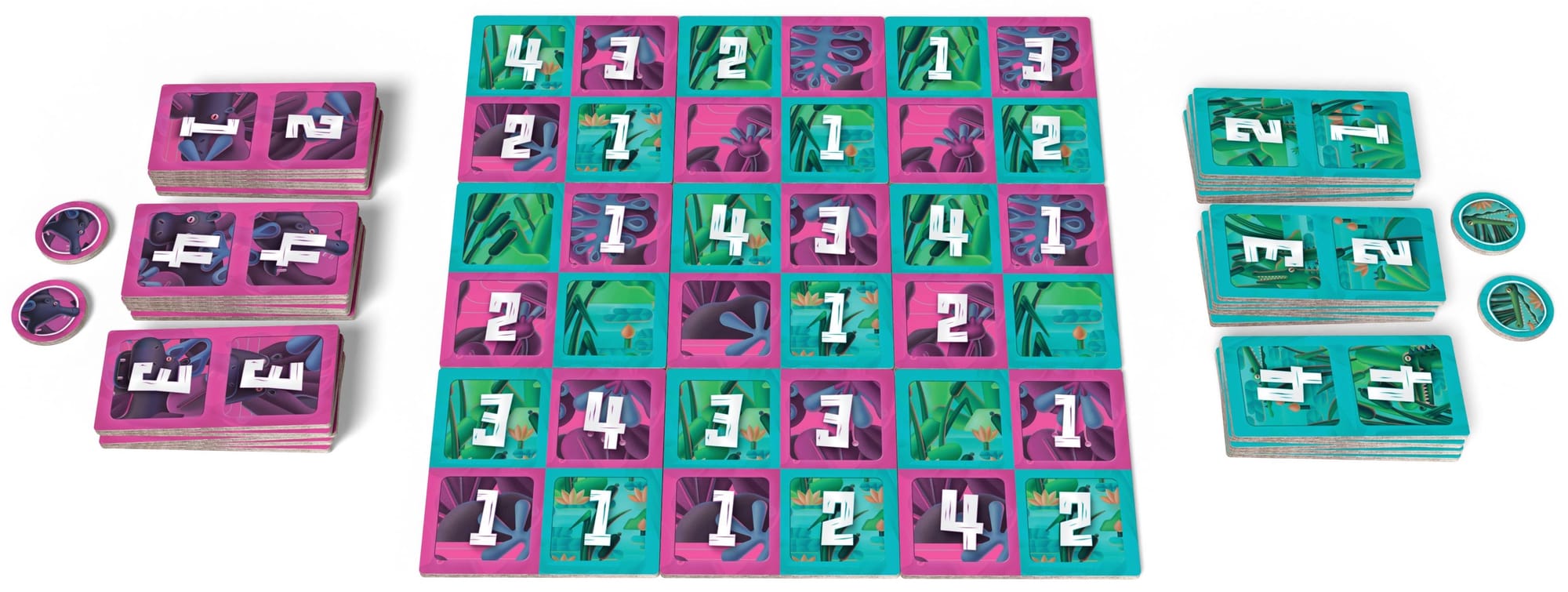
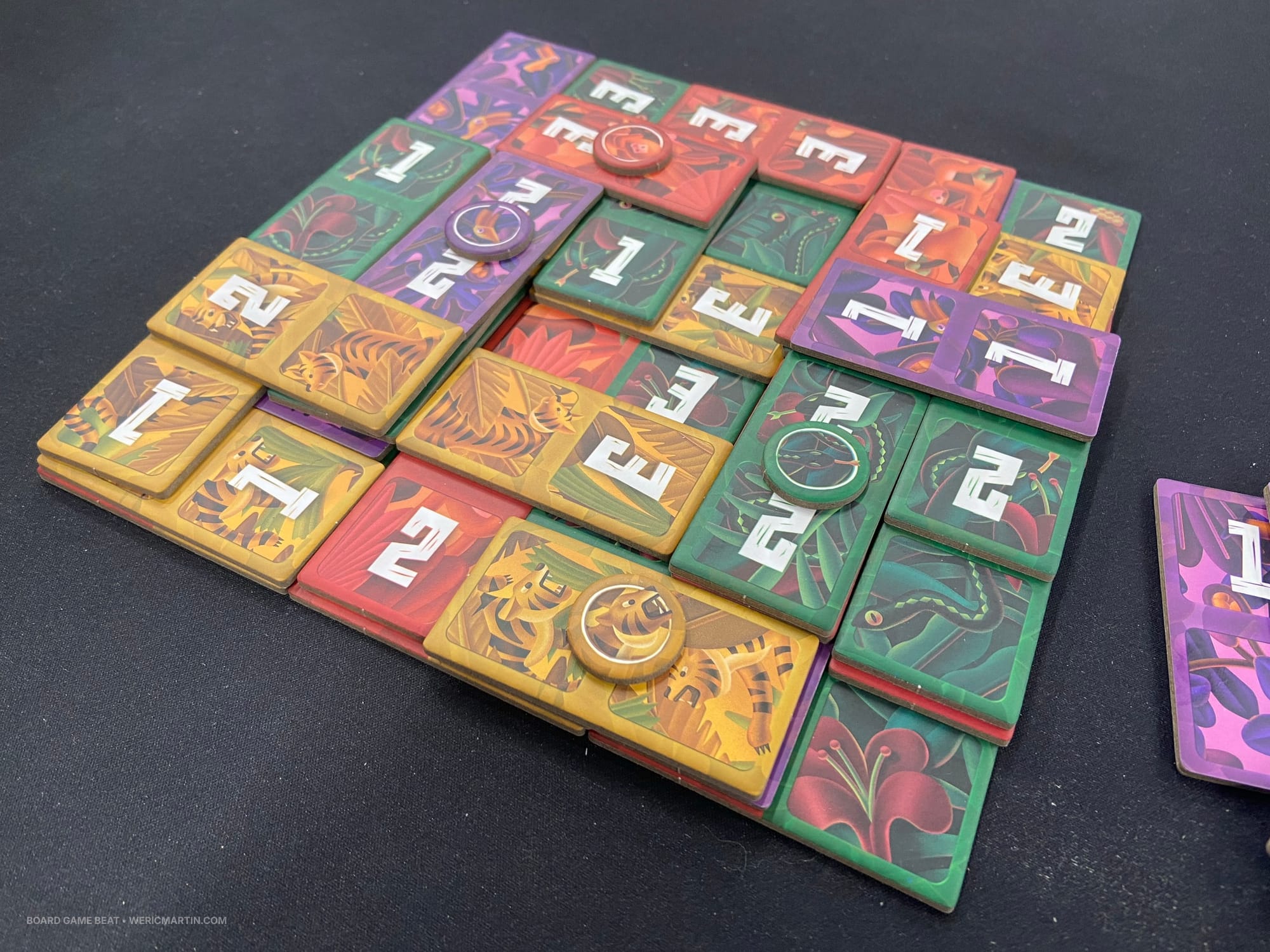
As for how to play Kumata, on a turn you place the top tile from one of your stacks onto the 6x6 grid, with each number being playable only on the same number, whereas a blank can cover (and be covered by) anything. As with many domino games, you can stack tiles as the game progresses as long as a stacked domino straddles two other dominoes at the same height.
What are you trying to do? Have the most points at game's end, with your score being the sum of your visible numbers both in the grid and on unplayed tiles atop your stacks. Each player has 1-2 totems in their color depending on the player count, and after a turn, you can place a totem on your just-placed tile both to make that tile off-limits for future plays and to score points equal to the height of that tile in the grid.
Blocking others seems like a good thing, but if your opponent can't play a top tile on their turn, they shift a top tile from one of their stacks to create a new stack — and unplayed tiles score them points at game's end! Maybe you'd be better off baiting them to play somewhere that you can cover up later...
Developer Andréa Farkas notes that Kumata will initially be available solely in French, with distributor Blackrock Games handling exports and assisting with localization of the game in other languages based on interest from publishing partners.
As for what's coming from Cosmoludo in the future, Farkas says, "We are not closing the door on expanding our abstract game range. However, our primary goal today is to grow our audience, and we believe family games are the most natural way for a publisher to do that. Looking ahead, players can expect more multiplayer games from Cosmoludo, with real interaction between players and strategy remaining at the heart of the gameplay. Several projects are already in development, and we sincerely hope they will resonate with our community."