By Dahl Taylor
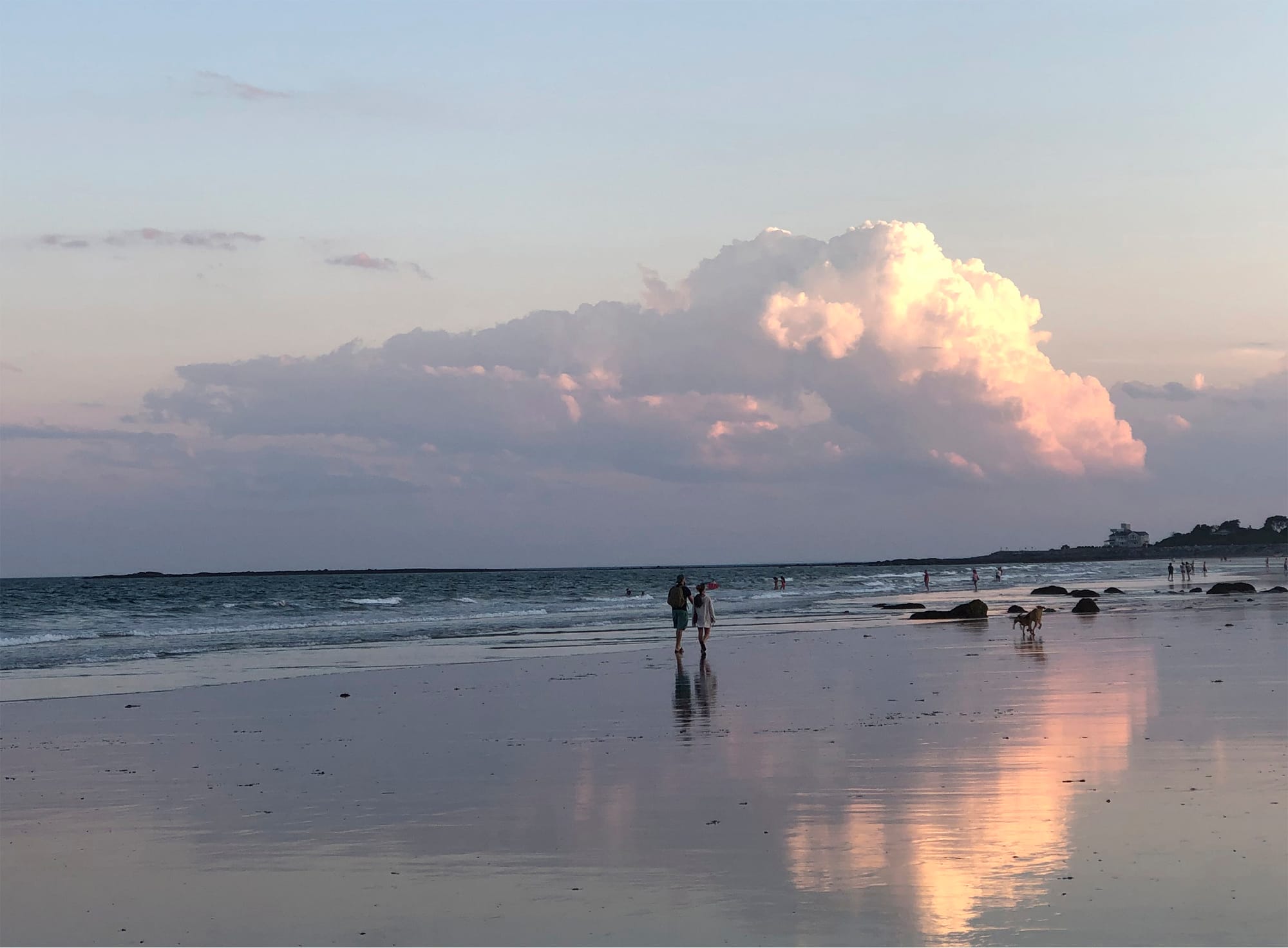
When I was approached to do the artwork for the beach-walking, shell-collecting game Sanibel, I thought, "This is what we do every year at our cottage in Rye, New Hampshire." We have a tiny place a few steps from a mile-long beach that we have been going to since our now-adult son was four. Today, when we gather there for vacations, our daily walks on the beach are a touchstone and a moment to reset and reconnect.
Those walks are also fierce competitions to find the most — and best — sea glass! The jars in the cottage have steadily filled over the years with our finds. Sanibel reminds me of those sea glass hunts and beachcombing in general.
Watercolor Was Always the Focus
From my first interaction with Samy Ventura, the Avalon Hill Art Director on Sanibel, the brief was focused on watercolor and traditional media as that would best complement the story of the game, including the movement of the ocean and the detailed beauty of the shells. This was, and is, right in my wheelhouse as I have concentrated on watercolor for a significant part of my work these last few years.
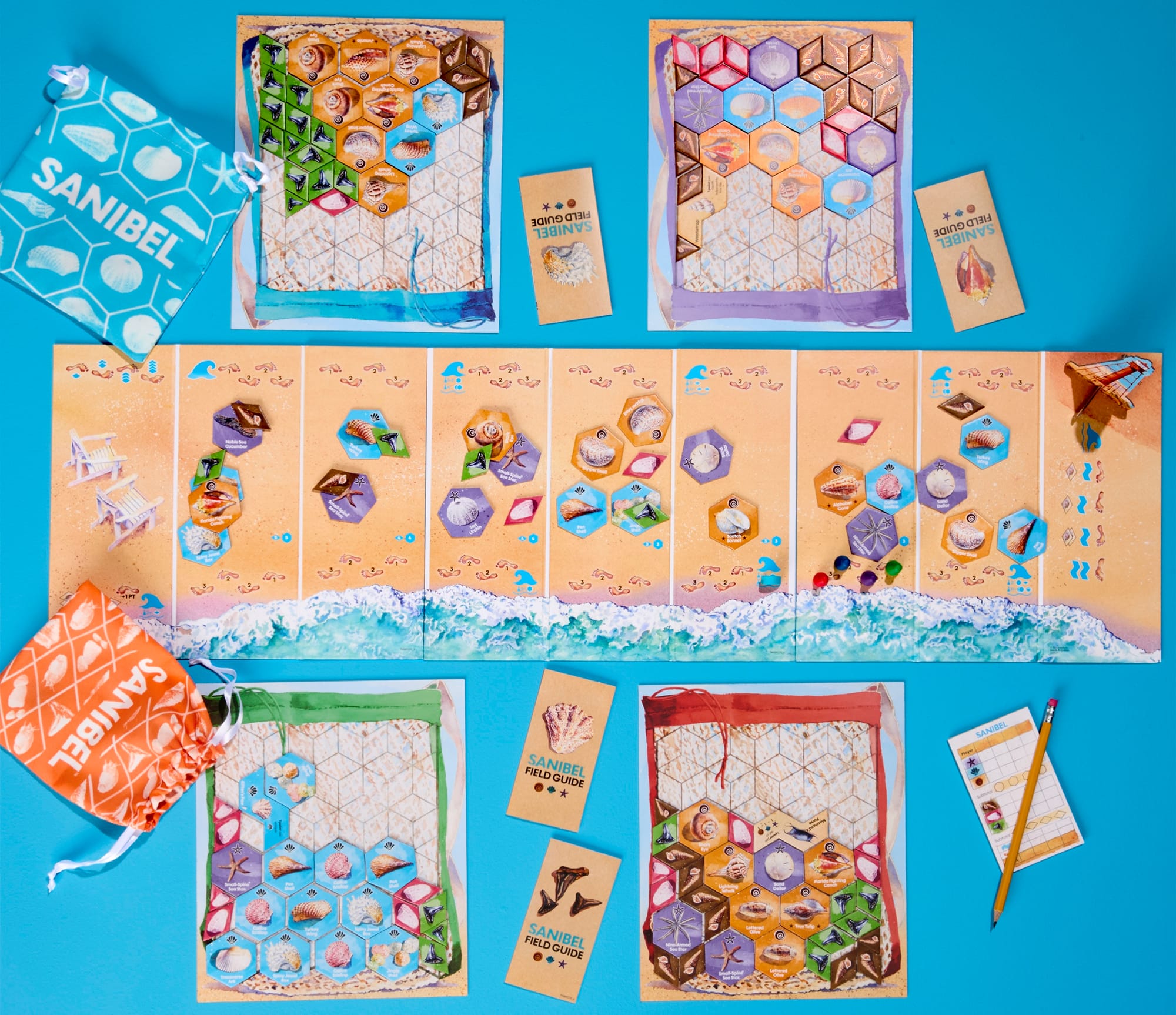
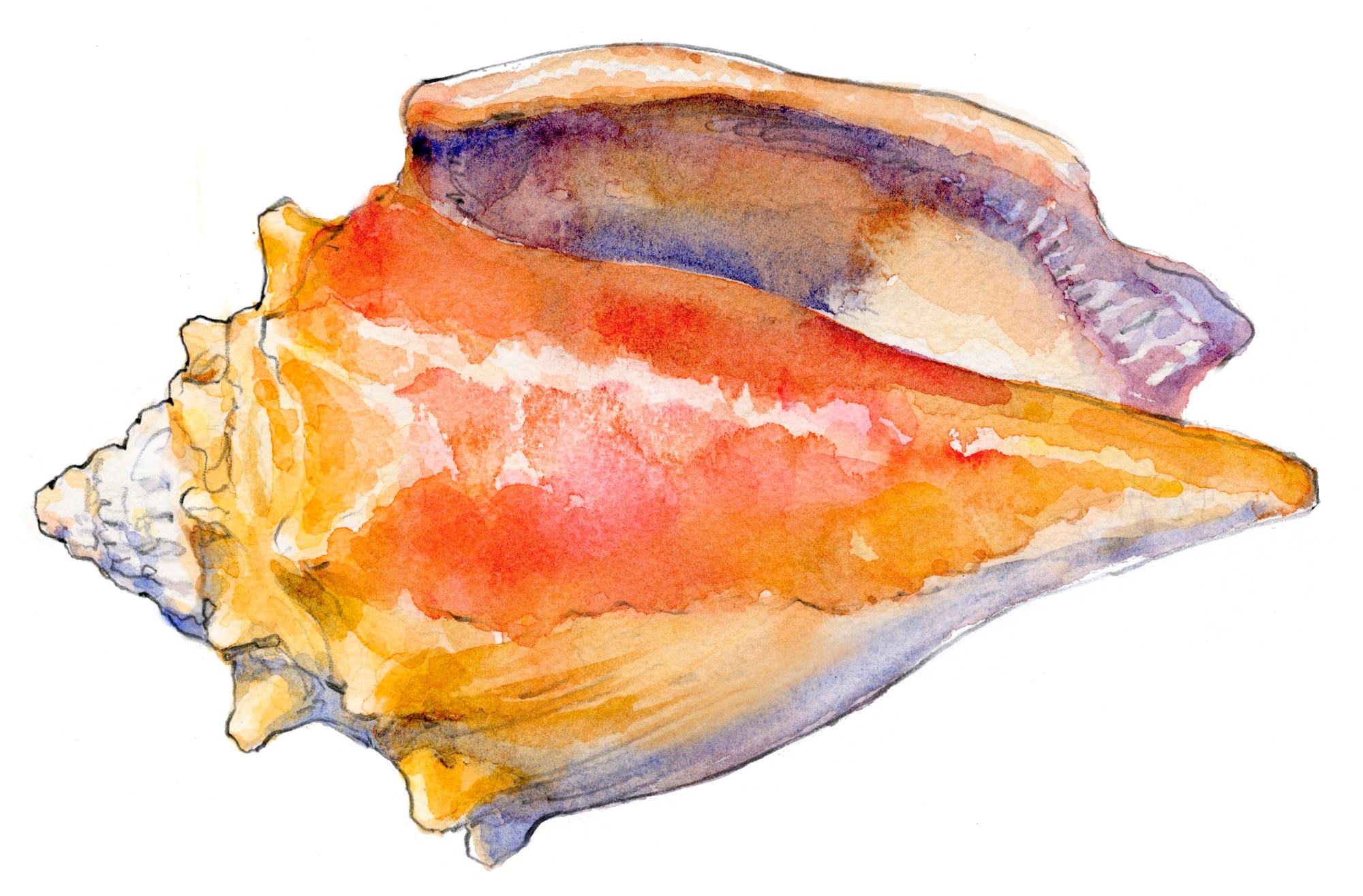
I started by defining the visual style of the watercolor for the game, specifically the shells. Since the theme of the game is collecting shells, I wanted to establish the look of the collection of shells that would be in the game before building any other component. The shells had to be the star, and everything else would come after that. I started with the Florida Fighting Conch art, using watercolor and just a little bit of pencil drawing added for definition. That piece got everyone on board with the art direction, and it defined how I was going to render the rest of the shells.
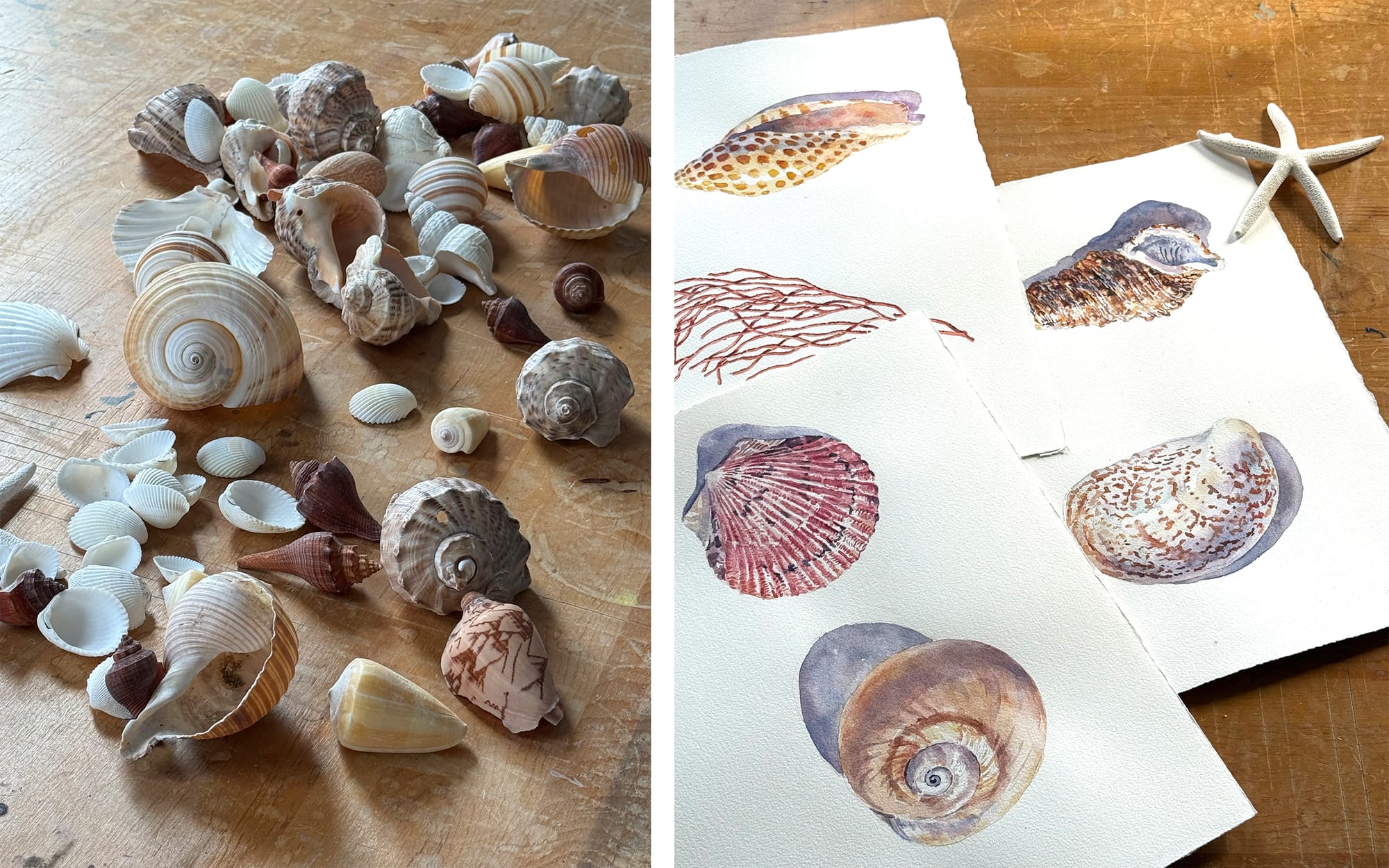
Painting all the various shells and items for this game was truly a pleasure, but to accurately render them, I had to do a fair amount of research. I tried to purchase as many of the shells as I could so that I could light and photograph them myself. Some are rare and quite expensive, though. That's when I relied on an encyclopedia of shells I had and, of course, the internet. Coincidentally, I also used iNaturalist, the same resource Elizabeth used when designing the prototype.
Art of Sanibel
With the style of art and the shells defined, I moved on to the cover art. Samy asked that the illustration celebrate Sanibel Island, focus on shells, and hint at game play.
While Samy and I were researching the area, we learned about the vast destruction the island faced because of Hurricane Ian in 2022. Ian destroyed a lot of the island, including vegetation, homes, the shoreline, and more — but the lighthouse remained and served as a beacon of hope for the community as they faced the daunting task of rebuilding. As a result, the concepts with the lighthouse rose to the top quickly because they highlighted Sanibel's resilience. Once we aligned on the lighthouse being featured, the cover art went through several iterations, which is par for the course in any illustration assignment.
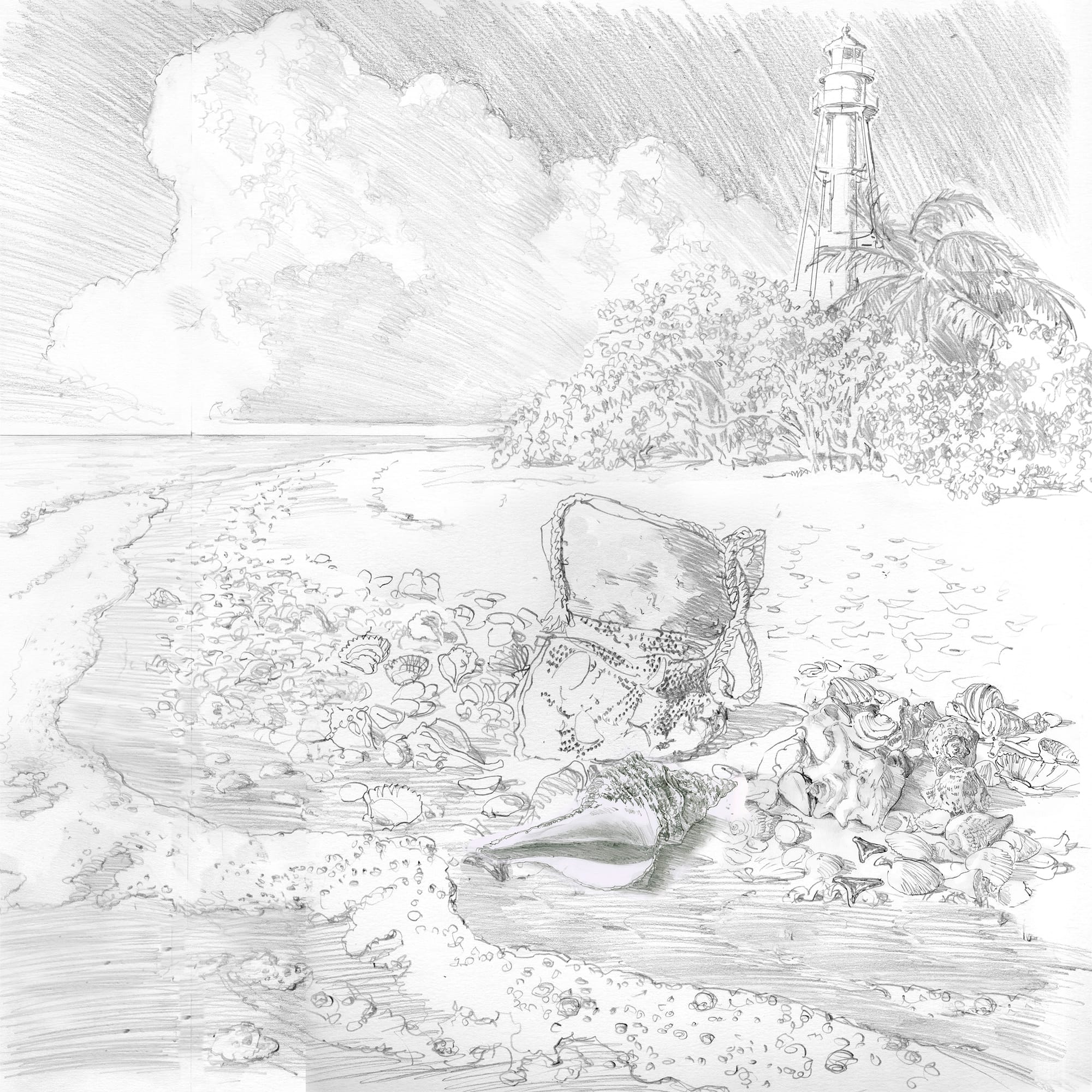
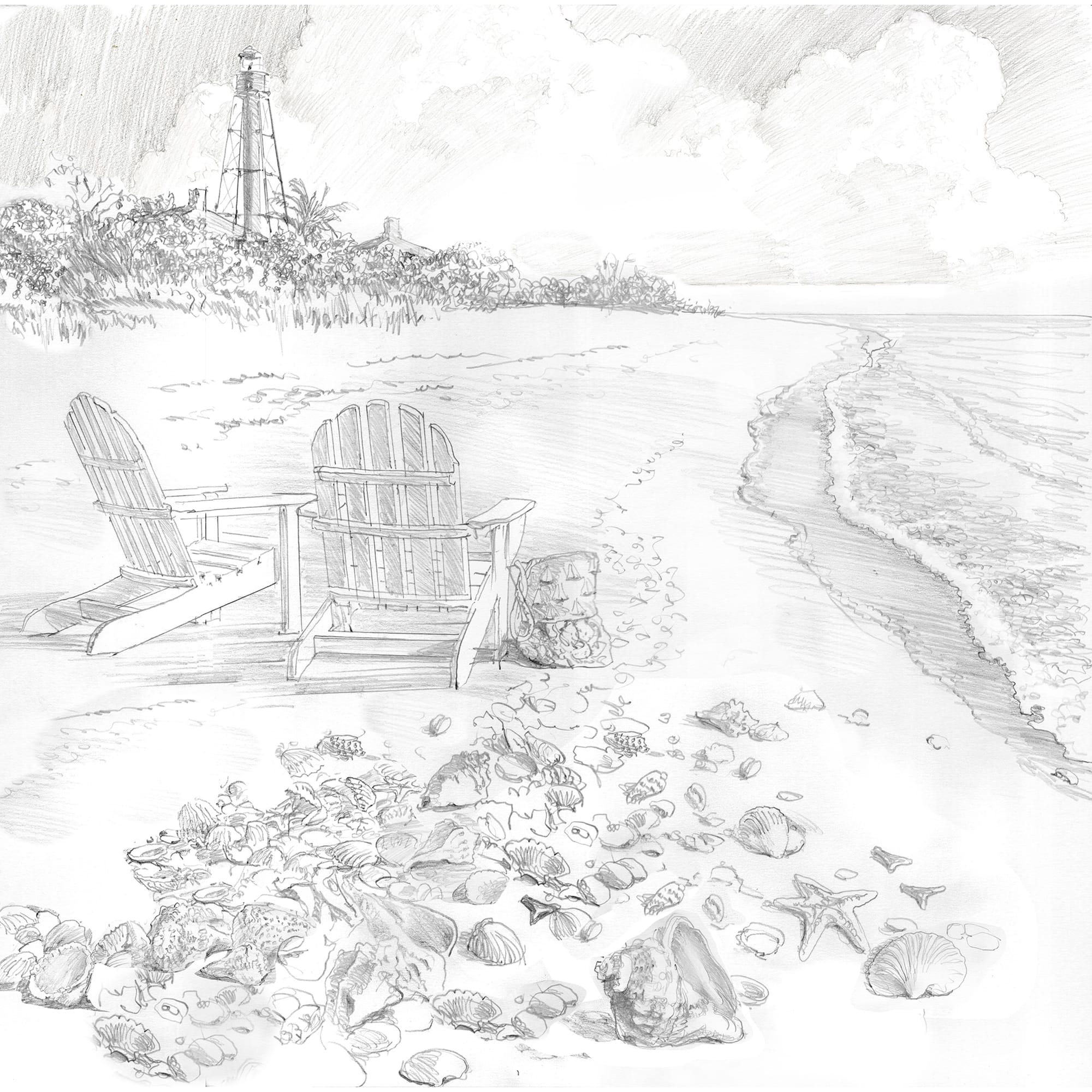
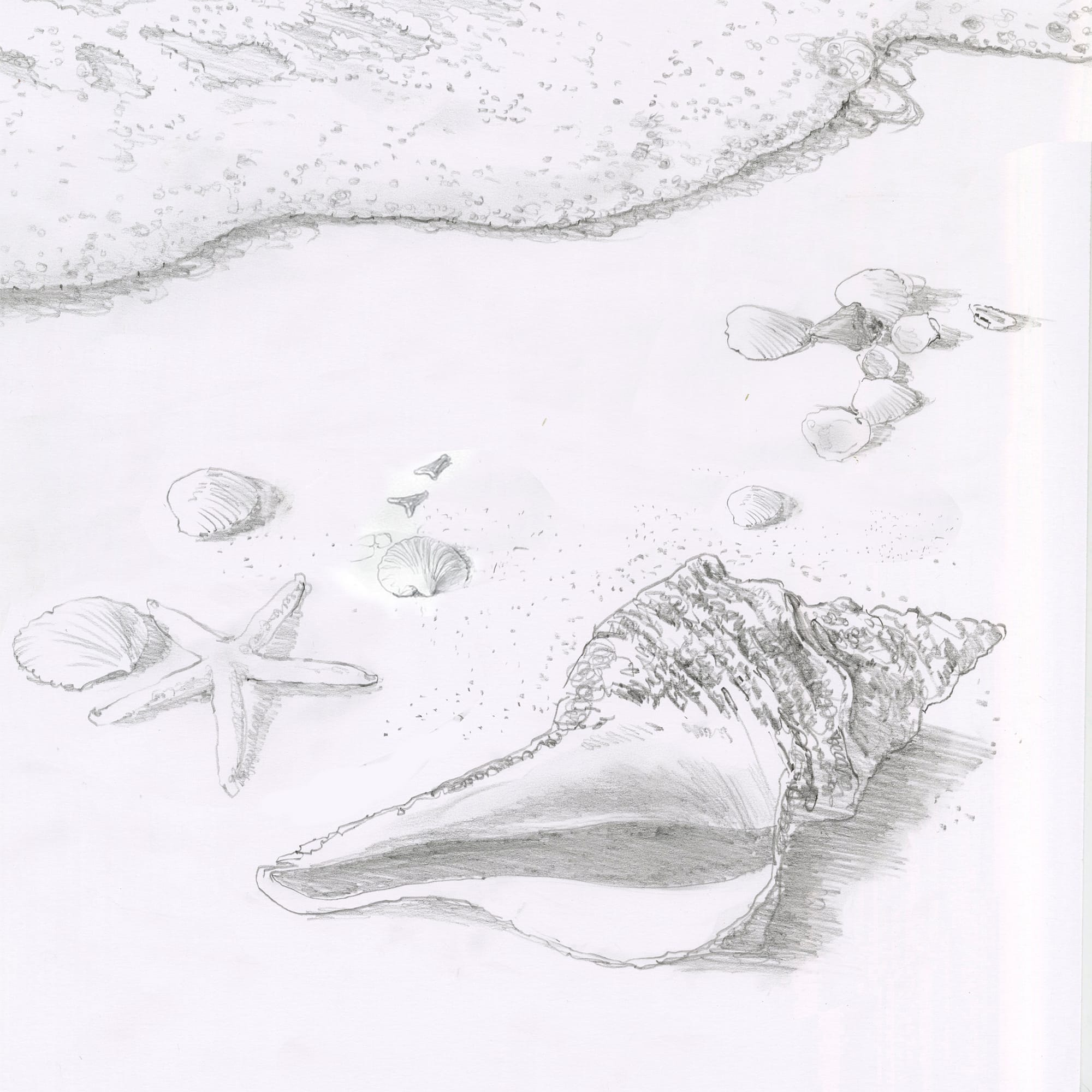
Throughout, I painted the different elements of the game as separate components, which could be assembled and arranged digitally. This made both my job and Samy's job easier as it gave us more flexibility in composing scenes. This also allowed the art to be used as separate elements in other printed aspects of the game, such as the instruction manual and even marketing materials.
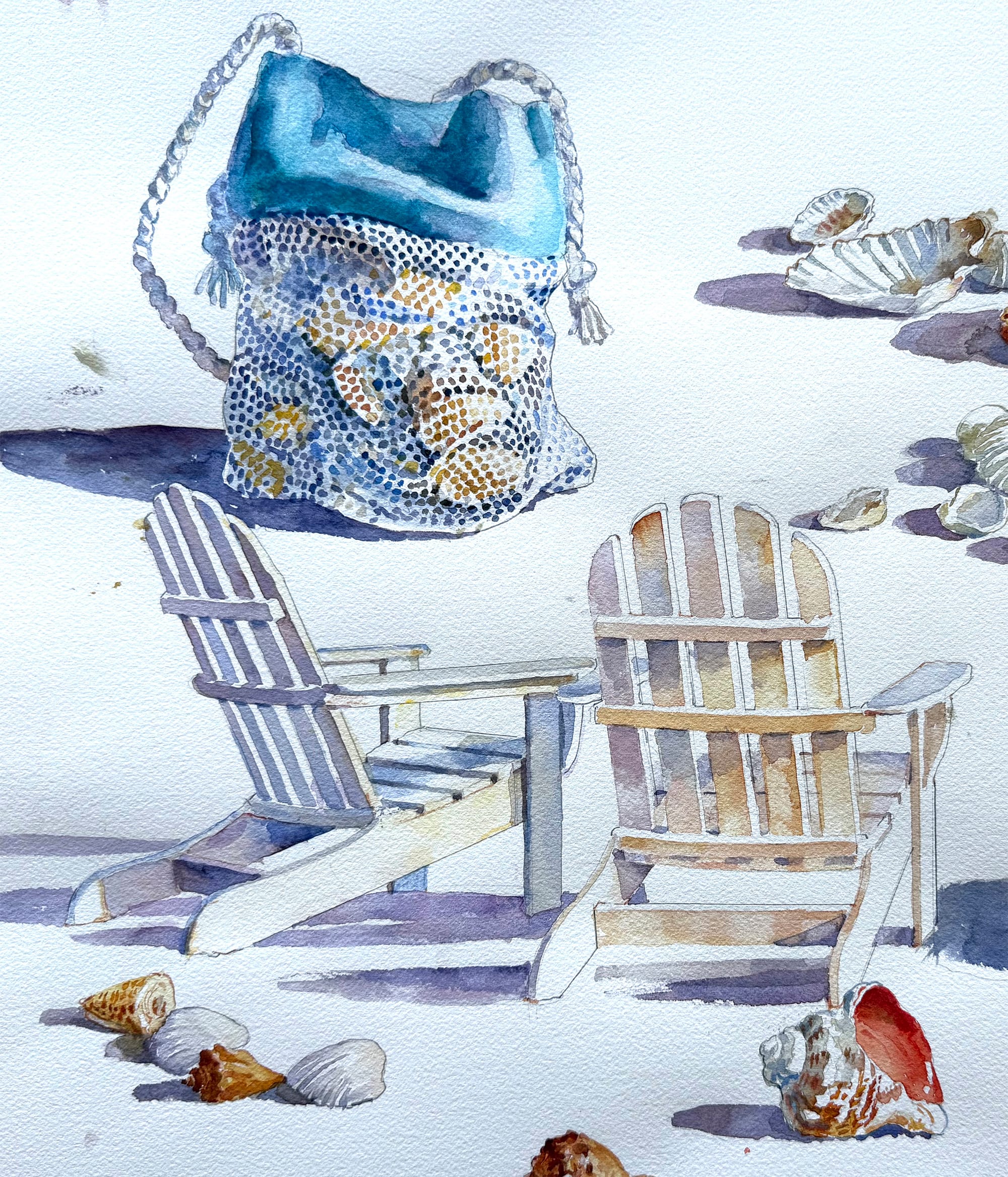
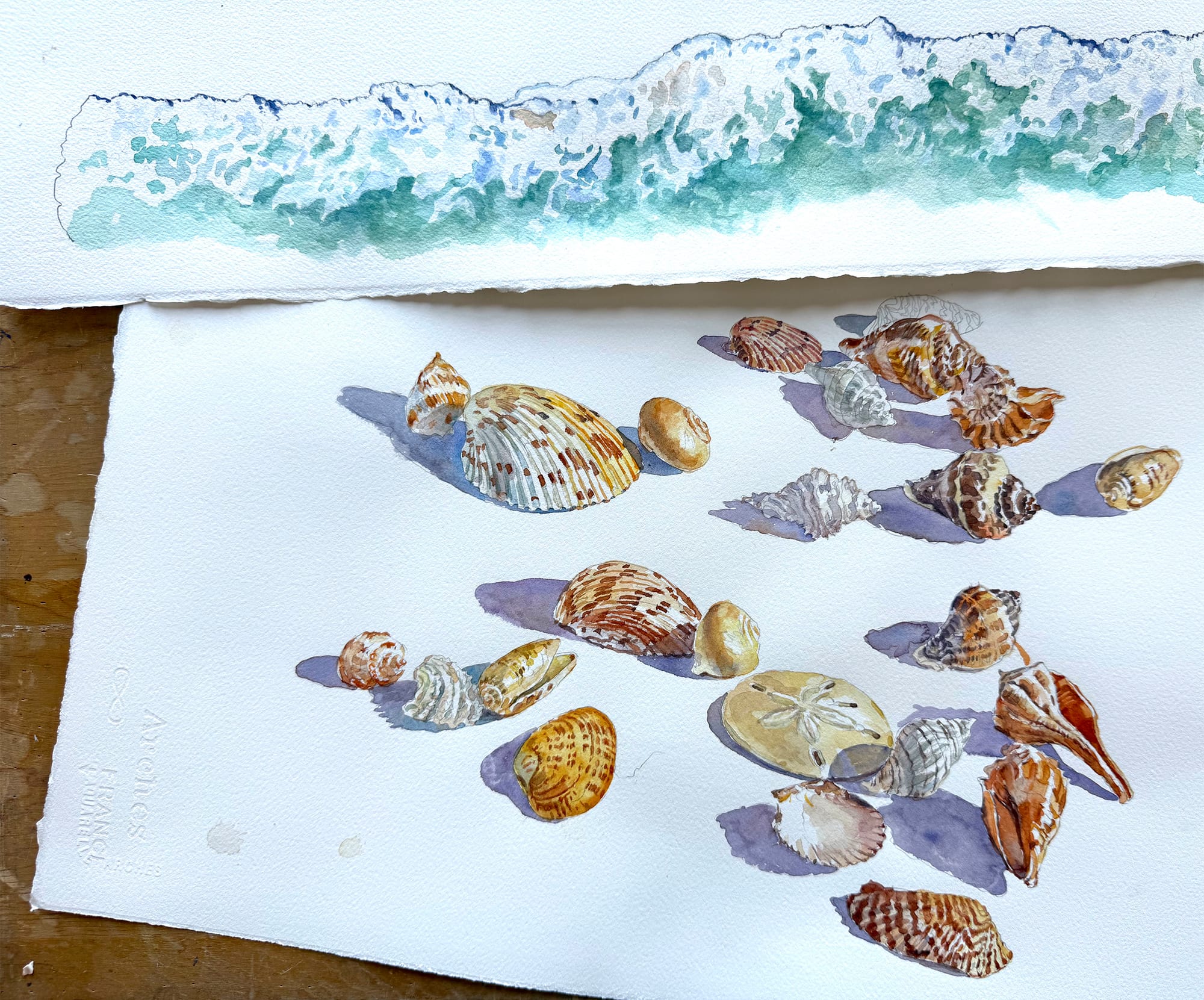
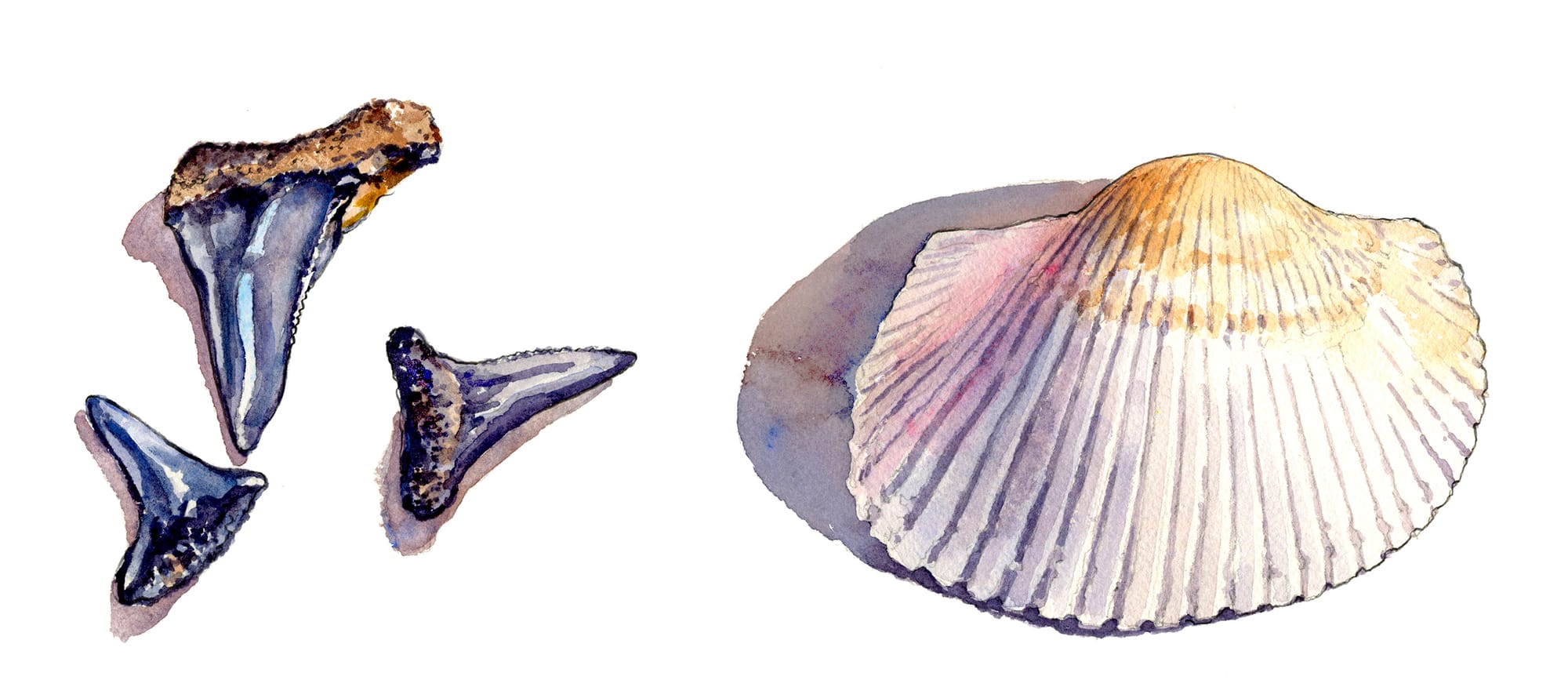
With the shells and the front of the package complete, the game components, board, and everything else effortlessly flowed straight to the final product and what you see today. All in all, it was a great project and a lovely experience working with Avalon Hill and Samy — and I have to say that creating the art for Elizabeth Hargrave's new game gave me considerable street cred with my son, who was already a fan of Wingspan!